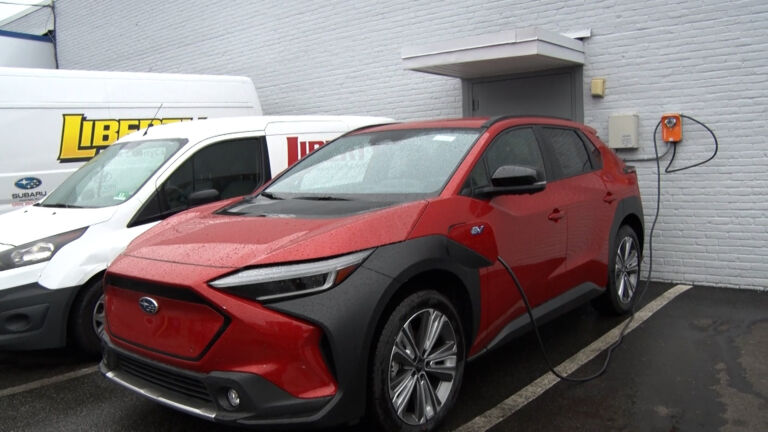
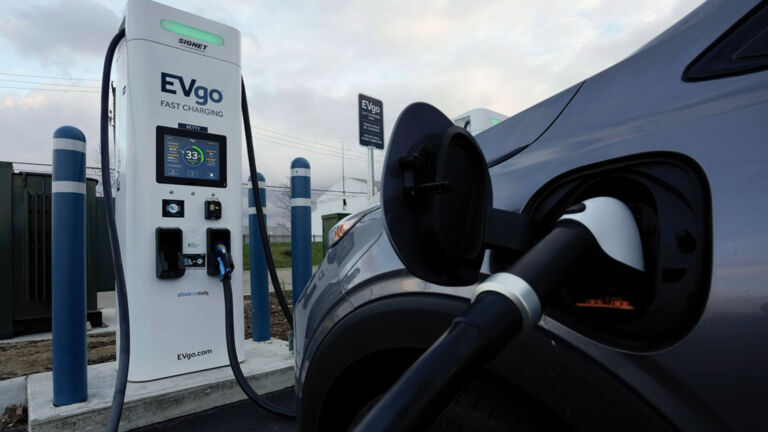
The U.S. Senate last week voted 51-44 to repeal a rule allowing California to ban sales of gas-powered cars by 2035, creating a ripple effect across the country. Eleven other states, including New Jersey, were set to follow in California’s footsteps, representing roughly 40% of the U.S. auto market in all.
How much the bill if enacted would impact New Jersey specifically is up for debate. Following California’s lead, Gov. Phil Murphy had called for half of all new car sales to be electric by 2027 as part of a larger effort to curb greenhouse gas emissions and air pollution. But if President Trump was to sign the latest bill once it lands on his desk, New Jersey’s electric vehicle rule could be dead before it fully gets off the ground.
NJ Spotlight News spoke with Doug O’Malley, director of Environment New Jersey, about the Senate bill and its potential consequences for New Jersey.
“The key thing to know is that regardless of what happens in Washington, New Jersey’s been a clean-car leader for more than two decades, and this was no surprise whether it was a congressional vote or a regulation or through litigation,” he said.
“The fact is … we have a constituency of more than 200,000 New Jersey residents that are driving EV’s right now.”
The Murphy administration signed on to a multi-state effort known as the Affordable Clean Cars Coalition to roll out a series of “clean vehicle programs.” Participating states include California, Colorado, Delaware, Maryland, Massachusetts, New Jersey, New Mexico, New York, Oregon, Rhode Island and Washington.
“It’s to basically say, we’re not going away,” O’Malley said of the coalition. “New Jersey is obviously one of those states, and the investments we’ve made are starting to pay off.”
“I think there will need to be a shift just acknowledging the fact that the feds are obviously not where they were last year,” he said. “That’s why New Jersey is not going to walk away from this fight.”