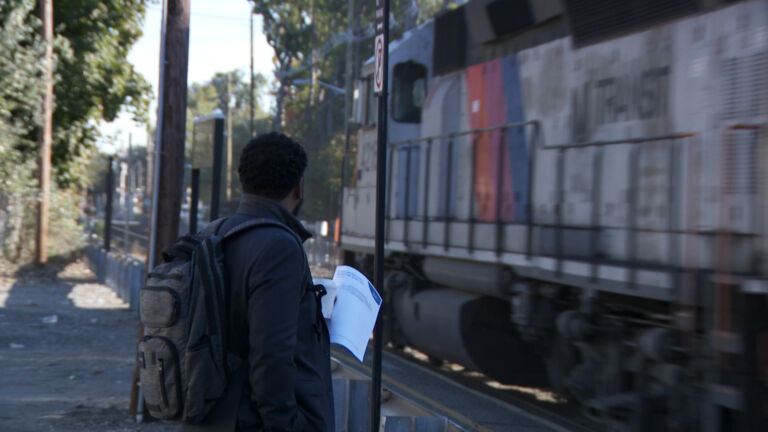
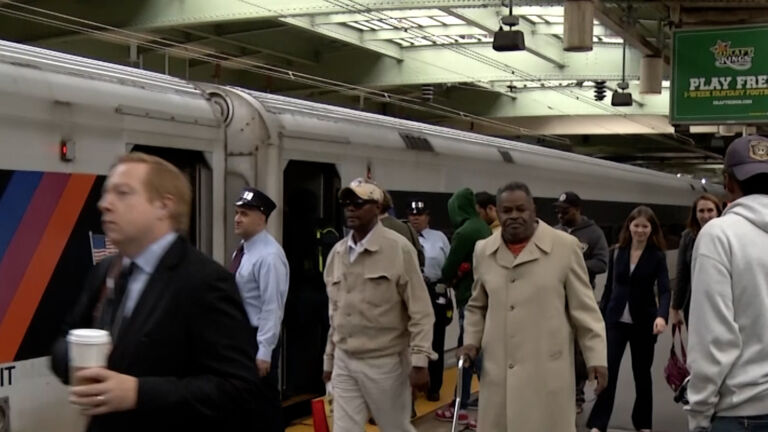
As regular commuter trains rolled along the Northeast Corridor, a special Amtrak caboose took five members of Congress on a New Jersey tour.
Democratic members had demanded to see whether ongoing repairs to overhead electrical wiring would avert another so-called “summer of hell” for Jersey rail riders. They got an eyeful, said U.S. Rep. Mikie Sherrill (D-11th).
“You can see that this is a train system built in the 1930s that has had severe under-investment in it for decades,” she told reporters in New Brunswick, where the delegation disembarked. “I don’t think anybody feels we are at the point where we can say to you, today, we have a plan for next summer.”
The group said it pressed for answers, and it praised Amtrak for making at least interim repairs to keep NJ Transit’s locomotives moving along the breakdown-plagued New Brunswick-to-New York sections of track.
“We’ve been partnering with our colleagues at New Jersey Transit to look at all the systems involved here,” said Stephen Gardner, Amtrak CEO. “So that’s the infrastructure, particularly the electrical infrastructure, which are the overhead wires, the substations that feed them, and with their equipment.”
Officials said any full system upgrades will hinge, in part, on a diagnostic report being conducted by an outside auditor hired to examine what caused the “summer of hell” fiasco.
That study’s due sometime in November, but riders remain angry and NJ Transit is still under fire. The agency finally hired a customer advocate, although he has yet to meet critical transit riders who continue to demand improvements.
“If a train’s 10 minutes late, people will start hitting Twitter — and that comes with the nature of commuter rail, and we know that,” said NJ Transit president and CEO Kevin Corbett. “And the thing is, people would rather deal with some pain up front, if they know it’s going to be resulting in concrete progress.”
To that end, NJ Transit said it is repairing its locomotives and ordered a separate study of its electrical systems. In addition, Amtrak is investing more money to upgrade overhead power lines. The agency applied for $300 million in federal grants to repair and replace catenary wires and signal systems, and officials urged the delegation to press for more funding in the next Congressional budget.