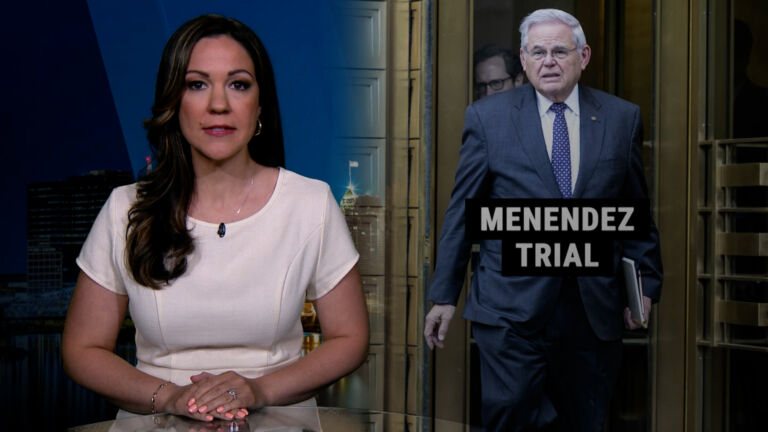
The federal corruption trial of U.S. Sen Bob Menendez resumed Tuesday after a week-long hiatus.
U.S. District Court Judge Sidney Stein on Friday blocked certain evidence the government was seeking to use in support of its case that Menendez (D-NJ) accepted bribes in exchange for sending billions of dollars of U.S. military aid to Egypt. The judge found it to be in violation of the Constitution’s “speech or debate” clause, which grants members of Congress a form of immunity relating to their official duties as lawmakers.
“It’s going to make it very difficult for the government to go forward with that set of allegations if they can’t show the jury what he [Menendez] actually did,” said Stan Brand, former counsel to the U.S. House of Representatives in an interview with NJ Spotlight News.
Brand calls the speech or debate clause a kind of “mental gymnastics” the U.S. Supreme Court created, because while prosecutors can’t talk about legislative acts, they can talk about alleged promises given in exchange for bribes.
“The problem is you can’t actually show what the member of Congress actually did in the legislative sphere. … But juries as a practical matter oftentimes will say, ‘Well he didn’t do anything so we’re not going to convict,’” said Brand.
Prosecutors hoped to use years of text messages, phone records and other documents obtained during the multiyear investigation of the senator, his wife and three New Jersey businessmen. But Brand says it doesn’t mean congressional members are walled off from being held accountable for misdeeds.
“If you look in the case books, you’ll find all kinds of decisions by the court of holding convictions of members of Congress. They’re routinely convicted even where courts bar use of this evidence. So, the notion that somehow this gives them a free ‘get out of jail’ card for everything they do, is just not the case,” Brand said.