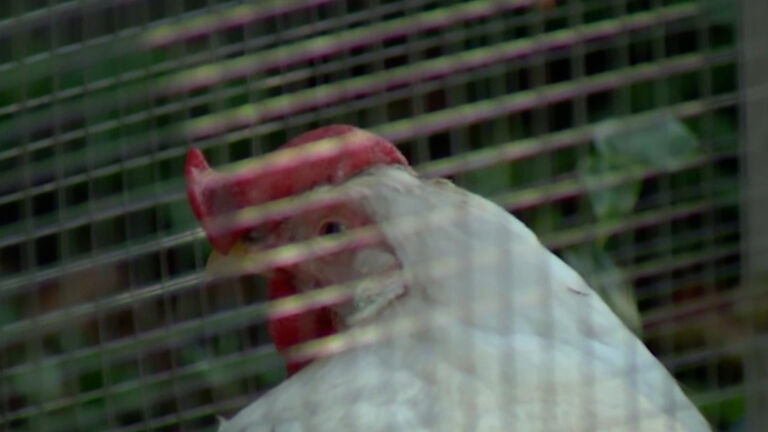
New Jersey poultry farmers, distributors and bird rescuers are urging government officials to step up their response to the rapidly increasing spread of avian flu.
Officials closed three local parks in Allentown and a park in Sayreville after more than 30 dead geese tested positive for the H5N1 virus, and a live poultry market in Union County was forced to temporarily close after the virus was found there. U.S. Secretary of Agriculture Brooke Rollins floated a billion-dollar solution, but with no timeline.
Pete Lillo, founder of Bear Brook Feather Friends Sanctuary in Sussex County, who rescues domestic ducks and geese, cares for more than 100 disabled and abandoned birds at his small farm in Green Township. He stopped accepting new rescue birds because he’s worried they might infect the flock.
Many bird species migrate through New Jersey along the Atlantic Flyway. Migrating birds make rest stops at places like the Delaware Bay, where they can easily share all kinds of viruses, including avian flu which is spread by body fluids, said wildlife biologist Larry Niles.
“I don’t want everybody to get all scared and then start taking it out on wildlife, because there’s no need,” said Niles. “We have a good surveillance system, and I think … people in New Jersey will be among the first to know if there’s a serious problem.”
The market in Union County is not the only such market in the region where avian flu has been detected. Earlier this month, live bird markets in New York City’s five boroughs and the surrounding counties were ordered to temporarily close for disinfection. New Jersey issued a similar request, but it was voluntary.
The Centers for Disease Control and Prevention reported 70 bird flu cases in humans — and one death — since 2024. But it’s hard to gauge virus activity, because people don’t normally get tested for flu when they get sick, says Montclair State University epidemiologist Stephanie Silvera. But what’s largely a virus infecting birds could mutate and become more transmissible, she noted.
“The risk still remains low for the average New Jerseyan. But, you know, your risk does increase if you are working in agriculture and having exposure to birds, poultry, waterfowl,” said Christopher Hellwig, president-elect of the New Jersey Association of County and City Health Officials.
Local public health officials advise people to wash up thoroughly after any exposure and report sick birds to authorities. For most people, the biggest impact from bird flu is in the soaring price of eggs — after some 15% of America’s egg-laying chickens have been destroyed to suppress viral spread, according to analysts at Expana.
Silvera says federal authorities needs to act swiftly to stop the virus.
“It was bound to get into our poultry and livestock as well at some point because, you know, birds don’t follow the patterns that we want them to. And once that happens, the risk for the humans interacting with those birds goes up dramatically,” Silvera said.