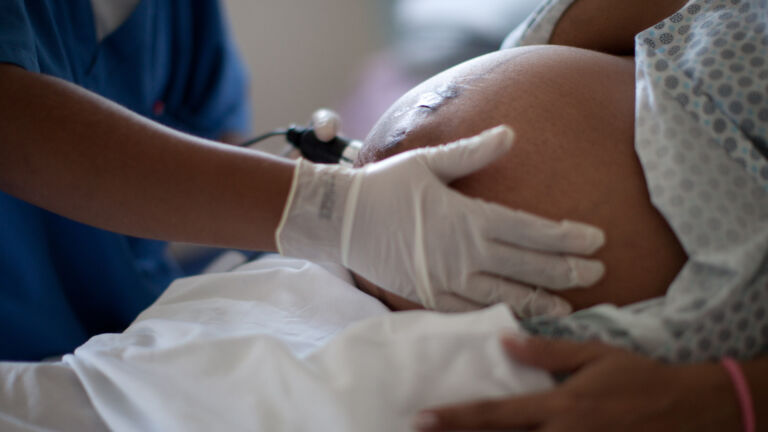
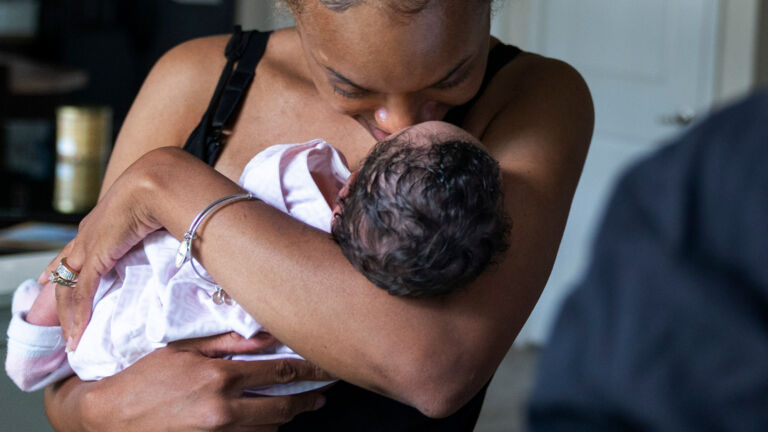
Black women in New Jersey are 25% more likely to receive an unplanned C-section than white, non-Hispanic women, according to a new study conducted by the National Bureau of Economic Research. The results show the wide disparities in how Black mothers are treated, even those with similar pregnancies, similar socioeconomic status, and even the same doctors, in the same hospitals as white women.
That proves what New Jersey’s first lady Tammy Murphy and her team found when she first launched her Nurture NJ program in 2018, Murphy said Monday in an interview with NJ Spotlight News. Their work was aimed at reversing that high rate of Black maternal and infant death in the state.
“We’ve done a number of things. First of all, back in I want to say 2019, we said that we would no longer reimburse for non-elective C-sections, which has been a very important driver of reducing our C-section rates here. We actually have a hospital maternal health report card that we have now started. And we started working on that also in 2019. And that is our effort to make sure that families, mothers to be, all have access that we are completely transparent and that our hospitals are putting their best foot forward. So they people can actually go online and check and see what their C-section rates were and what they are,” Murphy said.
Driving down C-section deliveries has been a major focus because the surgeries drive up post-partum complications and increase health risks, for both mom and baby. Another piece of the puzzle in reversing the rates, and ensuring equity for Black moms, has been the increase of doulas and midwives in delivery rooms.
“The fact of the matter is that we know as studies have shown that outcomes are better when you involve doulas and midwives, which is exactly why we’ve been not only building up both of those workforces, we’ve been trying to make sure that we’re reimbursing them at respectable rates. We’re trying to make sure they’re embedded in part of the of the care team. And to be honest with you, we’ve taken it a step further, and we are doing the same throughout the entire perinatal workforce,” Murphy said.
And their work continues to provide implicit bias training to all medical professionals around the state, she said.
“You can’t have the same two patients with the same symptoms, present to the same doctor in the same hospital and be treated so differently. So, yes, absolutely. And what we’ve been saying since the very beginning is we need to enable everyone across New Jersey to just be healthy in their own community. We need to give them the resources, the respect. And we need to make sure that they understand what is available, and we’re just expanding that network that we’ve been doing that since day one.”