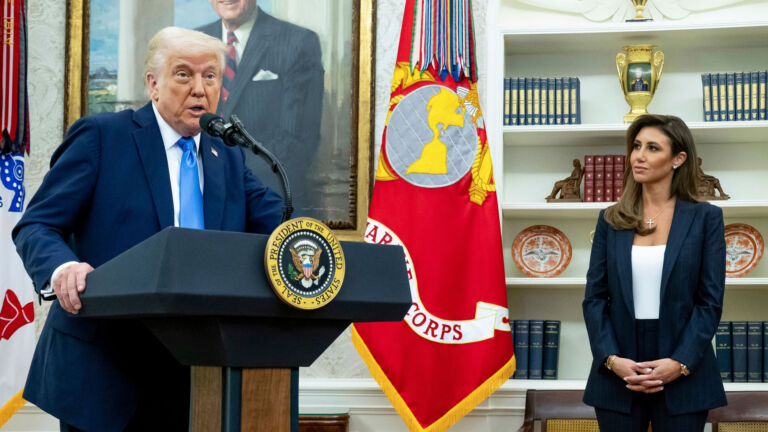
It appears President Donald Trump’s former lawyer will remain the top federal prosecutor of New Jersey.
The U.S. Department of Justice Thursday night found a workaround for Alina Habba to become acting U.S. attorney for New Jersey — ending a standoff between New Jersey’s federal judges who ousted her and the White House. At least for now.
Habba had served in an interim capacity for the past three months.
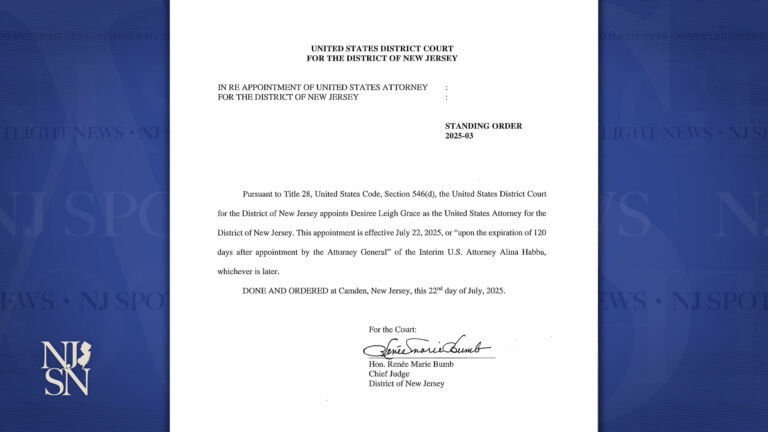
In a complex maneuver, the Trump administration on Thursday withdrew Habba’s formal nomination to the post and appointed her first assistant U.S. attorney, a job that was held by career prosecutor Desiree Grace until earlier this week when she was fired by the White House. That was after the state’s federal judges voted to have Grace replace Habba when her term was set to expire this week.
Justice Department officials said Thursday that as chief deputy, Habba will automatically inherit the title of acting U.S. attorney as long as no one is currently holding the position. A federal statue will now allow her to stay on the job for at least another 210 days.
U.S. Sens. Cory Booker and Andy Kim, both Democrats, pledged they wouldn’t support Habba’s nomination in the Senate because of concerns over her qualifications. In a statement, they said, “This is another attempt by the Trump Administration to install Alina Habba as U.S. Attorney for the District of New Jersey by bypassing the court’s lawful authority and ignoring the required advice and consent of Congress.”
“There has been a practical effect,” said New York Times reporter Tracey Tully of the operations at the U.S. Attorney’s Office in New Jersey. “Even prior to this week the morale was low, for a variety of reasons, including staffing levels. But then this week happens and there’s such … topsy-turvy. I’m told and my reporting shows that they stopped grand jury presentments this week because there was such uncertainty about what was going on. And assistant U.S. attorneys were apparently told not to send what they call informations to the front office because there was a lack of clarity over who might be able to sign it,” she said.