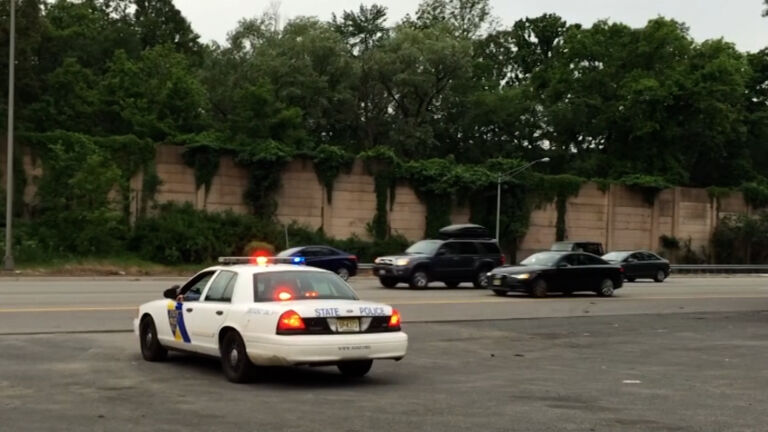
New Jersey Attorney General Matt Platkin on Wednesday confirmed his office has launched an investigation into an eight-month slowdown in State Police traffic enforcement that began almost immediately following the release of a state report showing racial disparities in the motorists that troopers were pulling over.
Platkin has named former U.S. Attorney General for the Southern District of New York Preet Bharara to oversee the investigation.
A recent New York Times investigation uncovered the drastic cutback in enforcement, which appears to have also coincided with an increase in fatal traffic accidents. In a statement, Platkin said he is “deeply disappointed that [State Police’s] well-deserved reputation for serving the public good has been tainted by the alleged and unprecedented slowdown in State Police traffic enforcement from approximately July 2023 to March 2024.”
It’s not the first time the State Police department has come under fire in recent years. The agency spent much of the 2000s under a consent decree with the U.S. Department of Justice because of alleged racial bias following a 1998 NJ Turnpike shooting incident; troopers opened fire on three Black and one Hispanic man during a routine traffic stop.
James Gerrow was New Jersey’s deputy attorney general at the time and appointed as special prosecutor in that case. In an interview with NJ Spotlight News, Gerrow said, “twenty-six years after the Turnpike Shooting Incident … some things apparently remain the same.”
“I think the major problem with the State Police is a lack of diversity … You’re talking really about an organization that’s composed of white males,” said Gerrow. “Back in the 90s there was essentially institutional racism. It was carried on by the road troopers. And it was not in any way challenged by those who were supervising it. But what I’m seeing now is that when you have a group composed of white males, we all have to recognize, and law enforcement has been trained on this, you have to recognize our implicit bias, that is our unconscious bias.”
“And what I’ve seen from that report that gave rise to the troopers deciding not to write tickets, not to engage with motor vehicle stops is precisely that, that this white organization implicit bias is there. And unfortunately, it’s coming out in their motor vehicle stops and searches.”