
Parents are now able to pull their children out of classroom lessons they find religiously objectionable, after the U.S. Supreme Court ruled in favor of parents this summer.
The 6-3 opinion issued in Mahmoud v. Taylor said parents can take their children out of a class when the classroom material interferes with the religious upbringing of their child. Some parents have already sent requests to their school district to do so, according to a school board attorney.
The ruling only pertains to the right of parents to pull their children out of class. It does not place any limits on what can be taught in schools, attorneys told NJ Spotlight News.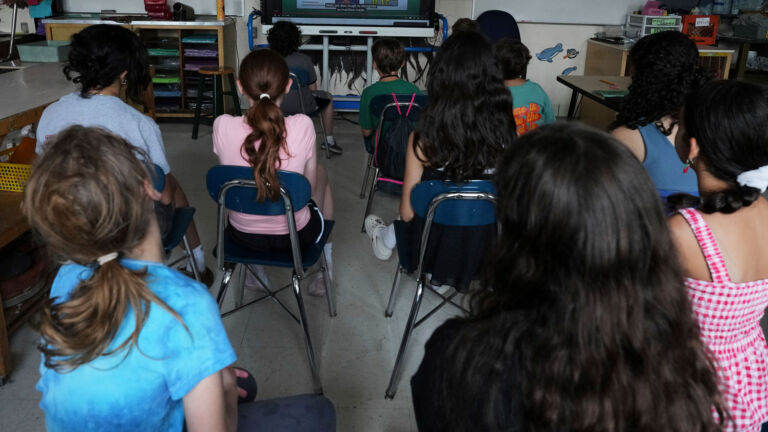
The Supreme Court ruling is just one instance of the ongoing debate over when parental rights can override school policy. Another lawsuit reached federal appeals court after a Hunterdon County father sued Delaware Valley Regional High School for complying with his child’s request to be called by a male name and pronouns and not tell the father. The court has yet to schedule a hearing.
NJ Spotlight News’ education and child welfare writer Hannah Gross discusses both court cases and what they mean for students, parents and school employees. This interview has been excerpted and lightly edited.
Briana Vannozzi, anchor: Hannah. Good to see you, as always. So what do we know about how this ruling is affecting school districts on the ground? Is there a surge? Are things pretty much status quo? What’s happening?
Hannah Gross: So far, based on conversations with school board attorneys, it seems like things are pretty status quo. There have been a few opt-out requests that have come in so far, and they’re expecting an increase as the school year goes on. But so far, it’s not overwhelming for districts.
BV: And maybe as more parents learn that they have this option now or that it’s available, more broadly available.
HG: Exactly.
BV: What do they have to do, a parent, in order to be granted that opt-out. Is there paperwork? Do they need to provide some type of detailed reasoning?
HG: They would need to reach out to the school district and explain which specific parts of the curriculum go against their religious upbringing of their children. So you can’t say, “I broadly object to [them] being taught about gender in schools.” You have to be a little bit more specific than that, is what the attorneys I spoke to have said.
Some districts are coming up with protocols or forms that families can submit, especially if they’re in an area where they know there’s a big religious community and they’re expecting a lot of people to opt out.
BV: I imagine that the school attorneys are working with those districts now pretty closely. Do we have any example of what that looks like, the forms or what type of information, proof they have to submit?
HG: There’s not an across-the-board requirement. It’s going to depend on the district, how they handle it, but the attorneys are advising that some higher-up administrators are the ones making these decisions who have some sort of legal background and are in touch with the school board attorneys. So it’s not just classroom teachers who are deciding when is a valid time to opt out and when is not.
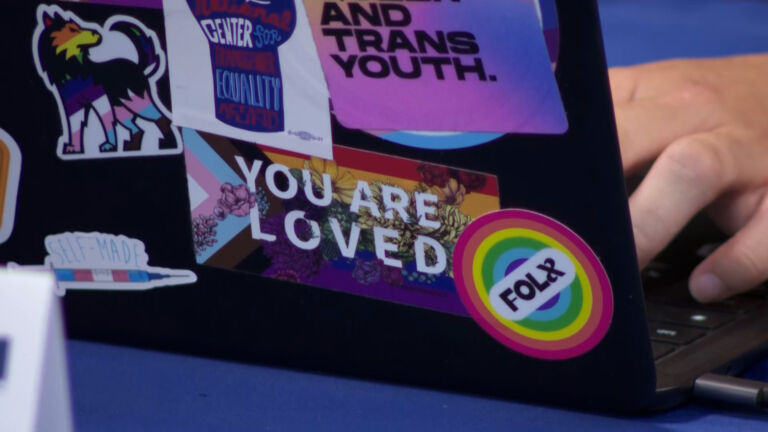
BV: I do want to clarify, though, this ruling does not ban the teaching of LGBTQ-inclusive curriculum. Is that right? That’s still required under New Jersey state law.
HG: That’s correct. The ruling has no influence on what’s taught in schools. It really only relates to a parent’s right to opt their kid out of certain lessons, but the lessons can continue to be taught. And in New Jersey, we’re actually required to have an LGBTQ-inclusive curriculum under a 2019 law that requires information about LGBTQ people to be taught across different classes and subjects.
BV: I’m curious, though, whether or not there could be other implications. Of course, as you said, it doesn’t affect what’s being taught, but is there a factor here where teachers could maybe scale back some of the teachings in order to avoid backlash or maybe school districts make that decision, particularly in communities where they know it’s a hot button issue?
HG: It’s possible. And some advocates I spoke to did express that concern. And something we’ve seen with recent challenges to books [is] where some districts might decide just, “Oh, we don’t want to include this book as a required reading” or “We’re going to pull this from the library on our own.” So there is a concern that teachers or districts might scale back or at least limit this information to certain class periods or units to make the opt-out process more seamless and less disruptive to the school day.
BV: But it sounds like overall, it’s still a bit of a hurdle that a family would need to go through in order for their child to get this opt-out permission, which maybe depends on the district as well.
All right, let me switch gears quickly, because we’ve been talking a lot about the 5756 policy. This all plays together in terms of the broader parental rights movement and who exactly has jurisdiction, whose rights supersede others.
You’ve been covering and we’ve been following a case out of Hunterdon County, a father who sued the Delaware Valley Regional High School about his daughter, who chose to use male pronouns in the school. The school did not notify him. Is this the type of ruling from the Supreme Court that could have any play there when it comes to parental rights overall? Walk us through that.
HG: So the Supreme Court ruling really deals specifically with parents’ rights to opt out of classroom materials. It wouldn’t influence whether a parent can opt their child out of referring to a student with their chosen pronouns or referring to them by a name or using a certain bathroom or even including Pride Month messaging during the school year. That’s all outside of the scope of the Supreme Court ruling.
BV: What about the state law in terms of an individual’s rights, a parent’s rights? I mean, what do we know based [on] what’s played out from this lawsuit? And there are others?
HG: I mean, both of these cases are dealing with kind of the same question about when do parental rights or the rights of a parent over their child’s upbringing supersede or how do they interact with school district policies and the education of all of the kids in school.
BV: What are you hearing as you talk to superintendents, advocates and parents? You know, this is a new school year and [in] a lot of cases it’s going to be a very different school year for some of those reasons that we mentioned. But what are they saying about all this? Because last year you covered a lot of Board of Education meetings where things were just flying off the handle. Is that what we expect moving forward?
HG: Even with all of the changes at the federal level, the superintendents I’ve spoken to say their commitment to students remains the same. They have to follow the New Jersey Law Against Discrimination and look out for all students and make sure they get the education that they’re entitled to under the law. So none of that should be changing.
BV: Of course, we have a governor’s race coming up in November, a new governor who will be taking the helm. Room there for any of this to change?
HG: Anything’s possible. … We have two candidates with different stances on education and parental rights. And it will definitely be interesting to see how that plays out in terms of the state school board and the Department of Education at the state level.
