
Border Dispatches: Despite terrors, some joy in Ukraine drive
Jersey driver shuttles donated supplies and a truck through sprawling farmlands
Before I left New Jersey for Ukraine, the people I’m representing here warned me not to drive in the war-torn country, especially alone. Frequent military checkpoints, detours off wrecked roads and bridges, unreliable internet, wide cellphone dead zones, and unexploded munitions and mines might get me detained, lost, or worse, they said. Not to mention fuel prices.
My second day here, I rented a car, which has taken me and Ukrainian volunteers on runs to bombed-out towns and villages and refugee centers with a trunk full of food and household items for the civilian victims of Russia’s scorched-earth war tactics, and to remote military outposts with medical and other supplies.
Then last week, I was asked to deliver a vintage heavy-duty Mitsubishi Shogun to soldiers at a base near Poltava, 200 miles from Kyiv, but the proposal came with two questions.
Would I do it alone?
And could I drive a truck set up for British roads, with the steering wheel on the right, the gear shifter on the left, and the gas, brake and clutch pedals reversed?
I said yes to both (I once drove a compact car through England), and this became a full Jersey operation. We filled the rattly truck with supplies, mostly donated by the Ukrainian American Cultural Center in Whippany, which also financed the purchase and transportation of the truck, and off I went.
The first test
The first test was a sharp descent down a gapped cobblestone street in Kyiv, in which the truck’s rock-hard suspension transferred the bumps to my spine and bones. But at least the brakes worked under the tonnage of the overloaded vehicle.
The five-hour trip took me through the endless fields of Ukraine’s breadbasket under the infinite skies of the country’s flat lands.
Then, on some of the back roads, packed dirt streets were wash-boarded and pitted with large potholes. This was especially true where bridges had been blown up and temporary wooden bridges were built in their place.
And that was it. Other than that, the trip was easy. And I feel guilty saying this considering Ukraine’s circumstances — but I’d even call it fun.


Before I handed the truck to four Ukrainian soldiers in Poltava, the five-hour trip took me through the endless fields of Ukraine’s breadbasket under the infinite skies of the country’s flat lands. Miles of radiant sunflowers, tall corn, swaying wheat, pine forests, and dark, rich, tilled soil painted the landscape in tones of yellows and gold and greens and brown.
The country’s black soil is as fertile as Iowa’s, and its farming technology is world-class. It’s 141,000 square miles of farmland is second in acreage only to the United States, according to the country’s agricultural website.
Fertile plains
The U.S. Department of Agriculture calls Ukraine “one of the world’s top agricultural producers” and says it “plays a critical role in supplying oilseeds and grains to the global market.”
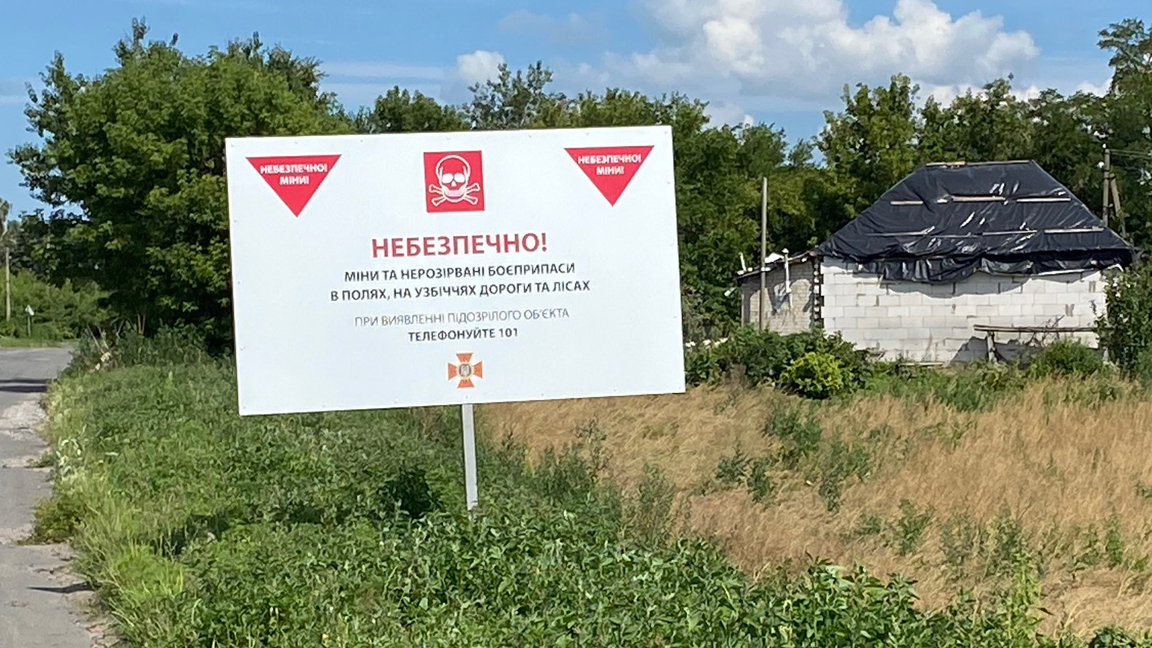
Signs warning of booby traps and mines left by retreating Russians are every few miles along the road to Poltava.
The USDA’s Foreign Agricultural Service says 60% of the country’s land mass is farmable, agriculture employs nearly 15% of Ukrainians and Ukraine’s agricultural exports totaled almost $28 billion — the greatest bulk by far of the country’s $68 billion in total exports.
These statistics are from 2021, before Russia’s unprovoked invasion and explain Russia’s five-month blockade of Ukraine’s export shipping lanes around Odesa — which seems to be resolved for now — and their harassment of farmers and destruction of farm villages in formerly occupied lands and battlefronts.
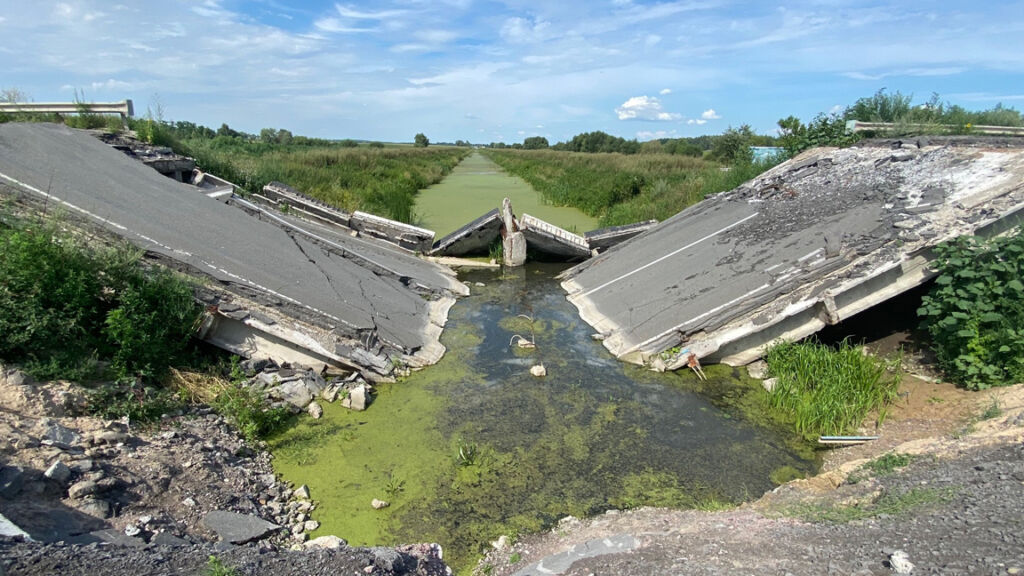
A blown-up bridge over the Supiy River on Highway HO7 in Novyi Bykiv, one of hundreds of rural villages bombed in the Russian attempt to invade Kyiv early in the war
Signs warning of booby traps and mines left by retreating Russians are every few miles along the road to Poltava and other places. Grain storage plants were destroyed, as were the bridges that were critical to heavy truck transport.

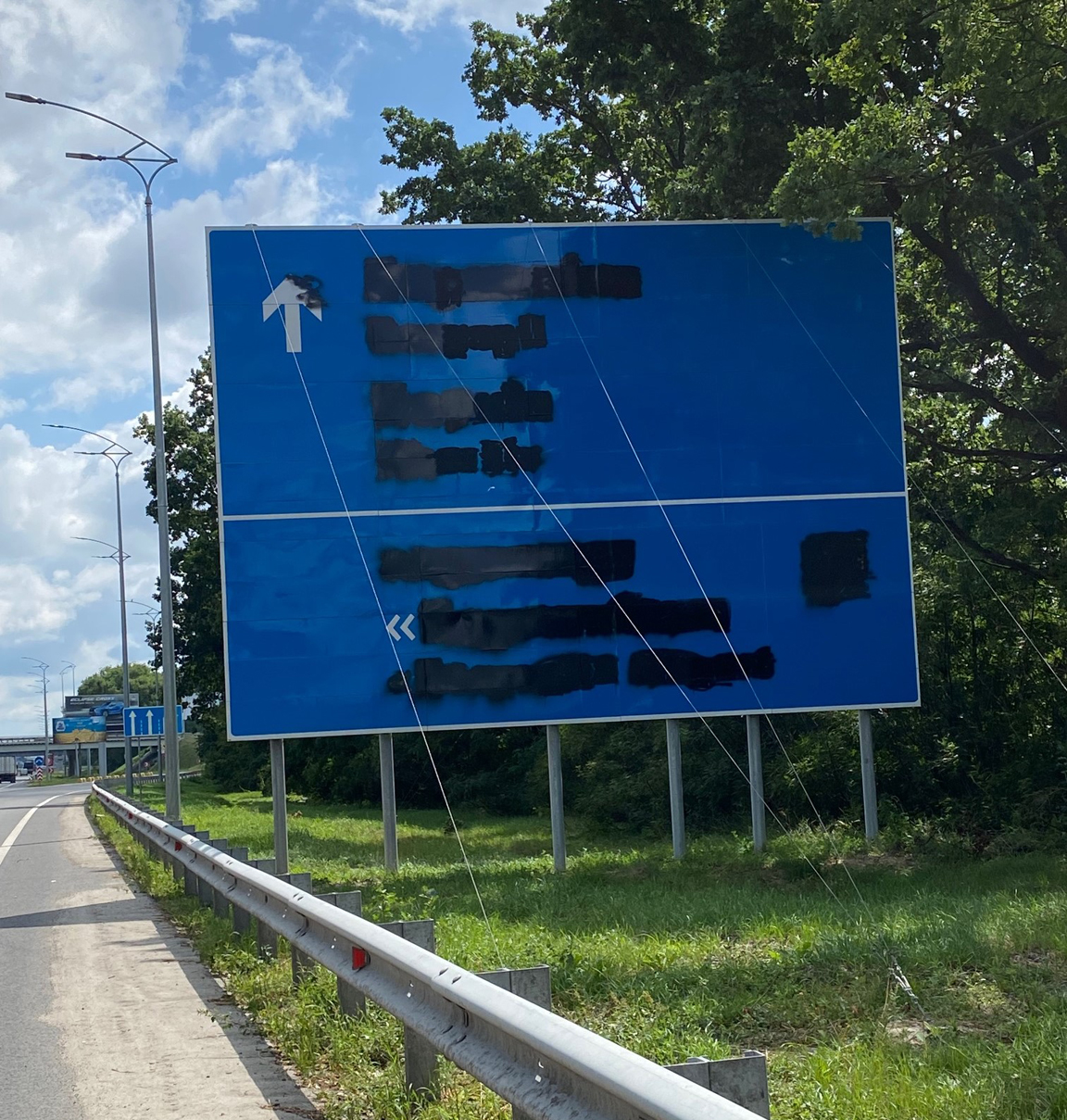
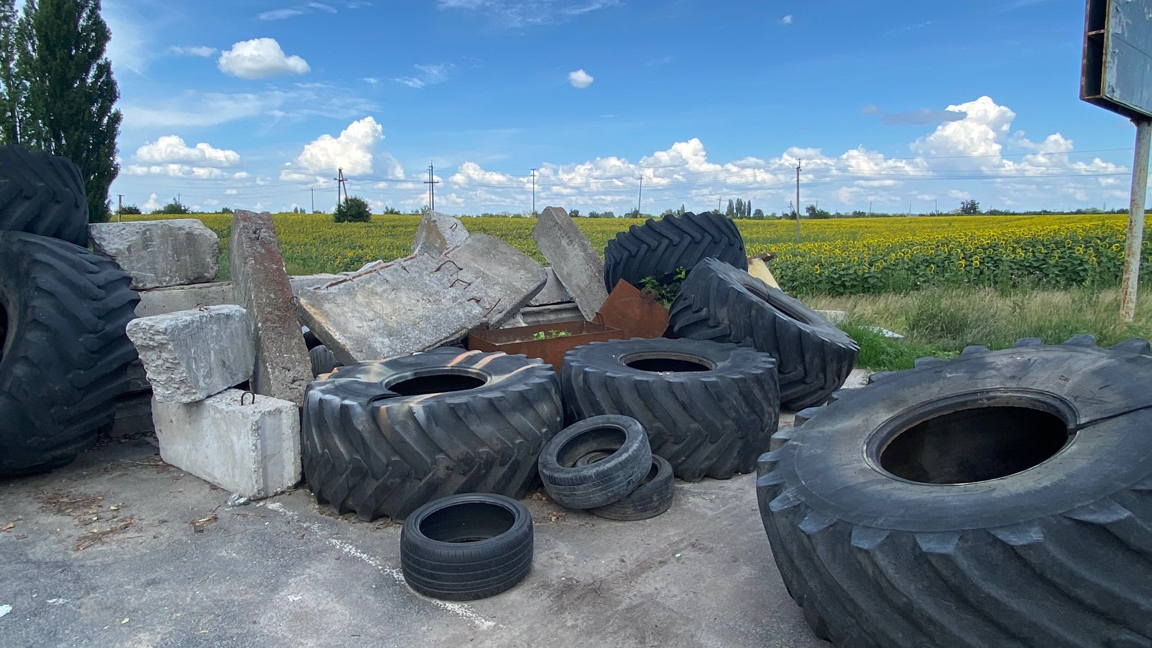
Ukrainian farmers responded with homemade blockades of cement blocks and tractor tires, while large agriculture industries brought in anti-tank hedgehogs and placed them on access roads. Fuel for their equipment is more expensive, markets are uncertain, but the tractors and combines are running in the fields, equipment dealerships are open and trucks carrying harvests, seeds and fertilizers dominate the regional back roads that connect industrial farms with large highways, some of which still have blacked-out signs to confuse the Russians.
In all that, there is the same beauty of resilience as nature’s crops, which continue to grow strong on war-torn land.
— All photographs courtesy of Mark Di Ionno. The cover photograph shows anti-tank “hedgehogs” along route MO3, protecting Ukraine’s sunflower, corn and wheat processing plants and silos.