Election profile: 15th Legislative District
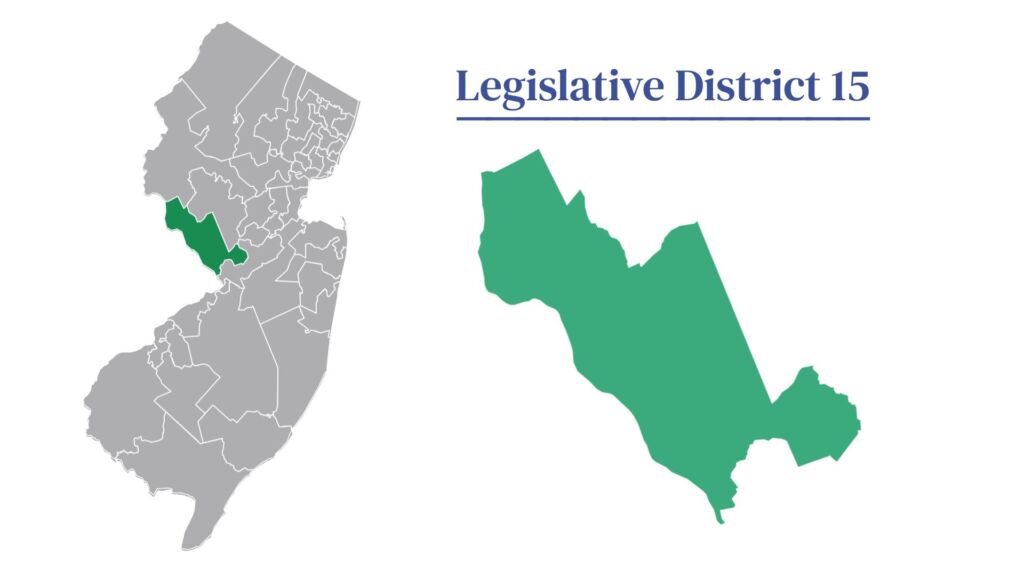
New Jersey’s 15th Legislative District, which includes the state capital, changed slightly after last year’s redistricting. In addition to Trenton, it includes Ewing, Hopewell borough and township, Lawrence, Pennington and West Windsor in Mercer County and Delaware, East Amwell, Frenchtown, Kingwood, Lambertville, Stockton and West Amwell in Hunterdon County.
The district’s registered voters are largely Democrats, about 48%, with just 15% of registrants identifying as Republicans. Most of the rest are unaffiliated.
All three incumbents are Democrats and are seeking reelection.
Sen. Shirley Turner is in her seventh term in office and recently retired from Rider University, where she served as director of career services. She faces Republican Roger Locandro, a business owner and former mayor of Delaware Township.
Democrat Assemblywoman Verlina Reynolds-Jackson, who formerly worked for the state Department of Community Affairs and the Mercer County Board of Social Services, and Assemblyman Anthony Verrelli, leader of the Carpenters Local 254 Union, are running for reelection. Just one Republican candidate filed: Michael Hurtado, who works for the Mercer County New Jersey Improvement Authority.
Editor’s note: All candidates for state legislative seats were contacted multiple times for the NJ Decides 2023 voting guide Q&As. Click on a candidate to see who responded and any answers provided. More information about the project, including the full text of the questions, is available here.
The candidates
SENATE
Age: 82 Hometown: Lawrence Twp. (Mercer) Occupation: Legislator Personal background: I was born and raised in Dover, New Jersey, before relocating to Trenton to attend The College of New Jersey, formerly known as Trenton State College. I have lived in Mercer County ever since. I am a first-generation college graduate. I earned a B.S. in education from Trenton State College and an M.A. in guidance and counseling from Rider University, formerly known as Rider College. I completed my doctoral credits in education (ABD) at Rutgers University. I worked as a health and physical education teacher in the Trenton school district before being hired by Rider College. There, I worked as the Educational Opportunity Fund counselor and assistant director to economically disadvantaged youth. I also worked as the associate director and director of career services. I am now retired and work as a full-time legislator. I am married and have two children and five grandchildren. Political background: I was the first African American woman to be elected to the Mercer County Board of Freeholders in the 1980s and was elected as vice president of the Freeholder Board in 1986. I served two terms in the New Jersey General Assembly from 1994 to 1998 and as associate minority leader from 1996 to 1998 before being elected to the New Jersey Senate. I served as Senate president pro tempore from 2002 to 2009. I am the first African American to be elected to the New Jersey Senate in the 15th District and the second African American woman to be elected to the New Jersey Senate. I am the first woman and African American to be elected as Senate president pro tempore. Why are you running for office: I enjoy being of service to our community and state. I have set a standard of excellence in constituent services, I pay close attention to the needs and concerns of my constituents, and I have been an effective voice for them in the New Jersey Legislature and, in particular, a voice for the voiceless. Key election issue: The issue of learning recovery since the pandemic remains an important concern. Remote learning led to declines in achievement, especially in school districts with high rates of poverty. I want to ensure that our state is providing the support that our districts and families need to help our students prepare for college, vocational training or the workforce. My bill, S1373, would establish a three-year pilot program in the Department of Education to support school district programs to increase the length of the school day or year in lowest-performing school districts. I have promoted extended school days and school years for many years to help support student learning, provide teachers with extra time for teaching and to help save parents the cost of after-school care or summer camp. I believe a change to our school schedule is long overdue. School schedules should be better aligned with parents’ work schedules. In most families, both parents work and families are spending a fortune in afterschool care and summer camps. Children from families that cannot afford after-school and summer programs are left unattended and at risk of getting into trouble. Additionally, our taxpayers have spent billions of dollars on school buildings that are underutilized, as our students are in school for only 180 days per year and only five or six hours of those days. Teachers often need to find employment to have income for 12 months out of the year, instead of just nine. By extending the school year, teachers will be able to earn more and not be in the position of supplementing their salaries. Other states have modified school schedules and have lengthened the school year, and I believe it is something that should be considered on a more widespread scale in our state than the just the 20 districts that I have proposed in my bill. However, additional instruction time is especially needed now to support learning recovery, which will prevent losing students altogether and causing greater risk of dropping out, joblessness, poverty, poor health and/or criminal behavior. I am also the sponsor of S1590, which establishes the Extended School Day and School Year Study Commission, which would be tasked with studying the effects of a longer school day and school year on advancing student achievement, enhancing the overall school learning environment and increasing student enrichment opportunities and educational offerings. Example of a successful project: I have been in the forefront of advocating for expanding access to affordable contraceptives to promote non-abortion services and help prevent unwanted pregnancies. I believe that access to contraceptives should be the foremost policy to help women achieve their desired family size. I sponsored the law to require health insurers to cover prescription contraceptives for up to 12 months. Access to a 12-month supply helps prevent gaps in birth control use and makes it easier on women. Continuously paying for a visit to the doctor to renew a prescription is costly and an inconvenience for women who are working and juggling their families and other responsibilities. I then successfully passed legislation to permit pharmacists to dispense self-administered hormonal contraceptives to help make it easier and less costly for women to access contraceptives. I am proud of the work that I have accomplished to reduce barriers for contraceptive access and to ensure that women’s reproductive and health care needs are included in our policy making decisions. Example of a challenge faced: I learned a lot from my first political fight when I was a Mercer County freeholder in the 1980s. Before the phrase “environmental justice” became popular, I fought along with my running mate the late Anthony Carabelli, to oppose a garbage incinerator from being built in a neighborhood in the City of Trenton. At the time, the project was supported by the suburban members of the Freeholder Board and county executive, the Chamber of Commerce, the editorial boards of both major newspapers, the trade unions, and all of the mayors in Mercer County, except Trenton Mayor Holland, so we felt very much like lone soldiers. The project would have been a white elephant, bringing huge trucks with garbage through Trenton to burn at the facility located in a densely populated municipality in Mercer County that would have been subjected to toxic pollution. The city was selected because the home values were low, and the project would have cost millions of dollars that would have been wasted spending. The freeholders traveled to Vienna to learn about recycling and as an alternative to the waste incinerator, we recommended that we do more recycling rather than create more pollution. We remained consistent in our position and were unwilling to support the project; as a result, the Freeholder Board did not have the votes needed to approve the project in Trenton. My position cost me reelection. I put people over politics and have no regrets. The experience taught me that you should always follow your convictions, even when you are the only one on that path, and that experience has informed my actions and leadership through the years. On NJ’s gun laws: I am proud to have voted for legislation that has made New Jersey gun laws among the strictest in the country. I would not change our gun laws. However, as long as gun laws in other states and at the federal level remain lax, it is too easy for individuals to purchase guns and bring them across our borders. Our federal background check system needs to be improved with the use of universal background checks. States must report individuals who cannot legally possess a weapon due to crimes or mental illness to ensure that federal background checks are returning accurate information. We must also do more to change young attitudes about the use of gun violence to resolve conflicts and strengthen our mental health system. On the Murphy administration’s climate change proposals: I support efforts to combat climate change, but I am concerned that some decisions are being made from a place of privilege and not a real understanding of the financial hardships and other challenges that our residents and businesses are facing. The high cost of electric vehicles make them unaffordable for low-income and middle class individuals and families. Depending upon the level of electric vehicle, homes may need upgrades for special charging equipment, which is another added cost. We do not have the infrastructure in place to support vehicle charging, including at multiple dwelling developments. We do not know how this type of rule will impact existing businesses or our ability to attract new businesses to our state. Additionally, I am concerned that the cost to replace the battery of an electric vehicle will create another financial strain for people who cannot afford the high cost of a battery. China dominates electric vehicle battery technology and it would be wise to first diversify our supply chain and also ensure that we are not undermining U.S. manufacturers and jobs. I believe that these issues need to be carefully considered before our state issues a ban on gas-powered vehicles. The more we depend on electric vehicles and appliances, the greater the risk that our residents will be impacted by a major outage attributed to a weather-related event. I believe that consumers should still have the option for a hybrid vehicle at the very least and that we should continue incentivizing the purchase of electric vehicles. We may need a program to help lower-income individuals with the upfront costs of purchasing an electric vehicle or generators during power outages. We should continue developing the infrastructure to support electric charging. We need to ensure that our utility companies have solid emergency response plans for restoring electricity, which is already a problem for many communities during weather-related events. On housing affordability and property taxes: The New Jersey Legislature has taken great strides to reduce property taxes and provide more relief to homeowners and tenants. The Homestead Credit was replaced by the ANCHOR program and provided relief to both homeowners and tenants. Under the ANCHOR program, property tax relief increased by 625% in the 15th Legislative District. We also expanded the income eligibility for the senior freeze program from just under $100,000 to $150,000 to allow more senior citizens to freeze their property taxes and be reimbursed for any increase in property taxes they may incur. Finally, we passed the StayNJ program to reduce property taxes by 50 percent for eligible homeowners beginning in 2026. We still need to do more to help make it more affordable for businesses and renters in New Jersey. Since 2000, I have sponsored legislation to allow for a state constitutional convention to reform New Jersey’s system of property taxation. My goal is to make our state more affordable by reducing taxes and reforming the way we pay for schools and government services. We need to be less reliant on property taxes as a form of revenue to pay for education and government. We need a fairer and more progressive form of taxation and we need to consolidate towns and school districts to help reduce taxes and rent. I am the sponsor of S934, which establishes guidelines for creditworthiness determinations concerning affordable housing programs. When a renter has an opportunity to live in an affordable unit, where their rent would not exceed 30% of their income, they can be denied due to poor credit. Many times, individuals and families have been paying market rate rent that is unaffordable, thus creating a situation that negatively impacted their credit. The chance to pay affordable rent would provide the financial relief they need and also lead to significant social benefits; I do not believe it is fair to penalize someone by denying them the opportunity to live affordably. The bill will make affordable housing available to more individuals and families. I also support incentivizing homeownership, especially in high-poverty communities that need more owner-occupied housing to improve the stability of the neighborhood. My bill, S944, establishes the “Police Officer, Firefighter, Public School Teacher, Corrections Officer, and Sanitation Worker Home-Buyer Assistance Act.” The goal is to encourage certain public safety workers and other municipal employees to live in the communities they serve by providing downpayment assistance with 0% interest that would be forgiven at a rate of 20% over five years. The presence of public safety workers would help to improve the safety of neighborhoods, improve the connection public safety officers have in community, and provide positive role models for our children. I am also the sponsor of S3002, which establishes the Residential Property Repair Program, to allow low-interest loans to homeowners or prospective homeowners to fix homes that are in disrepair and make them livable as the applicant’s primary residence. The bill uses existing housing stock to create affordable housing that is decent, safe and secure.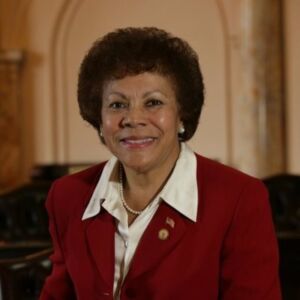
Age: 60 Hometown: Stockton Occupation: Owner/Manager of a geothermal/net zero mechanical company and a large tree nursery Personal background: I was born and live in Stockton, New Jersey. Local schools up through a B.S. in agricultural economics, continued graduate studies in natural resource and environmental economics. I just completed a master’s degree in public administration (MPA) (Pi Alpha Alpha). I have farmed continuously throughout my life – general, vegetables, honey, beef, turkeys, chickens. I milked up to 150 cows, and worked on a dairy grain farm. Started a tree moving company to pay for college. Created a large tree nursery and tried organic grain and poultry for several years. Simultaneously created a construction company that specialize in geothermal, and net zero construction with solar. I also have a master HVACR license, registered municipal clerk, certified public works manager, qualified purchasing agent and affordable housing professional certification for New Jersey. Political background: I started volunteering on the Shade Tree Commission, then the Environmental Commission. I have been on two Municipal Utility Boards and the Planning Board. I was elected to two terms on the Township Committee, two terms as deputy mayor, two terms as mayor, police commissioner. I currently sit on the Board of Trustees at Raritan Valley Community College as the vice chair and finance committee chair. Why are you running for office: I am tired of the stalemate, one party rule of Trenton. The residents’ and taxpayers’ needs are passed over. The Clean Energy Fund is raided, funding is misappropriated. Tax credits are given away to foreign companies. Key election issue: Building back the economy, balancing education costs with outcomes, creating environmentally sound solutions. Education, the economy and the environment are all blended together in a successful, productive New Jersey. We need to focus on educating our youth, adults returning for training and continuing education to be productive members of society. The more members we have contributing to society, the faster the economy grows. There is a tremendous opportunity in the environmental field, there are up to fivefold reductions in energy usage in sourcing heat pumps through ground source applications. Customer-based solar reduces the need for grid expansions. There are square miles of undeveloped roofs in agricultural facilities that would support micro grids of solar production and alternate revenue streams for farmers. Example of a successful project: When I entered the Delaware Township Committee, the Police Department operated out of a trailer. During my terms we built a police facility. I always champion workforce development at RVCC. As a group, we are doing great things there. While others are discussing clean energy, I build net zero homes, I actively convert homes to Home Performance homes. I have written grants, balanced budgets, managed a community through Superstorm Sandy and two other tropical storms and floods. Example of a challenge faced: I am in the biggest challenge of my life. I am learning how to navigate my world from an electric wheelchair. I have adapted my world to be ADA functional. I have always been a champion for access. On NJ’s gun laws: Laws need to address criminals, not law abiding citizens. On the Murphy administration’s climate change proposals: NO. The math is wrong and the timelines are impractical. If they were sincere, no group would be allowed to raid the Clean Energy Fund. Even California is admitting the solutions are at the customers’ site or close to it. Micro grids need to be developed, every large agricultural and commercial rooftop should be explored for solar, every mill race needs to be explored and developed for hydra-electric. Where gas lines cross electric lines, there can be small clean natural gas generators. Most of New Jersey’s electrical generation is either gas or nuclear. It is cheaper and easier to convert to ground source heat pumps. These units provide up to five times reduction in energy demand. No grid expansions, reduction in solar field sizes at the use. What would I do differently? I’d vote no. I think it is bad form for the governor’s former employer to be in charge of the stocks and bond sale for the company installing the wind farm. I would also review the damage to marine life. Not reviewing it is morally wrong. On housing affordability and property taxes: You have to go back to the source. Rent, housing and property taxes are high because school costs are high. Converting schools to solar and geothermal would be a reduction in physical costs. Society determines what level of service is required. From that, those involved must attempt to provide it economically. Originally the state income tax was imposed to help fund school costs. It is a spending crisis. Final thoughts: I believe I bring a unique blend of business and policy background, with a good foundation of math, economics and education. The taxpayer, the environment and education can thrive.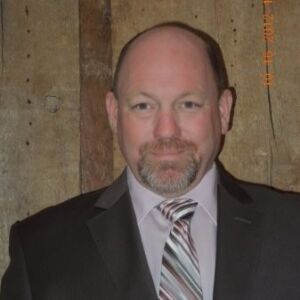
ASSEMBLY
Age: 59 Hometown: Pennington Occupation: Retired Personal background: Assemblyman Anthony S. Verrelli has been committed to helping other people his entire life. An unapologetic advocate for New Jersey’s working-class families, he believes that everyone deserves a second chance and an opportunity to succeed. Raised in Trenton and Lawrence by Italian and Scottish immigrants to the United States, graduated from Notre Dame High School before attending the Sam F. Secretario Carpenters Training Center. Anthony became a member of the United Brotherhood of Carpenters & Joiners of America in 1989 and remained a union member for over 35 years. Anthony has been a proud member of the Hopewell Township Knights of Columbus since 2010. Anthony; his wife, Donna; his daughter, Alyssa; and his parents, Georgina and Freddie, live in Pennington, and Anthony’s brother, Ronnie, lives in Ewing. Political background: Anthony served on the Mercer County Board of Chosen Freeholders (now called County Commissioners) from 2016 to 2018 and has served the working families of the 15th Legislative District in the New Jersey General Assembly since August 2018. Assemblyman Verrelli is chair of the Assembly State & Local Government Committee, vice chair of the Assembly Labor Committee, vice chair of the Assembly Community Development & Affairs Committee and a member of the Assembly Special Committee on Infrastructure and Natural Resources. Why are you running for office: I’m running for office to continue the work that I’ve been doing my entire life. Before I was in office, the issues of worker’s rights, improving access to mental health services, addiction/recovery treatment (particularly with the ongoing opioid crisis), and ensuring that people leaving incarceration are given a fair chance at success were still at the forefront of my mind. Furthermore, as we see an evolving labor landscape in New Jersey and throughout this country, we must also ensure that working people have protections that allow them to work safely and with dignity. All of these issues are about improving the quality of life of every resident in New Jersey, whether in my district or not. Key election issue: As I stated above, New Jersey is a state that must be uniquely bold in approaching the challenges that it faces. As the most densely populated state in the country, we have to be. The cost of living is the biggest issue on everyone’s mind, but that cost isn’t just dollars and cents. It’s the cost of the opioid crisis plaguing our communities. It’s the cost of dwindling access to mental health services. And it’s the cost of residents needing legal protections to protect their jobs and livelihoods. These issues are a “cost” of living, and we must address them all from that perspective. Throughout the current legislative session, I have put much effort into pushing forward bills that tackle the issues above. These include A3672, which seeks to eliminate obstacles to harm reduction programs; A3674, aimed at establishing a special probation drug court; AR186, to raise awareness about the dangerous effects of the drug xylazine; and the ANCHOR program, which provided historic property tax relief for over 1.7 million New Jersey residents. I also introduced and sponsored A4772, which grants striking workers access to unemployment benefits, allowing them to advocate for better working conditions. Example of a successful project: As a carpenter by trade, I’ve completed many projects throughout my career, and I’m proud of those successes. As a legislator, navigating a bill from introduction to the governor’s desk for their signature can be best described as the most important project I work on. My legislative work has been successful throughout my term, and there’s no better example than A4772, the UI Strike Bill. This first-in-the-nation bill enables striking or locked-out workers to receive unemployment benefits two weeks into their struggle. If the company hires replacement workers, those benefits start immediately. In a time when workers across America are exercising their collective bargaining rights, this bill could not be more necessary. It required extensive research, conversations with stakeholders, time, and care from introduction to signing. Proudly, it was signed and is now law. And this new law has already helped striking workers to pay their bills and feed their families. Example of a challenge faced: Entering the New Jersey General Assembly as a newly elected assemblyperson is an incredibly challenging experience. To be successful, one must be willing to listen to and learn from those who have come before them. Being a quick learner is crucial, as is being open to having your opinions challenged and being willing to change them. Most of these skills I developed as a carpenter. There was always something to learn from somebody. It’s about serving others and not yourself. On NJ’s gun laws: I’ve always supported sensible gun reform, and the proof is in the legislation I’ve supported. One such example is S3150, which establishes strict-liability criminal penalties for firearm trafficking that results in injury or death. Law enforcement from across the state and Gov. Phil Murphy supported it as a tangible policy that will hopefully stem the tide of gun violence in New Jersey. On the Murphy administration’s climate change proposals: I do. The movement toward a greener future in New Jersey has been steady, fueled by job growth. My labor endorsements exemplify that. Climate change is real, and we can simultaneously boost our economy and greenify our communities. They’re not mutually exclusive. These policies improve the quality of life of all New Jerseyans through a cleaner world and good jobs. I’m proud to support that mission. On housing affordability and property taxes: The issue of housing affordability (whether it be rent, property taxes or anything else) needs to be addressed in more than one way. That is to say, there is no single fix. During my term, I’ve worked diligently to ensure that the new housing we’re building is of a high quality, whether it’s market rate or affordable. I’m pushing for A669 to make getting rental housing easier for people with mixed credit histories. I’ve also protected current residents from being priced out of their homes and neighborhoods. Programs like ANCHOR (which includes renters), the senior property tax freeze program, and Stay NJ all work toward that aim. And I’m proud to have voted in favor of those programs because they’ve made a tangible impact on the residents’ bottom line, and that’s where it counts.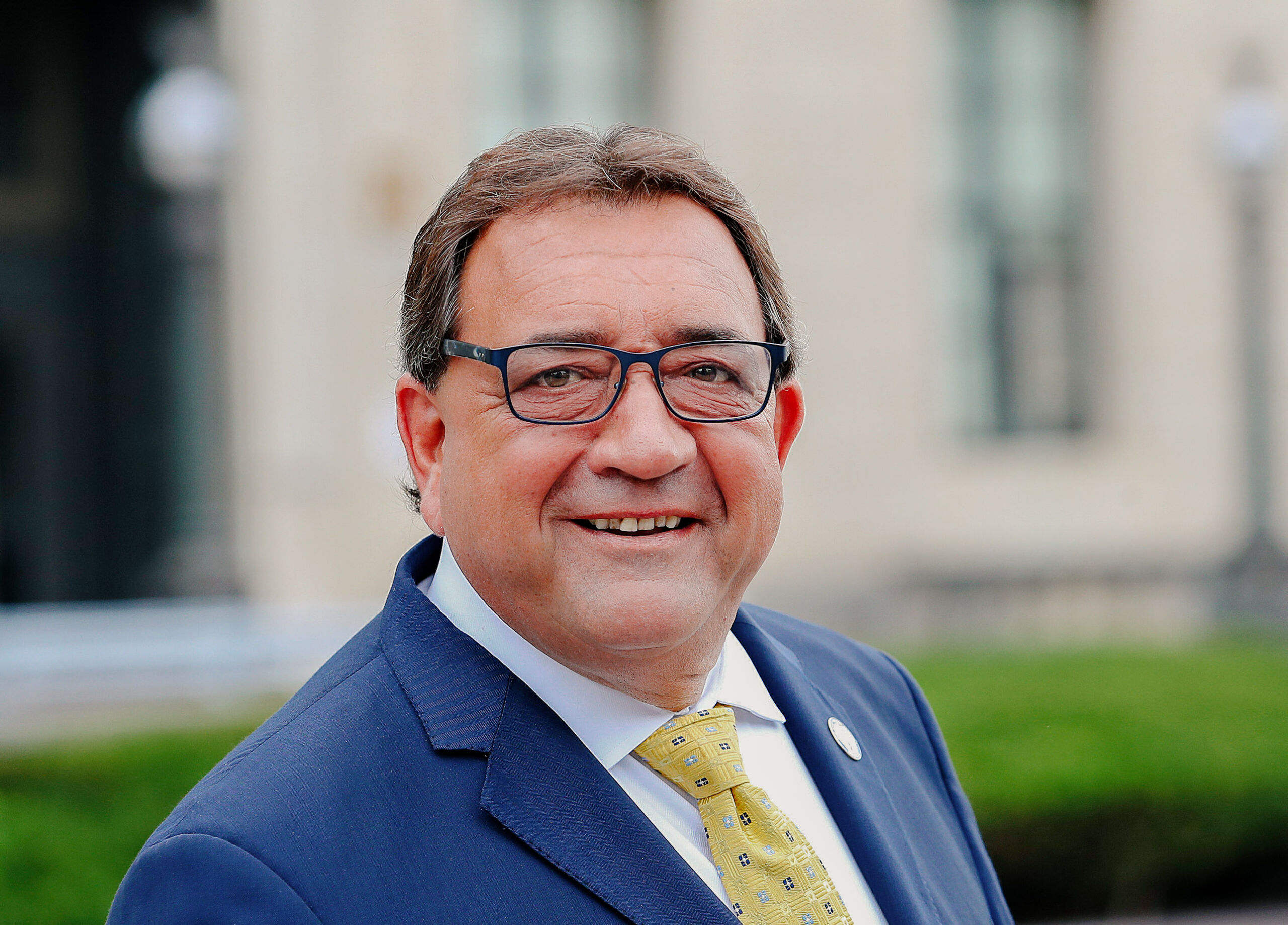
Age: 23 Hometown: Trenton Occupation: Cashier Personal background: First generation American on my father’s side (from Colombia), fourth on my mother’s (from Italy). Born and raised in Trenton. Graduate of Mercer County Community College, currently in my senior year at Kean University studying public administration and political science. Parking lot attendant and cashier at the Cure Insurance Arena in Trenton. Candidate for Pi Alpha Alpha and Pi Sigma Alpha honor societies. Member of the Knights of Columbus and the Italian Sons and Daughters of America. Political background: Currently a member of the Mercer County Republican Committee, vice chair of the Trenton Republican Committee, member of the New Jersey Young Republicans State Committee, and chair of the New Jersey College Republicans. Previously ran for Mercer County commissioner in 2021 and managed the successful campaign of Jennifer Williams for Trenton City Council. Why are you running for office: New Jersey needs lawmakers with a new vision, people who know intimately the challenges of life in this rapidly changing economy. For too long our state has been hemorrhaging people and talent. We spend so much educating our children only for them to begin life in another state while those entering retirement do so in another state. New Jersey needs a class of lawmakers not beholden to any particular ideology or political style, we need lawmakers concerned with improving life for our people. Key election issue: School funding, moving away from a property-tax-based formula. It’s unfair to urban schools and keeps property taxes among the highest in the country. Solutions include combined school districts with more streamlined administration as well as increasing aid to public schools from the state budget. Example of a successful project: Managed the successful city council campaign for Jennifer Williams, the first openly trans person elected to a municipal council in New Jersey. Assisted in the founding and operation of the Students Against Animal Cruelty club at Kean University. Example of a challenge faced: Getting my degree. While at Mercer I became homeless during the COVID pandemic. I’ve also had to commute every single day to Kean University from Trenton on NJ Transit. I’m very fortunate to have my tuition covered by grants but books, transportation, food and costs at home have made it tough. Nevertheless, I’m committed to getting my bachelor’s degree. On NJ’s gun laws: I’d have to study this issue more carefully but so far the right to bear arms has been protected in New Jersey while also ensuring that we are among the very lowest in gun-related crime. On the Murphy administration’s climate change proposals: Not entirely, I remain opposed to the construction of wind turbines along the shore. On housing affordability and property taxes: Changing our school funding formula will help lower property taxes. For those who hope to own their own home, creating an economy with high-paying jobs and dynamic careers will help people gain a better footing to someday own their own home. For renters, lowering property taxes will also help them. 
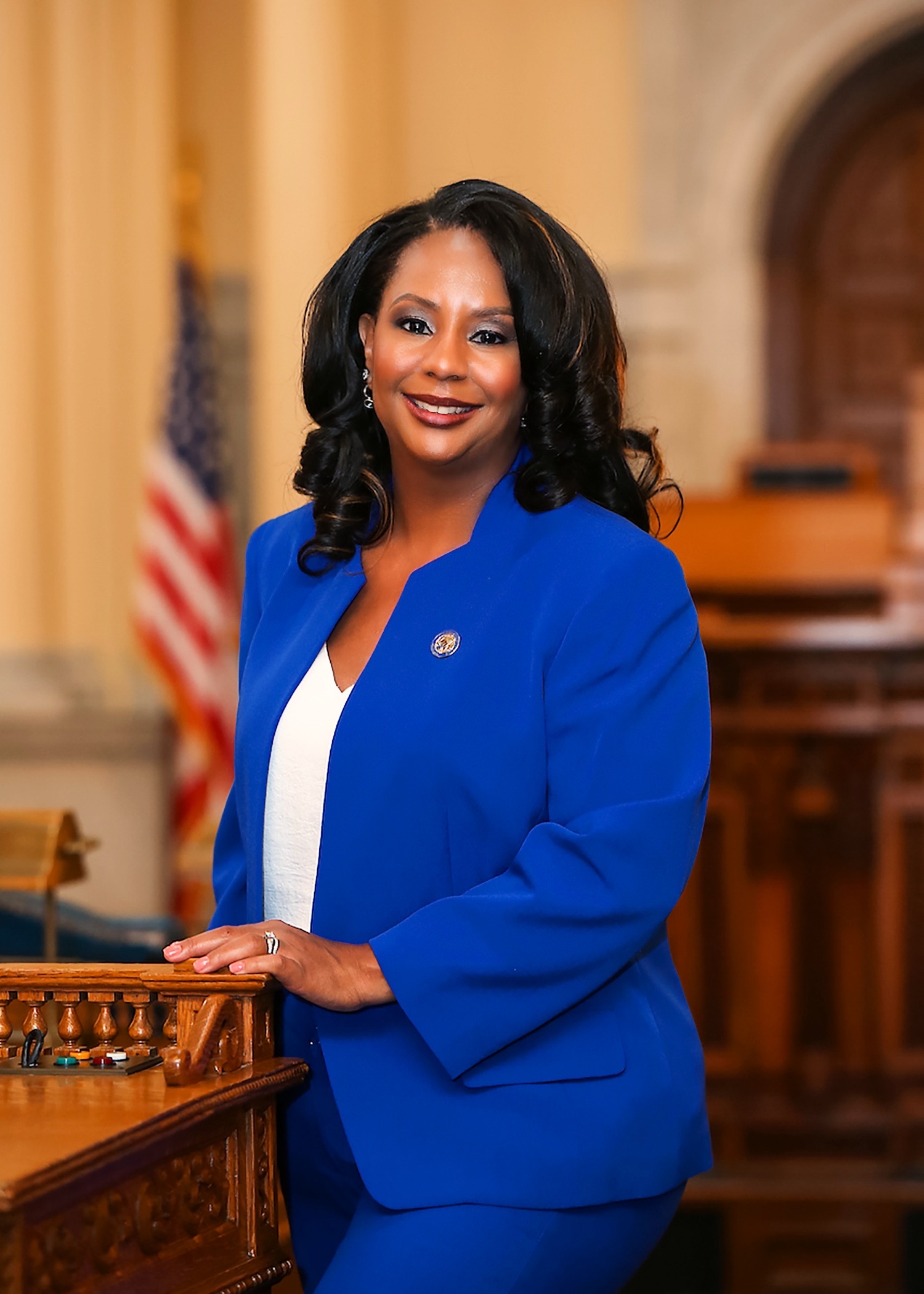
Age: 52 Hometown: Trenton Occupation: Grants administrator Personal background: I was raised in the vibrant and diverse city of Trenton, New Jersey. I am a proud graduate of Trenton Central High School. After high school, I earned a BA in sociology from Trenton State College/The College of New Jersey, an MSA in administration from Central Michigan University, and a certified municipal finance license from Rutgers University, School of Government Services. Before my current role as a grants administrator for Mercer County, I worked at the New Jersey Department of Community Affairs and the Mercer County Board of Social Services. My deep connection to my community and my experience as a social worker for over 20 years has shaped my values and my commitment to public service. Political background: My first ever role as a public servant was as an advocate for my family and loved ones. From there, I eventually became a voice for my city and community as a councilwoman in the capital city of Trenton. I served as a member of the Trenton City Council for almost eight years and then I was given the great opportunity to serve as assemblywoman for the 15th Legislative District. I am the constituent outreach chair for the New Jersey General Assembly. I also serve on the Joint Committee on the Public Schools, the Joint Committee on Economic Justice and the Commerce and Economic Development, Budget, Higher Education and Equal Employment Opportunity committees. Why are you running for office: For most of my adult life, I have tried to live by the words: “If you have something to say, say it, speak up and speak out.” I decided to run because I remember thinking that the system was overwhelming and that the people around me needed an advocate who would work to make the world more equitable, just and accessible. I wanted to create a better world for my nieces and nephews. I wanted to use my voice to advocate for my community members who could not or were not able to advocate for themselves. For those who are working hard but are at a disadvantage in today’s society. I had something to say, and I made it my personal mission to say it, speak up and speak out. I am running for re-election to continue advocating and fighting to create a better world for generations to come. Key election issue: A key issue for me in this election is economic empowerment, particularly in the context of the ongoing economic challenges for working-class families across the state. New Jersey voters deserve policies and initiatives that prioritize their financial well-being, support small businesses and ensure equitable access to economic opportunities. Two areas of economic empowerment that I am particularly interested in are workforce development and access to quality health care, which are crucial to ensuring that every resident has the opportunity to thrive. To address the key issue of economic empowerment, workforce development, and health care access, I have been a strong advocate for practical and impactful solutions that directly benefit the people of New Jersey. Several bills I’ve sponsored and worked on, some of which have become law, reflect my commitment to these critical areas: Economic Empowerment: Affordable Housing Initiatives: I have supported legislation aimed at expanding access to affordable housing, ensuring that families have stable and affordable homes. Tax Incentives/Programs: I’ve championed bills to provide tax incentives and resources to residents across the state, to help them weather economic challenges and thrive. Education Equity: I’ve been at the forefront of efforts to enable students, particularly those in underserved communities, to receive a quality education. Job Training Initiatives: I’ve supported measures that fund job training and placement programs, helping individuals gain the skills they need for in-demand jobs. STEM Education: Encouraging STEM (Science, Technology, Engineering and Mathematics) education is a priority. I’ve worked on bills to expand STEM opportunities in our schools. Maternal Health Initiatives: I’ve supported measures to address maternal health disparities and improve access to prenatal and postpartum care. Mental Health Parity: I’ve advocated for mental health parity legislation to ensure that mental health services are on par with physical health services. Bills signed into law: A-998 – Codifies and expands ARRIVE Together Pilot to make certain mental health services available to police responding to certain emergencies; appropriates $2 million. A-3852 – Establishes New Jersey Child Tax Credit Program A-5472 – Establishes New Jersey Maternal and Infant Health Innovation Center Act, & and appropriates $2,220,000 A-5672 – Increases child tax credit under gross income tax Example of a successful project: One of the most impactful and rewarding experiences I’ve had the privilege to be a part of was my involvement in the New Jersey Complete Count Commission. Serving on this commission allowed me to play a significant role in ensuring that every resident of our great state had the opportunity to be counted in the U.S. Census. My involvement with the commission also underscores my commitment to preserving our democracy and ensuring that every voice is heard. It was a successful program in its own right, but more important, it was a testament to the power of collective action and the impact we can have when we work together for the common good. Example of a challenge faced: I love learning, but when I got to the Legislature or when I joined the City Council, there was no book or person to guide you through how to do this. There’s a lot to learn to be an effective legislator and oftentimes information is key. There isn’t necessarily a guidebook about how to be an assemblyperson and there are still legislative districts in our state that have never had Black or women state representatives. People often talk about the importance of representation, but we don’t always talk about the challenge of being the first or one of the few. Ultimately, I think it’s important to have a strong support network around you and I was blessed to have people around me who made my transition to the Legislature a little easy. I also had the opportunity to learn from and be mentored by mavericks like Sen. Ron Rice and Lt. Gov. Sheila Oliver. On NJ’s gun laws: New Jersey’s gun laws have been shaped by a strong commitment to public safety and they reflect our dedication to creating safer communities for all residents. As an advocate for responsible gun legislation, I believe that the current laws – including the recently enacted Measures – are important steps toward achieving that goal. I support measures such as universal background checks, restrictions on high-capacity magazines and keeping firearms out of the hands of domestic abusers and those who pose a danger to themselves and others. I also support increased coordination regionally between New Jersey, New York and Pennsylvania to help limit regional access to illegal support. On the Murphy administration’s climate change proposals: I wholeheartedly support the Murphy administration’s initiatives to combat climate change, which include the promotion of electric cars and increased use of electricity in new buildings and appliances. These initiatives reflect our commitment to environmental stewardship, sustainable energy and reducing our carbon footprint. While I fully support the Murphy administration’s efforts to combat climate change, my focus would be on making sure we have the workforce for these energy sources, making clean energy solutions affordable for all and ensuring that vulnerable communities are active participants in and beneficiaries of the energy transition. Together, we can create a more sustainable, inclusive and environmentally responsible future for New Jersey. On housing affordability and property taxes: Addressing the cost of rent, housing affordability, and property taxes in New Jersey is a multifaceted challenge that requires comprehensive and innovative solutions. I have been deeply committed to these issues throughout my tenure as an assemblywoman and I’ve championed several bills and initiatives, such as the ANCHOR program and expanding the Child Tax Credit, that are aimed at making a positive impact on the lives of our residents. To further address the challenges of housing affordability and property taxes, I believe in continuing to: Strengthen Rent Control Laws: Ensuring that rent control laws are fair to both tenants and landlords is essential. Explore Property Tax Reform: We need to explore comprehensive property tax reform that addresses the structural issues causing high property taxes in our state. Landlord Accountability: It’s imperative that we hold landlords accountable for providing safe and quality housing. Final thoughts: Empowerment is at the heart of creating opportunities for the next generation. As an assemblywoman, I am deeply committed to ensuring that our youth have access to mentorship, internships, career exposure and the overall support they need to thrive. My dedication to creating opportunities for the next generation stems from my belief in the potential of our youth. When we support and show up for them, we can empower them to reach their full potential and contribute to a stronger, more prosperous New Jersey for all.