
NJ Black Republicans on why the Democratic Party is not for them
Identification with Republican Party’s conservative values is a recurring theme
This story is part of the NJ Decides 2024 Reporting Fellowship, in collaboration with six local and community news organizations and the Center for Cooperative Media at Montclair State University. The stories in this collaboration focus on the presidential election from the perspectives of diverse communities in New Jersey.
This story, examining why some Black New Jerseyans have embraced the Republican Party, is being published in partnership with Atlantic City Focus.
In a political landscape where the Democratic Party has long enjoyed the overwhelming support of the Black electorate, a small but vocal group of Black Republicans in New Jersey is challenging the status quo — driven by disillusionment with the Democratic Party’s promises and a belief in conservative principles that resonate with their personal values.
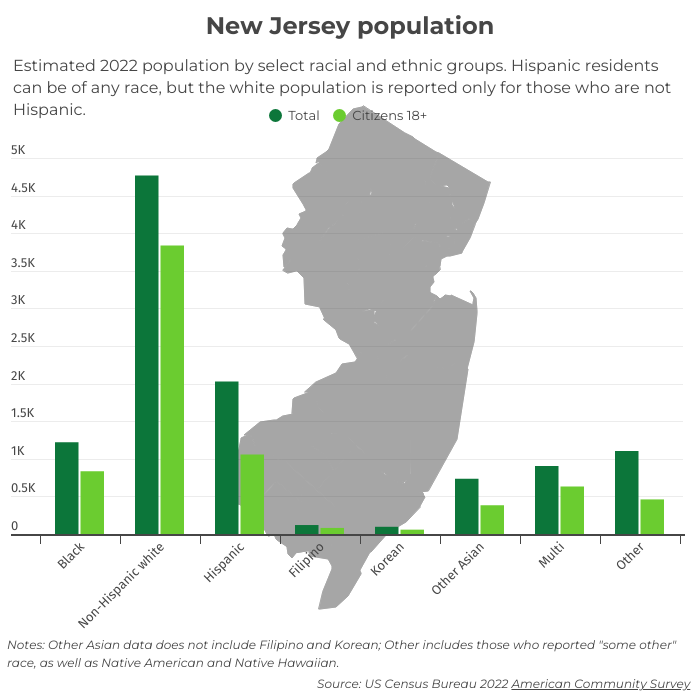
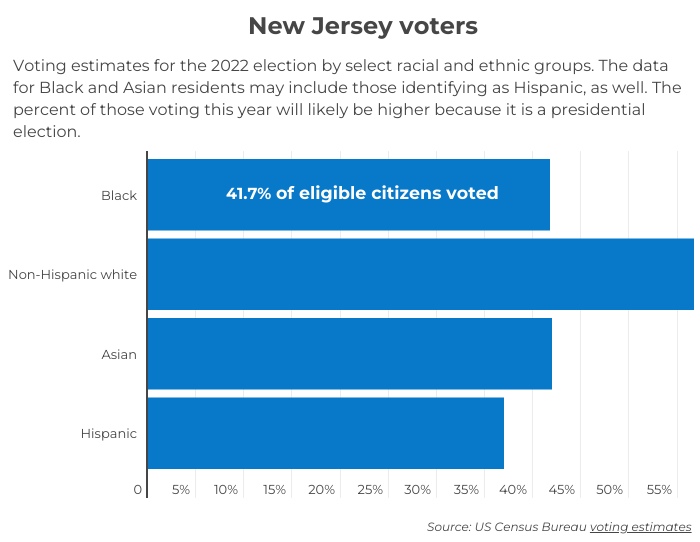
More than 1.1 million New Jersey residents are Black, making up about 12% of the state’s population, according to data from the U.S. Census Bureau. In 2022, the bureau estimates that roughly 42% of Black people who were eligible to vote in this state cast ballots. That percentage is likely to be higher this year because more people tend to vote in presidential elections.
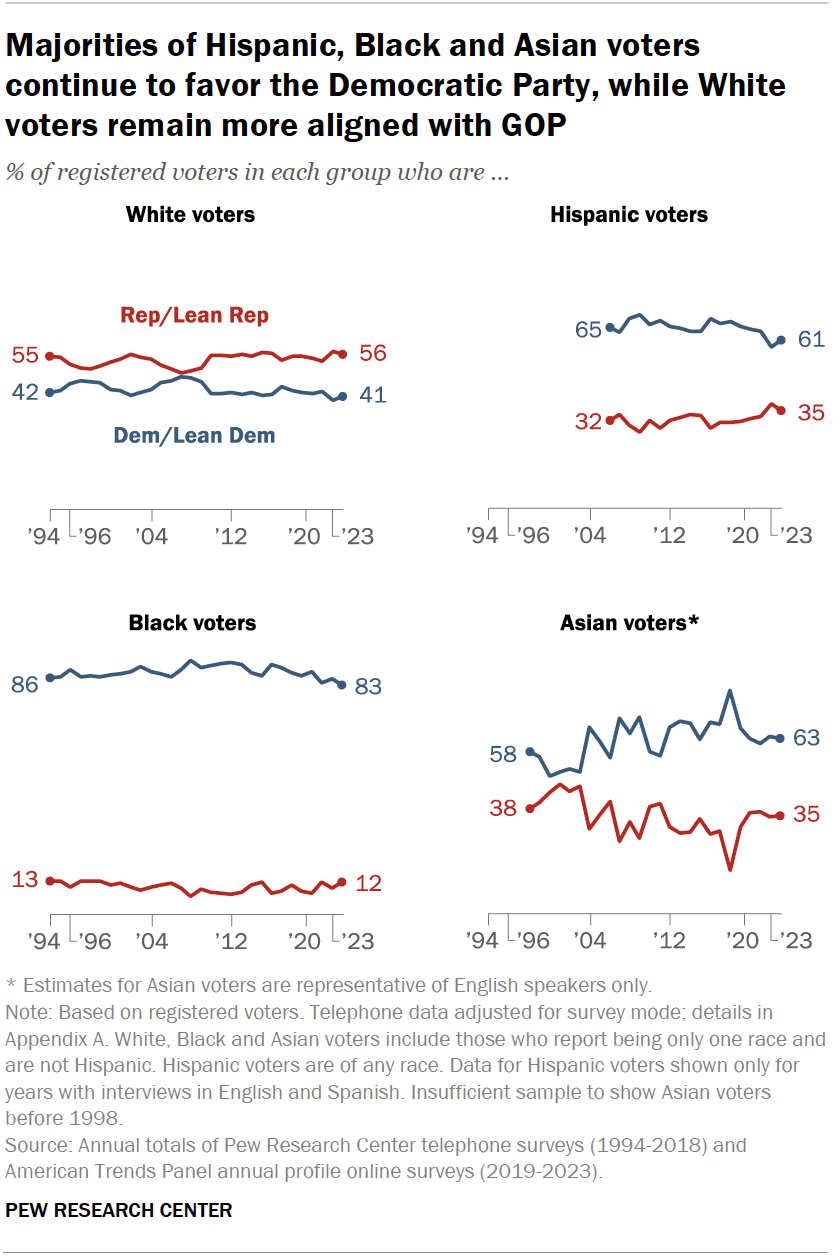
The state does not track voter registration by race or ethnicity. Nationwide, 83% of Black voters favor the Democratic Party, according to April 2024 data from the Pew Research Center, compared with 63% of Asian voters, 61% of Hispanic voters and 41% of white voters.
Individual empowerment
Black Republicans in New Jersey represent a minority within a minority, but they are gaining attention in this year’s presidential race. They argue that the Democratic Party has taken the Black vote for granted and has failed to deliver meaningful progress on issues like economic mobility, education and public safety. In contrast, they see the Republican Party as offering a platform for individual empowerment, personal responsibility and economic opportunity.
For many Black Republicans, their journey began with frustration with the Democratic Party’s track record in addressing the needs of Black communities. Andrew Parker III, an Atlantic County commissioner, argues that the Democratic Party has enjoyed the “blind loyalty” of the Black community for decades, despite not delivering meaningful progress.
“The conditions in our communities have continually declined or, at best, remained stagnant,” Parker said. Real change requires a new direction, he said, and he sees the Republican Party — with its focus on economic mobility, fiscal responsibility and personal liberty — as better positioned to address today’s pressing economic challenges.
This sentiment is echoed by other Black Republicans who said the Democratic Party has focused too much on social programs and government intervention without empowering individuals to achieve success on their own. Some say this has created a cycle of dependency on government assistance, rather than self-sufficiency.
For Billy Prempeh, a Republican candidate in New Jersey’s 9th District Congressional, the choice to join the GOP was rooted in a realization that his personal values aligned more closely with conservative principles. Prempeh, whose parents were legal immigrants from Ghana, believes in school choice, is vehemently opposed to abortion and rejects the concept of institutional racism. He also criticizes the origins of Planned Parenthood, which he argues was designed to promote abortion in poor Black communities, a notion historians indicate is based largely on statements taken out of context.

Prempeh’s belief in merit-based success and personal responsibility contrasts with what he views as the Democratic Party’s focus on racial equity. He believes everyone should be able to thrive based on ability and hard work. In his view, the Republican Party offers greater opportunities for individual success, regardless of race.
“They want upward mobility as opposed to equality and equity, which I agree with,” Prempeh said of the Republicans. “If I work harder than someone, my ceiling should not be limited because you can’t do what I do.”
This emphasis on traditional conservative values is a recurring theme among Black Republicans in New Jersey.
Darius Mayfield, a candidate for Congress in New Jersey’s 12th District, describes himself as “fiscally conservative and socially normal,” and supports policies like school choice and lower taxes. He argues that the state’s public school system is one of the most systematically racist systems in the country, and that school choice is a way to break the cycle of underperforming schools in predominantly Black neighborhoods.

Mayfield does support reparations, at least in the form of the Platinum Plan, a policy initiative introduced by former President Donald Trump during his reelection bid in 2020 to increase economic opportunities for Black Americans. Among other things, the Platinum Plan promised to create 500,000 new Black-owned businesses, increase access to capital in Black communities and improve homeownership opportunities. The plan also called for making Juneteenth a federal holiday, a change codified by President Joe Biden in 2021.
“The Platinum Plan was basically a form of reparations for Black People,” Mayfield said. If elected, he said, “I can do things specifically for [the Black] community because they deserve it and we are owed it in a lot of ways because of what we’ve gone through in this country.”
A significant challenge for Black Republicans is the social pressure they face within their own communities to support Democrats. Prempeh recalled how he once believed that supporting the Republican Party was inherently racist.
Challenging racial stereotypes
“The white people are Republicans. The Black people are Democrats, and if you support the Republicans, then you’re a racist,” Prempeh said, recalling his early thinking — “I was brainwashed.”
Prempeh said his views changed after a white friend challenged him to examine his beliefs more closely, leading him to conclude that his values were more in line with the Republican Party.

“I believe in God. I believe in the sanctity of life. I believe I need the right to defend myself,” Prempeh said. “All these things that I think would be common sense, I figured the Democrats also believed. But I found out, over time, that they don’t believe any of the things that I believe in and actually I’m not a Democrat at all.”
For some, politics is an afterthought. Ray Ellis, a longtime Republican and a member of the Egg Harbor Township Committee, emphasized the importance of developing relationships within the community rather than focusing on party labels.
“I don’t care if you’re a Democrat or Republican. I don’t like people who are just running for a title. Are you going to help the community, or are you just going to be a title man?” Ellis asked. His focus on community service, through coaching youth football and mentoring young men, has earned him respect across party lines. “It doesn’t matter if people are Democrat or Republican. People understand that I’m for the community.”
Shifting political allegiances
Historically, the Republican Party, the party of Abraham Lincoln, had strong support from the Black community, especially after the Civil War and during Reconstruction. However, by the mid-20th century, the political allegiances of Black voters had shifted to the Democratic Party, largely given its work to adopt civil rights legislation under President Lyndon B. Johnson. The Republican Party’s opposition to some of these policies, including Barry Goldwater’s stance on states’ rights in the 1960s, contributed to the mass exodus of Black voters from the GOP. Since the 1990s, more than 8 in 10 Black voters have identified as Democratic, according to the Pew Research Center.
When asked what they think about the presidential candidates in this election, most Black registered voters favor Harris over Trump. About two-thirds of Black voters think Harris would make a good president, while three-quarters say Trump would not, according to a national poll of nearly 1,800 registered voters conducted in mid-September by the AP-NORC Center for Public Affairs Research at the University of Chicago.
The poll also showed the economy is the top issue for Black voters — a concern to 8 out of 10 of them — followed by health care, crime and immigration. Nearly three-quarters of Black voters said Harris would better address health care issues, with 8% favoring Trump’s approach. Some 53% of Black voters favored her stance on immigration, 58% on crime and 61% on the economy. With Trump, 22% of Black voters trust him more on immigration, 18% on the economy and 10% favor his views on crime, AP-NORC found.
Among the small percentage of Black voters who question the wisdom and usefulness of allegiance to the Democratic Party, some argue that the Democratic Party has focused on identity politics and social programs, which have not delivered the economic or social progress promised.
“People should focus on policy and what the individual brings to the table rather than party ideology,” Prempeh said. “What they stand for, that’s far more important because when we get blinded by party, we never move forward.”
Parker suggested that the Republican Party’s focus on free-market principles, lower taxes and entrepreneurship offers a more viable path to economic prosperity for Black Americans. Parker’s vision of “participatory democracy” emphasizes economic self-sufficiency, civil rights and civic engagement — values he believes are better championed by the Republican Party.
“I want to be clear: I became a Republican pre-President Trump and plan to be here post-President Trump. My loyalty lies in improving our communities and the lives of those who live and work in them,” Parker said. “The Republican Party’s messaging around the American dream, economic mobility, and opportunity resonates with my belief that hard work and individual effort should be the primary means of advancement.”
Cover photo: Billy Prempeh, Republican candidate in the 9th Congressional District (left) and Darius Mayfield, Republican candidate in the 12th Congressional District, talking to NJ Spotlight News last month in Election Exchange podcasts (Screenshots from NJ Spotlight News).
Editor’s note: This story has been updated. It had incorrectly stated that Billy Prempeh immigrated to the U.S. from Ghana. Prempeh’s parents immigrated from Ghana.
