
Hunger-relief groups rely more heavily on donated food from supermarkets and farms
Almost 2 million tons of food still goes to waste in NJ every year
This story is part of The Change Project series examining New Jersey’s social and economic challenges — and focusing on promising actions that have led to positive change.

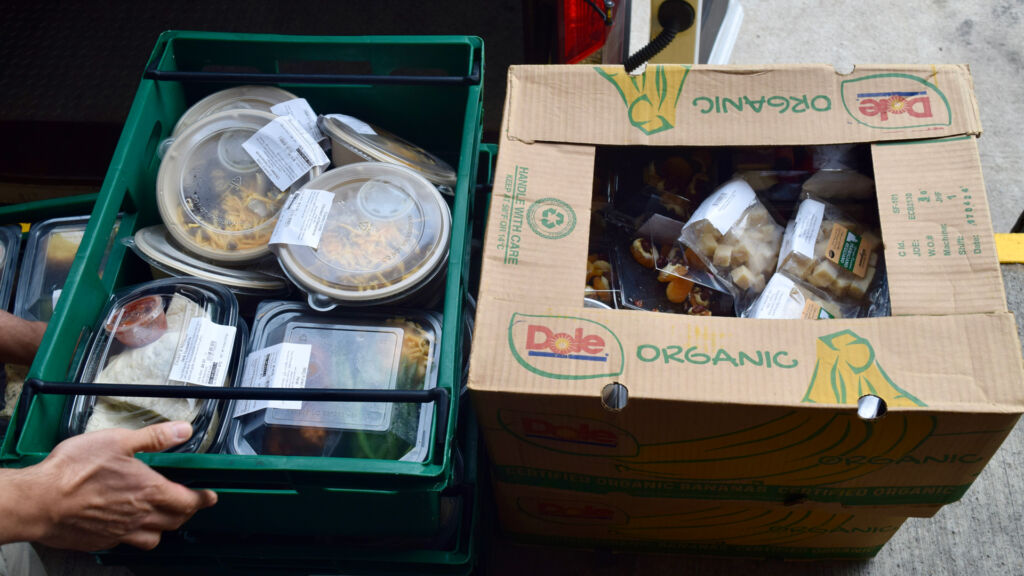
At CUMAC, a food pantry in Paterson, food donated by supermarkets that have decided they can’t sell it accounts for about half of the total given out to clients, and so represents a crucial component of its ability to feed an increasing number of food-insecure people.
In Franklin Township in Somerset County, the Franklin Food Bank is even more heavily dependent on produce, meats, dairy and dry goods that are “gleaned,” or rescued, from local food retailers, accounting for about 60% of the total.
Potential for change
- More than 1.7 million tons of food went to waste in New Jersey in 2022, even as close to 1 million people were food-insecure.
- A number of programs in New Jersey are models for redistributing through food pantries items that would have been tossed out.
- Supermarkets donate fruits, vegetables, proteins, dairy and baked goods that are still safe to eat.
And at the Food Bank of South Jersey in Pennsauken, Camden County, the weight of food gathered from supermarkets rose by 17% in the first quarter of 2024 from a year earlier, as more food pantries regularly collected food donations from supermarkets that want to help feed the hungry while cutting food waste.
Across New Jersey, the emergency food network is increasingly reliant on food gleaned from supermarkets — and to a lesser extent farms — to supplement other major sources such as federal and state governments, the Community FoodBank of New Jersey, and a host of private donors.
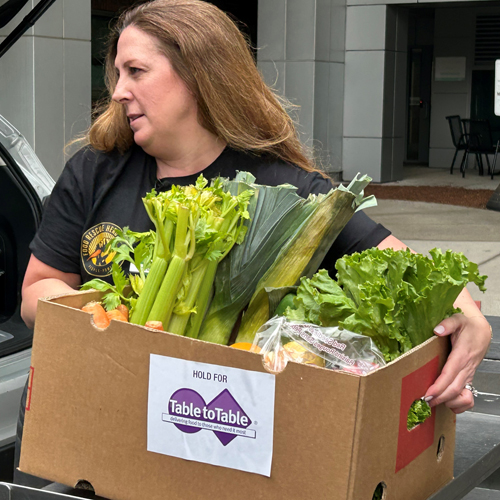
“Our belief is that there’s enough fresh food for everybody, and our goal is to get that fresh food from where it is to where it needs to be, and to keep it out of landfills,” said Heather Thompson, executive director of Table to Table, a nonprofit that for the last 25 years has been collecting unwanted but mostly usable food from meal-kit companies, retailers, restaurants and other sources, and delivering it to food pantries.
But there is much still to gain, with close to 2 million tons of food continuing to go to waste each year, despite some promising practices available to get more food to families’ tables.
In this latest installment of The Change Project, NJ Spotlight News examines some of those models involving food gleaning and donation networks, their challenges and obstacles. Intricate and often complex, the stakes of hunger and food insecurity in New Jersey are significant.
Big challenges
“If we could actually get all of this food that’s going to be thrown away and is edible into the hands of people who need it, people would have enough food,” Thompson said. “It could be that simple but the logistics of it are very challenging.”
In 2017, New Jersey passed the Food Waste Reduction Act which aims to cut the waste by 50% from 2017 levels by 2030. In 2019, the Department of Environmental Protection published a draft of its plan to implement the law by cutting food waste by some 57,000 tons a year, or the equivalent of 2,200 loaded garbage trucks, to hit the target of some 742,000 tons less than the 2017 level by 2030.
The state’s plan, finalized in October last year, includes forming partnerships with groups that are already working on the issue; educating the public on food waste, and reaching out to schools and business groups in the hope of enlisting their support.
Tag us using #ChangeProjectNJ on social media and stay tuned for live events.
The DEP has built a website showing how individuals can reduce their food waste; spread its aims on social media, and worked with the Association of New Jersey Recyclers and Sustainable Jersey to show towns how to cut food waste. It has also funded a Food Waste Tool Kit that shows K-12 schools how to cut the waste; how food-waste sources can connect with distributors of food that would otherwise be dumped, and how municipalities can measure the amount of food waste in their overall volume of trash.
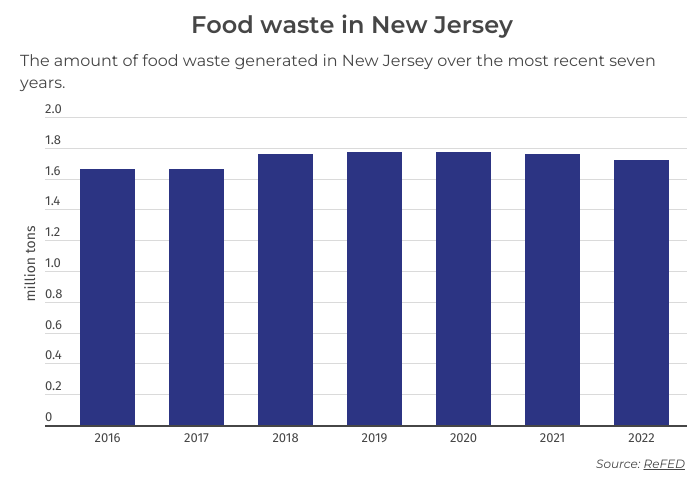
The state’s 2030 target is roughly half the estimated 1.72 million tons of food waste that New Jersey generated in 2022, the latest year for which data is available, according to ReFed, a Long Island, New York-based nonprofit that monitors food waste nationally.
Food waste: The data
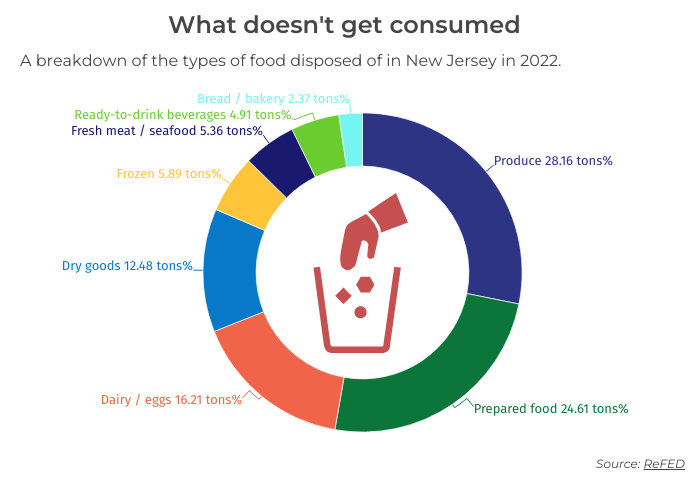
The latest total hasn’t changed much in the last five years but is higher than the 1.66 million tons recorded in 2016 and 2017, the group said. Of the latest number, about one-third goes into landfills, a little less than that is composted, and about 16% is incinerated. “After a period of increases, it appears that we’ve probably plateaued in terms of the amount of food going to waste,” said Jeffrey Costantino, a spokesman for ReFed. Its estimates are based on public and proprietary datasets, expert interviews, case studies and industry research.
In New Jersey, Table to Table gleaned 23.2 million pounds of food in 2023, slightly below record-high totals in the pandemic years of 2020 and 2021 but well above the 16.9 million pounds in 2019 and 14.2 million pounds in 2018. Its food-rescue operation is based on that of City Harvest, a New York City nonprofit, which inspired Table to Table by recognizing that there are millions of pounds of wasted food that could feed hungry people if there’s an efficient way of getting it to them while it’s still fresh and nutritious.
“Our team continues to make a strong effort to connect with new fresh/perishable food donors, as the need in our communities for food remains very high, and we know there are many untapped sources of healthy food that can be rescued,” Thompson said.
Thompson and other leaders of New Jersey’s food-aid network are using gleaned food to feed more people and prevent some waste.
How donations get delivered
In one such program, donors include Wegmans supermarket at Hanover in Morris County, which supplies about 200,000 pounds of free food a year to the Interfaith Food Pantry Network in Morris Plains. Tim Lockwood, the market manager, said that even though giving the food away represents a financial loss, it’s built into the store’s business model, and the donations are driven by both humanitarian and environmental impulses.
“We know that there are people in our community that need the food bank, and that it has thousands of clients,” Lockwood said. “If we’re able to help them, we try to do that.”

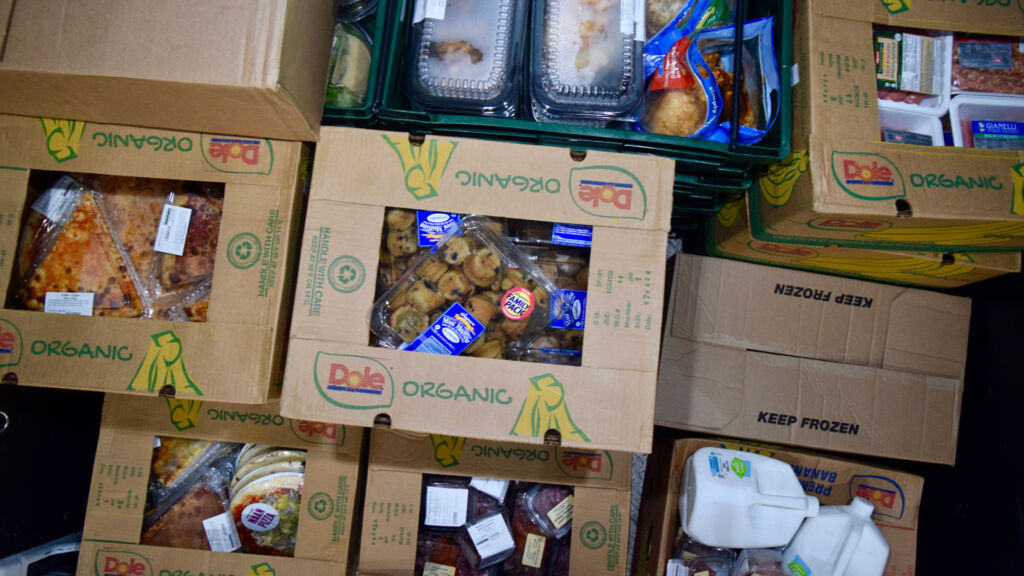
The supermarket supplies the pantry mostly with proteins, dairy, fresh fruits and vegetables, and baked goods which are picked up by the pantry and set out on shelves soon after they are shipped. Dairy products, for instance, are removed from the supermarket shelves three days before their sell-by date because Wegmans doesn’t want to risk selling spoiled products to customers, but they are perfectly safe and so are made available to the pantry clients.
But that pantry, like all other recipients of gleaned groceries, must ensure that the food is safe, fresh and edible, and so throws out 20-25% of what it receives from supermarkets overall, although that rate varies widely between suppliers, said Carolyn Lake, executive director of Interfaith Food Pantry Network.
For example, if it receives a batch of lettuce that has been packed underneath bottles of cleaning fluid, the lettuce will be discarded for safety reasons, she said.
“It takes a lot of education on the part of the donor, and they are running businesses, so this is an extra step for them, and we recognize that,” Lake said.
‘Completely unpredictable’
The amount of rescued food totaled 152,000 pounds, or 26% of the Interfaith Food Pantry Network’s total in the first quarter of this year. That was almost double the 88,000 pounds, or 18% of the total, in the same period a year earlier, Lake said. The number of retailers working with the program rose to eight from five during that time.
Lake’s program for gleaning food is based on an app called Meal Connect published by Feeding America, a national hunger-relief nonprofit, which helps coordinate relationships between food-aid agencies and retailers. For example, the app may tell users that an agency is already collecting food from one supermarket three days a week, helping to ensure that no other agency tries to establish a relationship with that store.
Although Lake stresses her gratitude for the increasing amount of food she gets from supermarkets, she doesn’t rely on it when planning her network supplies because both its quantity and nature may vary.
“The difference between rescued food and that which we get from USDA and the Community Food Bank of New Jersey is that rescued food is completely unpredictable,” she said. “We don’t know what we’re going to get from one day to the next, or whether it will be usable. When we plan the food to provide for our guests, we don’t plan anything that is rescued; it goes out as extras.”
Recipients of gleaned food know that they won’t be able to use all of it, and don’t want to spend scarce time getting rid of the portion they can’t use.
“You want to be known as the agency that says yes and can pick up that stuff at the drop of a hat, and can take quantity,” said Derek Smith, executive director of the Franklin Food Bank. “You also don’t want to be known as the agency that will come and take anything.”
The Community FoodBank of New Jersey, the state’s largest supplier of food aid, gleaned 37% of its 108 million-pound distributed total in the fiscal year that ended June 30 last year, said David Goldstein, vice president of operations.
“In food-banking, the world of donations is super-huge,” he said. ‘Partners want to donate the food; they know it’s going to folks who need it, so they work with us to get the highest-quality product.”
At the Food Bank of South Jersey, which supplies pantries in a four-county region, about 14% of food was gleaned last year, and that represented a 35% increase in that category from 2022, said Sarah Geiger, senior director of programs and services.
The gleaned food typically goes directly from a retailer to the pantry that distributes it, without going via the food bank’s warehouse. That leaves the food bank as a broker of the relationship rather than a supplier, and speeds the movement of often-perishable food to those who need it. “It’s a lot of relationship management,” Geiger said.
Why supermarket donations are so valuable
Donations from supermarkets are especially valuable because they typically provide a range of foods that pantries need, she said. “We absolutely need all donation streams, and this one in particular is very helpful because it has built in a range of staple categories — protein, produce, dairy — and consistently. It ticks a lot of boxes for us.”
Other suppliers, too, are providing substantial and increasing food supplies to New Jersey’s food banks and their local distributors.
HelloFresh, a meal-kit company with a warehouse in Newark, supplies about 500,000 pounds of food a year to Table to Table for distribution to pantries. The donations represent about 2% of HelloFresh’s food, but because of its high volume — the company ships about 350,000 boxes out of its Newark facility every week — the donation total is significant, said Jeff Yorzyk, the company’s senior director of sustainability.
If HelloFresh did not donate its surplus food to Table to Table, it would be composted to make biogas or else sent to a landfill, although the company is “philosophically very opposed” to using landfills, Yorzyk said.
More resources
New Jersey Department of Environmental Protection’s Food Waste Reduction Plan
Nonprofit ReFED’s Food Waste Monitor
Community Food Bank of New Jersey’s website.
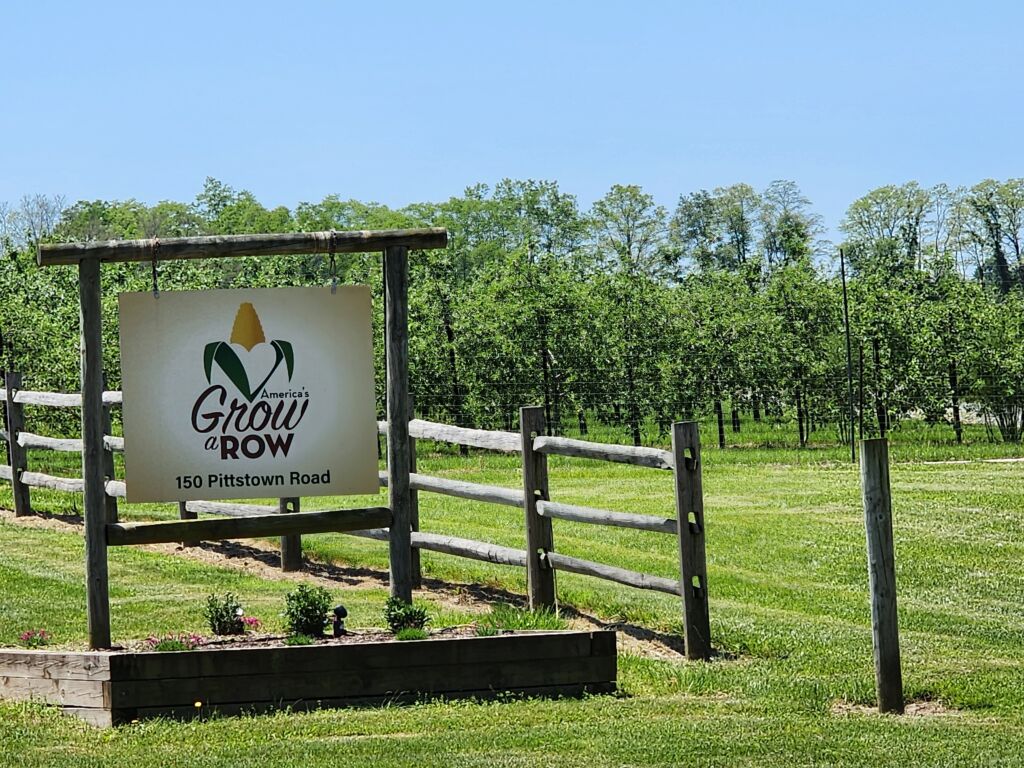
In Pittstown, Hunterdon County, America’s Grow-a-Row, a network of five New Jersey farms, gleaned about 300,000 pounds of food last year from supermarkets and farms, representing about 10% of the food it supplied to pantries and food banks. Last year’s total of gleanings grew 23% from 2022, said Chip Paillex, founder and president.
“We recognize that there’s a lot of food out there that’s going to waste so this is our opportunity to take a little bit of a dent out of that, and rescue food that would otherwise go in the trash or rot in the field, and give it to folks who need it,” he said.
Cover photo: An employee of Wegmans of Hanover wheels cartons of food to waiting food pantry vans. (John Mooney/NJ Spotlight News)
More from NJ Spotlight News
About this project
The Change Project is a part of the Chasing the Dream multiplatform public media initiative from The WNET Group. We are reporting on challenges facing New Jersey in a variety of areas involving social justice and equity, as well as showcasing promising remedies. Our reporting focuses on inequality in many aspects of life, from birth through school to finding an affordable place to live. We are also focusing on what has worked elsewhere to make life better for people, and what lessons we can learn for the future.
Major funding for The Change Project and Chasing the Dream is provided by The JPB Foundation
Help us continue to report on important issues by supporting our work.
