
Is New Jersey ready for safe-consumption centers for drug users?
The facilities, which focus on reducing harm, have saved lives elsewhere
This is the latest in The Change Project series examining New Jersey’s social and economic challenges — and focusing on promising actions that have led to positive change.

On a steamy Tuesday in late June a half dozen regulars gather along a sliver of shady concrete outside the East Harlem location of OnPoint NYC, the nation’s first government-sanctioned safe-consumption site for people who use drugs.
Others hover near the doorway, counting down the minutes until the program’s staff return from their lunchbreak.
Inside, OnPoint’s main room feels like a community center, with white concrete-brick walls, folding tables and chairs and powerful air conditioning. It’s a place where clients can cool off in summer months, warm up when it’s cold, charge phones and grab a snack and a bottle of water.
Potential for change
- In New York City, trained staff at the nation’s first safe-consumption center have reversed some 1,700 overdoses.
- A safe-consumption site opened in Rhode Island in January and has already saved lives.
- Harm-reduction advocates hope to open similar programs in Philadelphia, Massachusetts and Vermont.
OnPoint, a nonprofit, runs a medical clinic at this site and offers a range of mental health services. Upstairs is a wellness center with acupuncture, meditation and more. Clients can talk to a social worker at this facility and be connected with other services, including addiction treatment, if they choose.
But what makes OnPoint unique is its safe-consumption room, a separate, brightly lit space at the back of the East Harlem building outfitted with eight stainless-steel booths. People who inhale or inject drugs — which they must purchase elsewhere — can do so safely at these booths, knowing that trained staff members are nearby, watching over them discreetly and ready to intervene immediately if they stop breathing or start to overdose.
A separate room with a picture window and a powerful air-filtration system is available for people who prefer to smoke their drugs. On the wall over the door to the smoking room, large navy-blue letters spell out “THIS SITE SAVES LIVES” in English and Spanish.

“Everything about the place was just compassion and empathy and caring about people,” Cape May resident Tonia Ahern, a longtime advocate for people who use drugs and their families, told NJ Spotlight News in May.
Ahern — who lost her 29-year-old son Rory, a commercial fisherman, to drugs three years ago — visited OnPoint last spring. “When you walk in, everyone gets respect,” she added. “That’s what harm reduction is.”
As New Jersey grapples with how to stem opioid deaths, across the river OnPoint features a model with a proven, albeit controversial, track record. In Rhode Island, the nonprofit Weber/RENEW just opened the nation’s first state-licensed overdose prevention center, as these facilities are also known, or OPC No. 00001 in official documents. OnPoint’s work is not protected by state law, but its harm-reduction activities are sanctioned by New York City.
Safe-consumption sites are gaining attention in states nationwide. More than a dozen states considered such proposals in 2023 and at least seven voted on safe-consumption bills last year, according to the Drug Policy Alliance, which advocates to reduce the harmful impact of drugs. Minnesota has approved funding for a program as has Vermont, where state lawmakers overrode Gov. Phil Scott’s veto of a safe-consumption bill last year and allocated $1.1 million to open a facility in Burlington, the state’s largest community.
Video Editor: Laura Galarza
But pushback exists to safe consumption. Gov. Gavin Newsom vetoed a proposal passed by California lawmakers in 2022 and lawmakers in Massachusetts have struggled to advance OPC legislation. Communities — like Somerville, Massachusetts, outside of Boston — have pushed to advance their own programs in an effort to fill this void.
The United States is behind the curve on safe consumption, a concept that originated in Switzerland nearly 40 years ago and is now used in more than a dozen countries including Australia, Canada and Portugal; Portugal also decriminalized drug use and possession. No one has ever died at a supervised safe-consumption site, the data shows.
As part of The Change Project looking at potential solutions to some of New Jersey’s toughest challenges, NJ Spotlight News explored the use of safe-consumption centers as a possible model in New Jersey. The model is backed by multiple clinical associations and many people working with those who use drugs, some of whom believe opposition would make it hard to implement here.
Officials at the state Health Department, which oversees addiction treatment policies, said they have seen growing support for safe consumption and are willing to “consider all options” to address the drug-related deaths they called a public health crisis.
PART I: THE LONG ROAD TO HARM REDUCTION IN NEW JERSEY
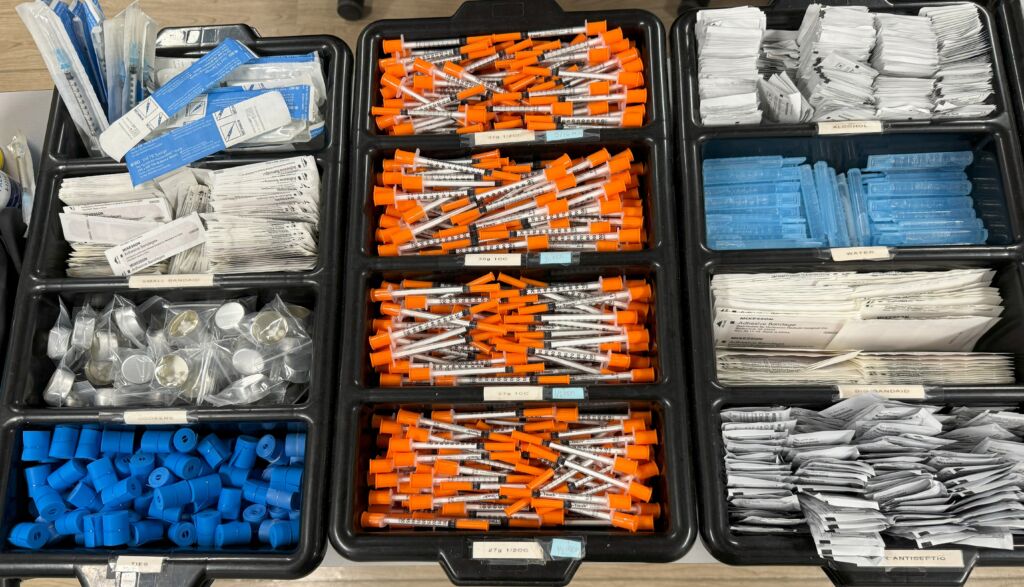
In response to the drug crisis, New Jersey has recently embraced many aspects of harm reduction, a concept that involves various tools to save lives and blunt the impact of substance use. This includes distributing clean needles and glass pipes to reduce the likelihood of spreading infection; and providing naloxone, or Narcan, which can quickly reverse an opioid overdose. Safe-consumption centers are considered a form of harm reduction.
The state launched a handful of syringe-exchange pilot programs in 2006, which grew to serve seven cities despite limited funding and regular opposition from local government and business groups. A state law signed in 2022 by Gov. Phil Murphy, a Democrat whose second term ends in January 2026, empowered the Health Department to lead and coordinate the program — reducing local control over siting decisions — and significantly expanded access to naloxone.
The department has since pledged $24 million from New Jersey’s share of a national opioid settlement to expand harm-reduction services to all 21 counties. Plus, the Department of Human Services, which regulates community-based addiction services, has distributed hundreds of thousands of doses of naloxone and made it available for free at nearly 700 pharmacies statewide.
“Part of why I’m in this role is that the Murphy administration is not afraid to use evidence and do harm reduction, and to shout from the rooftops that this is how people are going to get better,” said New Jersey Health Commissioner Kaitlan Baston, a pioneering addiction specialist who joined the department in August 2023, at the department’s “first annual” harm-reduction conference in May.
Experts say the state’s overall approach is working. Drug deaths in New Jersey declined to 2,564 in 2023 after peaking at 3,114 in 2021 and appeared to drop by double digits again in 2024. But fatalities are increasing among Black and Hispanic people here, Health Department data shows, populations that have long been disproportionally impacted by drug use. In 2020, Black residents had an overdose fatality rate of 51.4 per 100,000 population compared to 38.9 for white residents, according to the state’s overdose data dashboard.

“This is still an enormous problem and it’s taking way too many lives all the time,” Baston said at the May conference. She called rising deaths among people of color “unacceptable,” adding that the state’s harm-reduction efforts “are not meeting the communities that need it most.”
Baston insists more needs to be done to save lives and pledged that the Health Department would continue to prioritize harm reduction. A growing number of advocates agree and point to safe-consumption sites as the logical next step to curb these deaths and help the people and communities most impacted by illegal drug use. The department appears to be listening.
“We know there is interest in OPCs from our stakeholders,” Health Department Communications Director Dalya Ewais said in an email, referencing overdose prevention centers and noting there was public support for the model at a recent listening session held by the Opioid Recovery and Remediation Advisory Council, which Murphy created in late 2022. “The Commissioner and Department will continue to consider all options at our disposal that can address this public health crisis.”
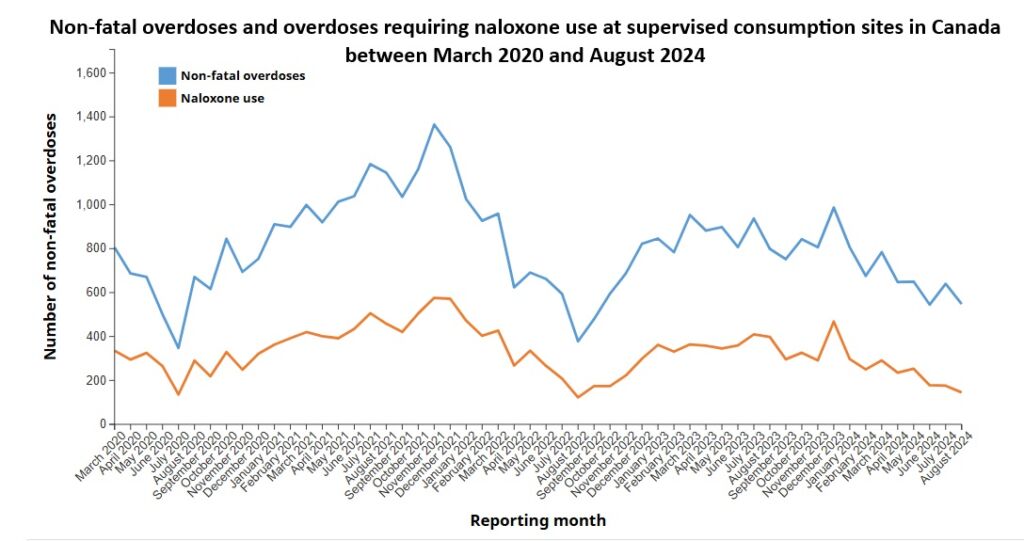
Data from around the world and dating back decades shows that safe-consumption programs save lives, connect people to support services and improve the community’s quality of life by reducing loitering, littering and crime. The model has been used to prevent 55,700 overdoses in Canada since 2017, according to government figures, and 42% of participants were connected with medical care, drug treatment or social services.
But safe-consumption sites remain controversial in the U.S. and legally tenuous in all but a few states, including New Jersey. And the model could be even more tenuous under President Donald Trump. OnPoint’s program in New York City operates without the protection of state law.
With illegal drugs of all kinds — not just opioids cut with large amounts of powerful additives, like fentanyl — experts say this often leaves drug users to look after each other in what has become an increasingly deadly environment. Fast-food outlets regularly find people who use drugs unconscious in their restrooms.
As a result, some nonprofit organizations and physicians serving opioid users have decided to look the other way if a client discreetly uses drugs on-site. They may create a “door-knock policy” for their restroom, regularly checking on visitors to make sure they haven’t lost consciousness, or install a “reverse motion detector” to alert staff if the person stops moving. One doctor said they would rather a patient shoot up in their office bathroom, where help is available, than force that person to leave, knowing they could potentially overdose behind a dumpster down the road.
Tag us using #ChangeProjectNJ on social media and stay tuned for live events.
“Until we get the green light [for safe-consumption programs] people are going to continue to use drugs in their cars, in their bathrooms, in their back alleys, and the stigma will continue,” said Ronda Goldfein, vice president of Safehouse Philly, which is working to open a safe-use center in that city. Their efforts were initially blocked by the U.S. Justice Department in 2019, under Trump’s first term.
“We know flooding the streets with Narcan is good, but it’s not getting the job done. We know that ‘just saying no’ was never a smart idea. We know that forced treatment doesn’t work,” Goldfein added. “Let’s stop talking about the things that don’t work and let’s think about things that have a good track record.”
PART II: A SAFE-CONSUMPTION CENTER IN NEW YORK CITY
Supporters of safe consumption say facilities like the ones run by OnPoint and Weber/RENEW save lives and benefit communities. Since OnPoint opened its overdose-prevention center in November 2021, staff members said they have reversed nearly 1,700 potentially fatal overdoses. The program counts more than 5,800 participants, people who have used drugs in OnPoint’s monitored rooms roughly 171,000 times, instead of shooting up or smoking in a public park, alley or restroom.
Building the case for safe-consumption sites
A safe-consumption facility is up and running in Providence. The fight to establish one in Philadelphia continues.
Over that time, OnPoint also said it has collected and safely disposed of more than 2.5 million pieces of drug paraphernalia — dirty needles, bloody cotton swabs and other litter that likely would have ended up on the street. During its first year of operation, emergency medical responders were called to the safe-consumption facility fewer than two dozen times, according to an initial report.
“When people come in, they’re in pain. They say, ‘I need to get right.’ They don’t go, ‘Man I need to get in there and party.’ This isn’t a party. This isn’t a Friday night, ecstasy-rave thing,” said Sam Rivera, OnPoint’s executive director, during an interview at the East Harlem site in June. Most clients use drugs to counteract physical or emotional pain, he said, or to stave off the intense symptoms that accompany withdrawal, especially from opioids — body aches and tremors, hot and cold sweats, diarrhea, vomiting and more.
“Now the medicine isn’t the one many, many people wish they were using. But for right now, we want to keep them alive,” Rivera said. “And with the current drug supply, keeping them alive — it’s very difficult. So not allowing them to use in a safe place where, if they overdose, we can respond, increases the possibility of them dying. And that’s not debatable.”
Rivera and other staff at OnPoint — which has been providing harm-reduction services in New York City for decades — helped the team at Weber/RENEW plan the layout and operations at the safe-consumption site in Rhode Island. Rivera and his colleagues also spoke at the New Jersey harm reduction conference in May, where they were treated like celebrities.
While OnPoint’s work — which is funded by a mix of city and philanthropic grants — is not codified in New York state law, it is supported by New York City Mayor Eric Adams as well as local prosecutors and police, Rivera said. The program’s concept emerged under former Mayor Bill de Blasio in 2019 and was backed by a report from the city’s health department, which predicted a single facility would save 140 lives and save $7 million in public health costs each year. Michele Calvo, who now directs New Jersey’s opioid response under the state Health Department, contributed to the report while she was a program officer at the New York Academy of Medicine.
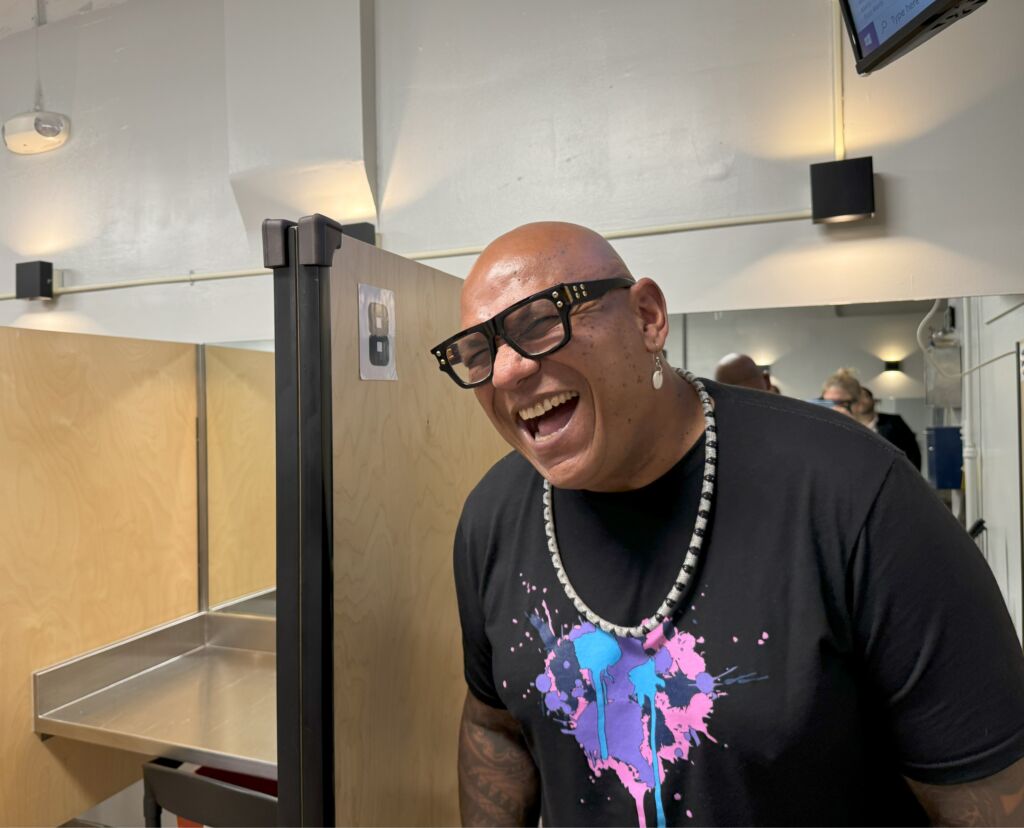
Harm-reduction advocates praise Rivera’s bravery for operating without explicit permission under the law, but some said they would not be comfortable working in this type of legal limbo, where any investment in staff, programs and clients could be suddenly dismantled. Others question whether a federal law designed to prevent drug dens or “crack houses” could be used to block safe-consumption sites, an argument advanced by U.S. Justice Department officials in their effort to prevent Safehouse from opening a site in Philadelphia.
It is not clear what the Trump administration has planned for these facilities, but the president has called for reductions in health-care spending that could impact harm-reduction programs more broadly.
Axel Torres Marrero, senior director of policy and prevention with the Hyacinth AIDS Foundation, which championed syringe-access programs in New Jersey, said legal clarity would make it easier to advance safe-consumption programs, a model they support. He said their work on clean-needle programs shows that even state-sanctioned public health initiatives — like the harm-reduction program in Atlantic City — can be derailed by local opposition. “Our history indicates that engaging in passive-permissive public health activity doesn’t work,” Marrero said.
Rivera said he understands the concerns other advocates raise and has taken steps to protect his board members and fellow OnPoint officers, should a raid of some kind occur.
“I’m not worried because we’re doing the right thing. I used to say early on this was radical. Now I say it’s righteous, not radical,” he said in June. “I don’t see anybody, no matter how committed they are, in law enforcement who would have it in their heart to come in here and arrest me,” he said. “I just don’t see it.”
Trump’s reelection has not changed Rivera’s commitment to the work or the daily operations at OnPoint. “If no one does anything for me to respond to, we’re going to keep doing it. If something happens where we’re being challenged, I’m ready,” he told Stat News in January.
In 2021, under former President Joe Biden, the federal Justice Department said it was “evaluating” the safe-consumption model’s legality, which supporters take as a positive sign. They also point to $30 million allocated by the Biden administration in 2022 to study harm reduction nationwide, plus the $5 million it allotted to Brown University, in Rhode Island, and New York University to assess the impact of safe consumption in their communities.
“Why would you fund something like this [study] if you were looking to shut us down?” asked Colleen Daley Ndoye, executive director of Weber/RENEW in Rhode Island.
Like advocates in Philadelphia and Rhode Island, OnPoint’s team faced some community opposition early on. Even if neighbors supported the safe-consumption concept, some felt northern Manhattan’s communities of color were already overburdened with programs that serve people who use drugs, engage in sex work, or both. “I respect that, 100%. But this is where [public drug use] is happening,” Rivera said.
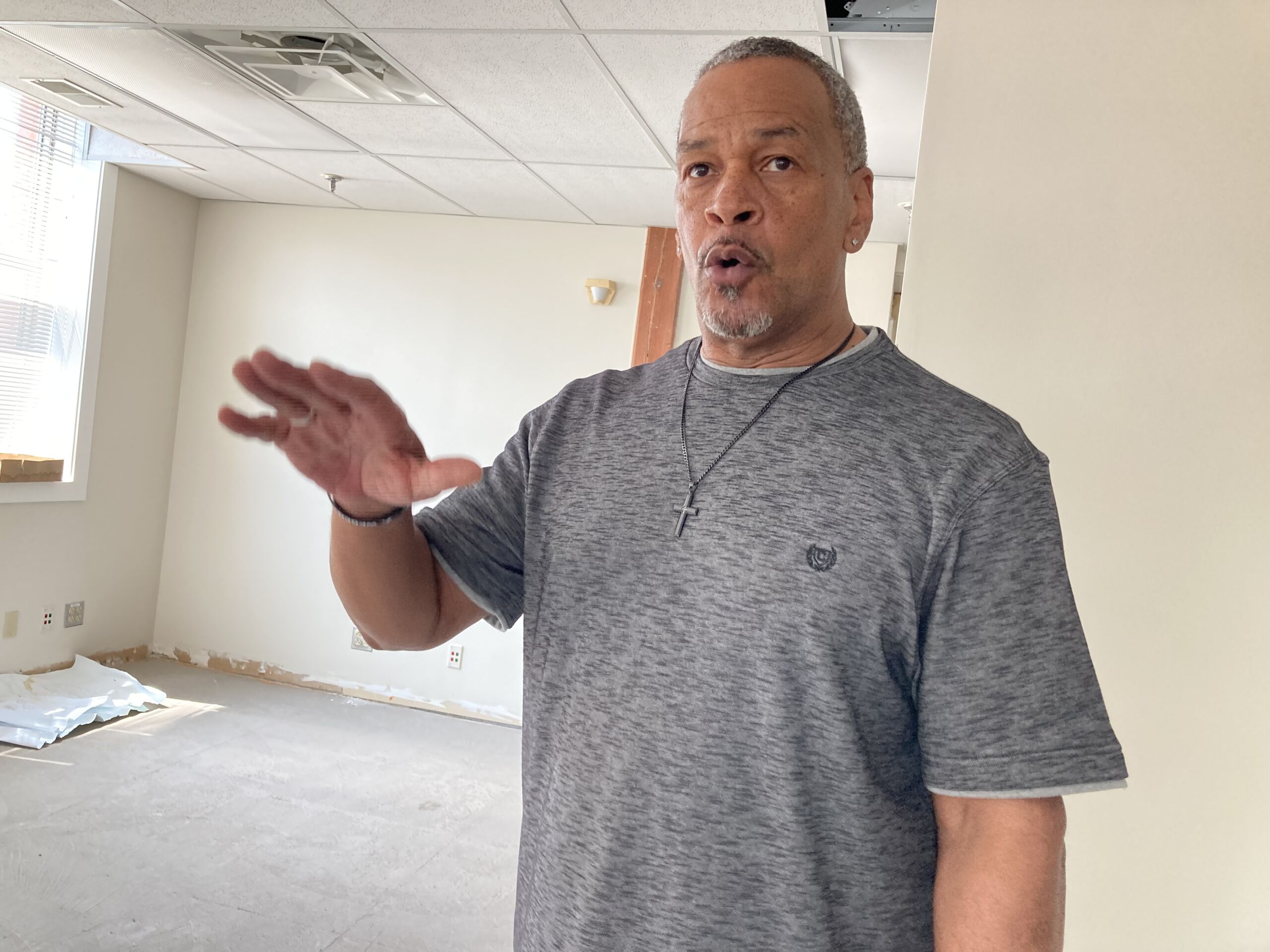
Dennis Bailer, Weber/RENEW’s program director, said it took hard work among civic groups and neighbors to build support for a safe-consumption site in the South Providence community where it exists. Part of his team’s message involved underscoring the impact of existing drug use in the area. “It’s not like we’re going to bring something that’s not already there, but rather we can save lives,” Bailer said.
In New York City, neighbors worried it would mean more syringes on the street, Rivera said, or more overdose deaths in alleys, although studies from sites in other countries suggest this isn’t a problem. “What we did is we took all those concerns — because we have them too — and we brought them inside. Now they are our concerns,” he said.
Rivera said there should be safe-consumption centers in diverse communities across New York City, given how addiction impacts all demographics. But it made sense to start in a community that was already overburdened by public drug use, in a place where OnPoint had long provided other harm-reduction services.
“I want to open where people will utilize the service,” Rivera said. “We didn’t have to introduce people to a different neighborhood, or different block, or different building. Most importantly, different staff — they know the staff here.”
Grey Gardner, senior policy counsel with the Drug Policy Alliance, agreed that safe-consumption facilities, when done right, can increase neighborhood safety and well-being. “This is a way of containing [concerns about litter and loitering] better and ameliorating the situation for everybody,” he told NJ Spotlight News.
“It’s not about creating a space for people to come and party and have drugs. It’s a place where maybe we can keep people alive until they’re in a position where they want to make different decisions about where they are headed,” Gardner said. “Or maybe they don’t, but we still treat them like people.”
PART III: INSIDE A SAFE-CONSUMPTION ROOM

At OnPoint’s East Harlem location — one of two it operates in northern Manhattan — clients can also do their laundry, take a shower and relax in the quiet courtyard. Its medical clinic provides vaccines, wound care and more; people can talk to a counselor with no appointment; staff members also offer drug testing, so clients know the power of their drugs and can adjust their use accordingly.
OnPoint’s safe-consumption room is well equipped to save lives. The space is stocked with different sizes of sterile syringes, alcohol pads, gloves, gauze, bandages and more for those who inject their drugs. Clean glass pipes are available for smokers, plus sanitary straws and new razor blades for those who choose to inhale their drugs.
Clients sign in, using any name they choose to provide. A large screen above the door of the safe-consumption room lists their name of choice, booth number and sign-in time, allowing staff to track their visits, much like the TV screens hospitals use to help families track loved ones through a surgical process.
“Our OPC is poly-modality and poly-substance-use friendly,” said Brittney Vargas-Estrella, director of operations for OnPoint’s safe-consumption program. “What that means is that folks can use whatever substance that they bring, in whatever modality they’re using.”
The facility has several overdose carts at the ready, stocked with plastic tubes staff can use to help open a client’s airway, face masks and tubes that can be connected to the oxygen tanks kept by the door. Instead of using commercially available naloxone kits, Vargas-Estrella said the team pre-loads syringes with small doses of the opioid-reversal agent to give them more flexibility in responding to an overdose. Automatic defibrillators are also on hand should someone’s heart stop.
Video Editor: Laura Galarza
“We’re only using naloxone in about 18% of overdose responses. In the other 82% we’re using oxygen, as well as agitation,” Vargas-Estrella explained in June. Most times OnPoint staffers are able to revive clients on their own. In the first year of operation, emergency medical responders were called to the facility fewer than two dozen times, according to OnPoint’s initial report.
There is also a financial benefit to safe-consumption programs, supporters say. OnPoint’s work has so far saved New York City taxpayers an estimated $40 million through fewer police calls and ambulance runs and less hospital care and other expenses, Rivera said. A 2017 study found that in San Francisco, every dollar spent on such a facility would return at least $2.33 in benefits and a single site with 13 booths would save that city at least $3.5 million a year in medical costs.
PART IV: STRONG RESISTANCE IN U.S.
Despite the evidence, the United States — where law enforcement has long led the response to drug use — has been slow to embrace overdose prevention facilities. Efforts to open a site in Philadelphia, a process launched in 2017 with strong city government support, have been stalled by neighborhood opposition and court challenges.
“There’s just so much evidence now that shows that this is a life-saving measure,” said Grey Gardner of the Drug Policy Alliance, who worked on the Vermont legislation, which was opposed by some who insisted the model needs more study. “There are a lot of really disingenuous arguments that come out by people that just don’t like it,” Gardner said.
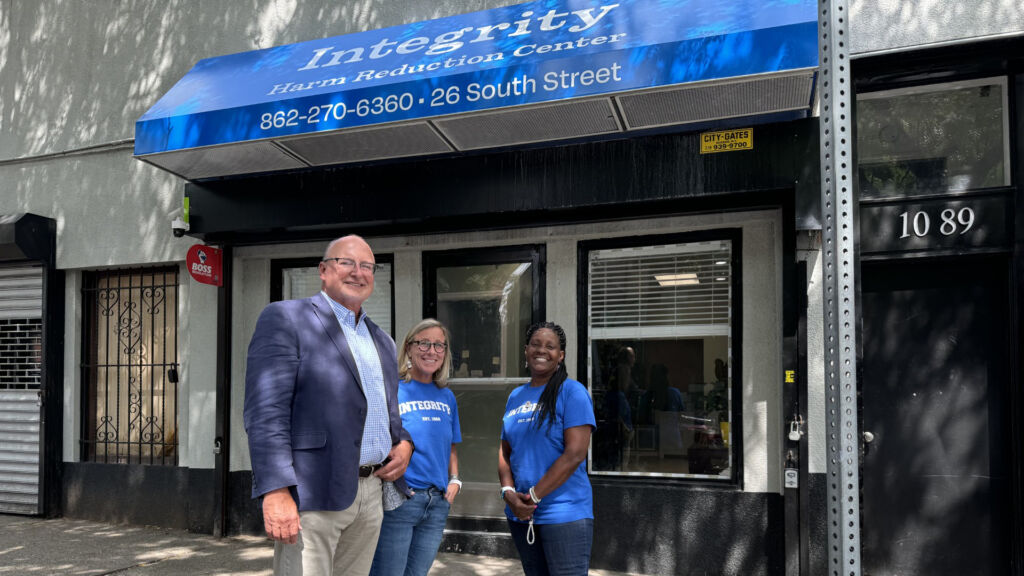
Historically, some of the opposition to harm-reduction programs — and safe consumption in particular — has come from more traditional abstinence-based addiction treatment providers. Robert Budsock, president and CEO of Integrity House in Newark, which has run residential and outpatient programs for nearly 60 years, said his openness to this model sets him apart from most of his peers.
Budsock makes clear his position has evolved. During an interview with NJ Spotlight News in June, he recalled how when then-President Barack Obama visited Integrity House in 2011, reporters from the national media asked Budsock to comment on a safe-consumption site that had recently opened in Vancouver.
“I said, ‘That has nothing to do with what we do here at Integrity House’,” Budsock recalled with a smile. “But with so many people dying every year, we have to do more,” he said. “And if we have to do more, let’s look at the evidence, let’s look at the effectiveness of harm reduction” programs, including safe consumption.
Integrity House has embraced harm reduction in recent years, with a mobile program and a new brick-and-mortar site that opened in August. Their work does not currently include safe-consumption centers, but Budsock said he can envision a future in which they might partner with others to create such a program.
PART V: THE CHALLENGES IN NEW JERSEY
New Jersey has taken multiple steps to reduce addiction, expand treatment and support recovery, but interest in harm reduction was historically limited to a handful of grassroots groups operating outside, or at the edge of, the law. In 1996, founders of New Brunswick’s Chai Project, the first safe-syringe distribution program in the state, were arrested, fined and threatened with jail for providing clean needles to an undercover police officer, a crime at the time.

Since then, New Jersey’s laws have evolved significantly and public support for harm reduction has grown. It is one of the few states to decriminalize the possession of drug paraphernalia, reducing the legal risks for people distributing clean needles or smoking pipes.
Several state officials have quietly explored the possibility of safe-consumption programs and former health commissioner Dr. Shereef Elnahal acknowledged the potential benefits — and likely challenges — at a conference hosted by NJ Spotlight News in 2018. The following year, then-Assemblywoman Valerie Vainieri Huttle (D-Bergen), introduced a bill to create a safe-consumption pilot program.
Advocates said these conversations continue under Baston, who has also focused on addressing racial disparities in health care. A well-placed safe-consumption center could help reduce these gaps, some said. “We have a much more participatory health department in terms of harm reduction,” Axel Torres Marrero, of the Hyacinth AIDS Foundation, said. “I feel like at the state level, these conversations are taking place.”

Launching an overdose-prevention program codified in state law would require the Legislature and, politically speaking, New Jersey is not New York City or Rhode Island — or Vermont. Sen. Joe Vitale (D-Middlesex), who championed the clean-needle program and introduced a Senate version of the pilot program Vainieri Huttle proposed in 2019, doubted his colleagues would support a safe-consumption program.
“Remember what people said about needle exchange? They thought we were crazy,” Vitale, who chairs the Senate Health, Human Services and Senior Citizen committee, recalled in June. Public health leaders agreed that political opposition on the municipal and county levels would also be hard to overcome, no matter how strong the evidence of success.
With the needle-exchange program, Vitale said legislators and local leaders were swayed in part by studies that show the wider public health benefit in how these programs reduce blood-borne diseases. Convincing stakeholders to save the lives of drug users themselves is a harder sell, he said. “I think people would feel like we’re just enabling them to do drugs,” Vitale told NJ Spotlight News.
Marrero agreed it would still take significant legwork, including educating lawmakers on the dangers of the current drug supply. “You also have to convince local officials and the Legislature that every single time [someone uses drugs] it’s a problem. Every single injection encounter can be an overdose,” he said. “I think you’d be doing some significant vote counts,” Marrero said, suggesting it would be hard work to get lawmakers to approve such a measure.
More resources
American Medical Association’s Overdose Epidemic Report 2023
Information on harm reduction from the Substance Abuse and Mental Health Services Administration
List of New Jersey pharmacies providing free naloxone
While still controversial, harm reduction is gaining acceptance in New Jersey; and nationwide, public support for safe-consumption models clearly exists. A national poll of 1,300 people, conducted in 2023 by KFF Health, found 45% of those surveyed were OK with the model, including 17% who were strongly in favor and 28% somewhat in favor. Of the respondents, 55% identified as white, 20% as Hispanic and 15% as Black, a demographic mix that resembles New Jersey’s population.
Overall, there seems broad agreement that while drug fatalities are finally declining in New Jersey a new approach is needed to save more lives. “Everyone is working at 110% at Integrity and my colleagues throughout the state of New Jersey. You can’t ask people to work any harder,” Budsock, the Integrity House CEO, said. “We need to think about a different way to turn the tide on the overdose epidemic. And we’re still in the middle of an epidemic here in the United States.”
Cover photo: Safe-consumption booths at OnPoint’s harm-reduction center in East Harlem, NYC (Lilo H. Stainton/NJ Spotlight News)
More from NJ Spotlight News
About this project
The Change Project is a part of the Chasing the Dream multiplatform public media initiative from The WNET Group. We are reporting on challenges facing New Jersey in a variety of areas involving social justice and equity, as well as showcasing promising remedies. Our reporting focuses on inequality in many aspects of life, from birth through school to finding an affordable place to live. We are also focusing on what has worked elsewhere to make life better for people, and what lessons we can learn for the future.
Major funding for The Change Project and Chasing the Dream is provided by The JPB Foundation
Help us continue to report on important issues by supporting our work.
