
Hazard NJ: The long wait to make polluters pay for cleaning up the Passaic River
The river was listed as a Superfund priority almost four decades ago. Only now are cleanup plans taking shape
The Passaic River looking toward Newark (NJ Spotlight News/John Mooney)
Editor’s Note: ‘Hazard NJ’ is an investigative podcast and multimedia project from NJ Spotlight News revealing the dangers climate change poses to the state’s Superfund sites and the health threats that poses to people. Subscribe to the podcast on Apple Podcasts, Spotify, Amazon Music and more. Read stories and watch reports here.

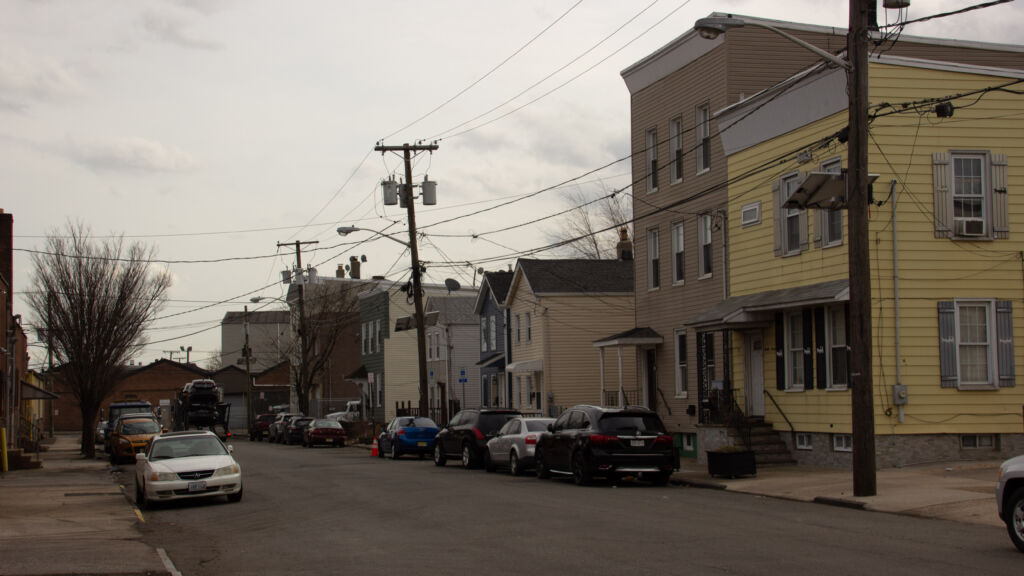
Ana Baptista grew up in Newark’s Ironbound district, just two blocks from the Passaic River at the end of its 90-mile course through New Jersey as it approached Newark Bay.
Even when she was very young, Baptista took part in demonstrations that drew hundreds of her neighbors to the streets.
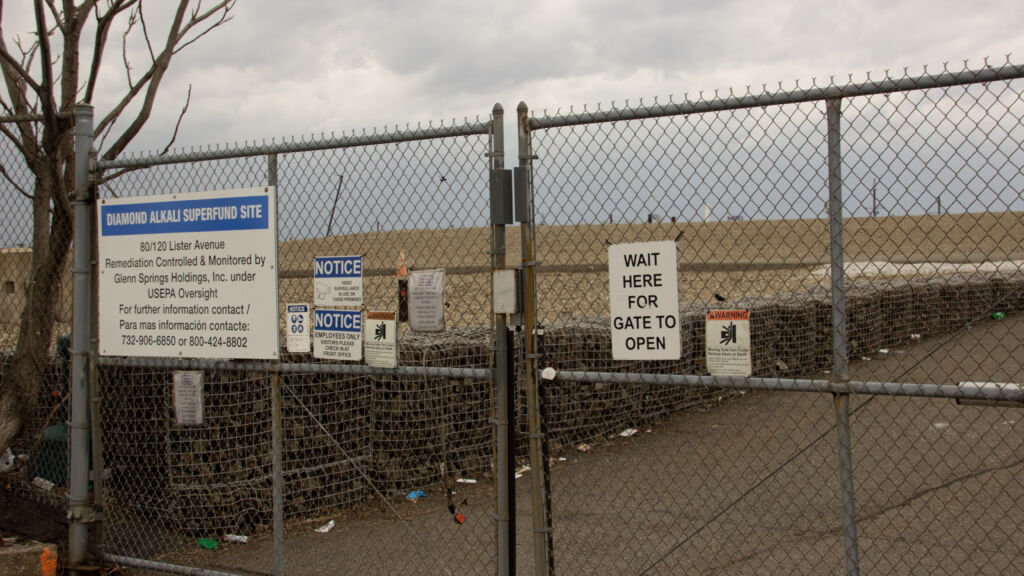
The demonstrators demanded an investigation and cleanup of the river, which was among the most polluted waterways in America, harboring PCBs, pesticides and other industrial poisons. Dioxin, a lethal byproduct of herbicide manufacture, was also discovered deep in the riverbed at the outflow from Diamond Alkali, a chemical plant in the Ironbound that made Agent Orange for use by the U.S. military in Vietnam.
More than 30 years later, Baptista is still waiting for the cleanup of the Passaic to begin in earnest.
“Maybe sometime in the next few years we’ll start to see what we’ve all been hoping for,” said Baptista, who is now an assistant professor at the New School in New York City, where she works on environmental policy.
“We’ve got a good plan and a lot of well-motivated people are dedicated to the cleanup. Still, there are uncertainties.”
One of 114 Superfund sites in NJ
It has been almost four decades since the Environmental Protection Agency placed the Passaic River on its National Priorities List, or Superfund, the federal government’s premier program aimed at cleaning up America’s most polluted sites. New Jersey has 114 of those sites, more than any other state and while the wait is on for them to be cleaned up, they are facing new threats. And so too are the people who live and work near them. In “Hazard NJ,” a podcast and multimedia reporting project, NJ Spotlight News looks at Superfund sites through the lens of climate change: how storms, rising sea levels and other emerging threats are impacting New Jersey’s most polluted places. In addition to the financial and regulatory legacy of these sites, the project looks at what climate change could mean for people living nearby and across the state.
Since the Passaic River was placed on the Superfund list, tens of millions have been spent to chart the extent of the pollution, assess its impact on human health and animal habitats, and explore alternatives to remove the poisons and reclaim the river. Records show New Jersey taxpayers have also spent a small fortune paying lawyers to pursue the main polluters, which include the Occidental Chemical Corp. of Texas, one of the nation’s biggest chemical manufacturing companies.
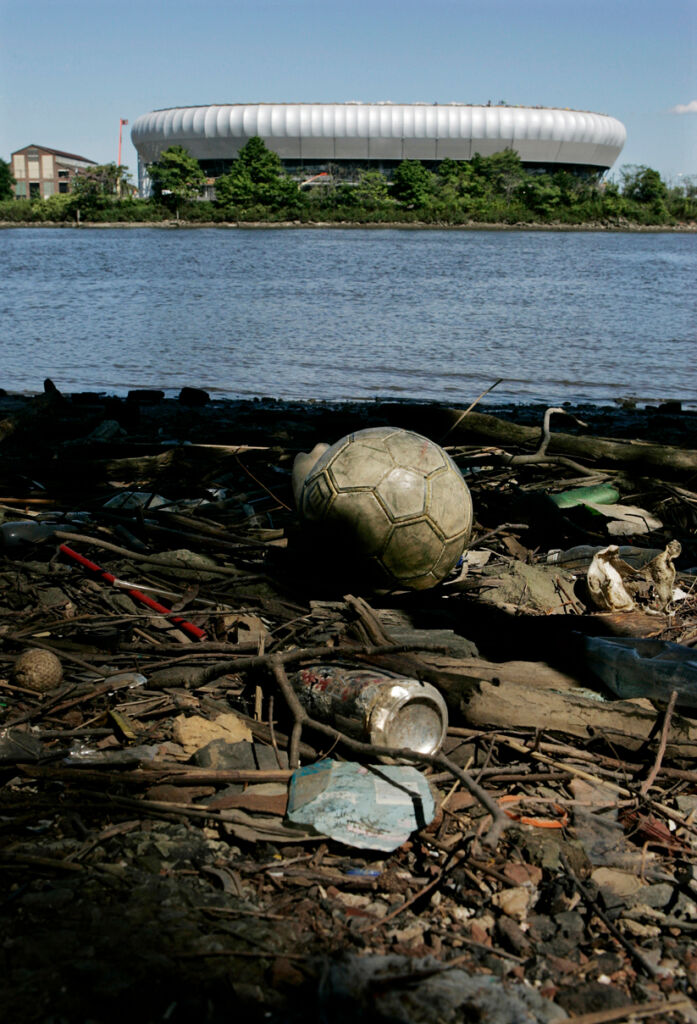
Dioxin and the other major contaminants in the river, meanwhile, have spread throughout Newark Bay and associated waterways, migrating with the tides some 17 miles upstream. An initial $1.4 billion plan approved by the EPA calls for dredging eight miles of riverbed in the lower Passaic.
But the uncertainties that concern Baptista and others who have watched and waited are manifold in what would be one of the biggest river cleanups in the 40-year history of the Superfund program.
Over the course of four decades, the government’s commitment to the Passaic project has ebbed and flowed under shifting political winds. Lawmakers in Trenton and Washington D.C. pursue clashing agendas, sometimes even within their own parties. The priority of Superfunds wanes under ideological indifference. And New Jersey governors of both parties have diverted environmental cleanup settlements to close budget gaps.
Who will pay, and how much?
Among the biggest questions undermining the Passaic project: Who will pay, and how much?
Maxus Energy Corp., a petrochemical firm that is the corporate successor to Diamond Alkali, declared bankruptcy in 2016 just months after the EPA came out with its cleanup plan. The EPA is now just one of dozens of creditors seeking payment from a firm that ostensibly has few assets remaining.
During the ongoing bankruptcy proceedings, evidence emerged that suggested Maxus’ corporate parent, the state-owned YPF SA of Argentina, had deliberately drained Maxus to avoid liability for the Passaic cleanup. The evidence showed that lawyers for YPF pegged the ultimate cost for the cleanup and restoration of the river at nearly $12 billion, an expense they believed would kill the company.
Elected officials in New Jersey were furious.
Booker: ‘America’s biggest crime scene’
U.S. senators from the state, Cory Booker and Robert Menendez, wrote fierce letters of protest to the Argentine president and explored changes in bankruptcy law that would make it harder for polluters to avoid liability for major chemical spills. Booker called the Passaic “America’s biggest crime scene” and vowed that the polluters would pay.
State legislators held a special hearing on the issue and called for the New Jersey Attorney General’s Office and state Commission of Investigation to delve into the bankruptcy. In a separate effort, citizen groups called on New Jersey to divest the $80 billion state pension portfolio of any holdings connected to YPF and Maxus.
At the time, in 2017, the pension fund had about $18 million invested in the two companies, it was reported.
“We were all shouting like stuck pigs, but in the end nothing happened,” said New Jersey state Sen. Bob Smith, a Democrat who chairs the senate’s Environment and Energy Committee.
Smith, in an interview with NJ Spotlight News, said that reforming federal bankruptcy laws is too heavy a lift for a divided government that remains in partisan gridlock. He said the hopeful political consensus that created a fully funded Superfund is long gone.
Meanwhile, the Passaic River waits for cleanup along with more than 100 other open Superfund cases in New Jersey.
“I’m as frustrated as anybody by the failure to get the Passaic and all these other sites remediated,” Smith said. “But it takes policymakers who want to go in the same direction. We haven’t had a lot of that lately in Washington. So companies think they can get away with polluting the air and the water.”
Even in relatively progressive New Jersey, policymakers have diverged on pursuing the polluters of the Passaic and other state waterways.
In 2018, Gov. Phil Murphy vetoed a bill championed by leading Democrats that would have forced the state to divest its holdings in YPF and Maxus. In rejecting the bill, Murphy said there were better ways to influence corporate behavior and said his administration would develop new policies to promote environmental and social justice in companies in which the state pension fund invests.
Stunned by Christie-era settlement
It remains unclear how far the state has taken such policies. A spokeswoman for the state Treasury said New Jersey no longer has any “direct investment” in YPF or Maxus but did not respond with details of when investments in the companies were sold or if the state still owns them as part of a larger fund. YPF did not return phone calls for this story.
In 2015, the administration of then-Gov. Chris Christie stunned environmentalists when it agreed to a $225 million settlement with ExxonMobil on $8.9 billion in liability the company accrued for various spills across the state: The settlement essentially gave Exxon a 97% discount on contamination at dozens of service stations and fuel storage sites.
Lesniak: ‘This settlement was one of the worst things I had ever seen during my tenure in Trenton.’
A contingent of advocates, including then state Sen. Ray Lesniak, sued to block the settlement but were defeated in court. The group then appealed to the New Jersey Supreme Court, which decided against hearing the appeal. The state attorney general, under Murphy, wrote a brief supporting the Christie settlement and the Murphy administration used more than half the money to help balance the state budget.
“This settlement was one of the worst things I had ever seen during my tenure in Trenton,” Lesniak said in a recent interview. “If polluters know they can walk away, what’s to stop them from doing more harm in the future?”
Research by nonprofit groups and other watchdogs shows that a number of polluters such as the firms primarily responsible for spoiling the Passaic River have successfully exploited bankruptcy laws and government indifference to walk away, paying just pennies on the dollar on their liability.
An exhaustive study by the Center for Public Integrity, a nonpartisan good-government group, found in 2007 that companies responsible for pollution at 120 Superfund sites across the country were able to avoid more than $700 million in potential liability after declaring bankruptcy.
Bankruptcy strategy?
In a study about the same time, the General Accountability Office raised red flags about the bankruptcy issue, finding that polluters had become more and more creative about draining assets from subsidiaries potentially liable for cleanup costs.
The study also found that the EPA and state governments were sometimes not aggressive enough in pursuing known polluters, leaving taxpayers often stuck paying for inadequate cleanups.
Tittel: ‘This state, and others, have developed a kind of environmental Stockholm syndrome where the regulators are held hostage by the violators and the polluters.’
In 2018, a nationwide association representing government waste officials called on states to seek financial assurances such as performance bonds and insurance guarantees from polluters. The study cited numerous cases where bankrupt polluters escaped responsibility, including the owner of a Hunterdon County landfill that stuck state taxpayers with millions in cleanup costs in the early 2000s.
The New Jersey Sierra Club has advocated for more aggressive tactics in attacking corporate pollution.
Jeff Tittel, former director of the group, said the long delays in cleaning up the Passaic ultimately reflect the values of federal and state policymakers unwilling to engage powerful and wealthy interests in the petrochemical industry.
Draining the Superfund program
The Superfund program, he pointed out, has been steadily drained of money, especially after an oil-industry surcharge that fed the fund was eliminated in 1995. At the same time, regulators in many states, including New Jersey, developed a transactional stance toward corporations which were suddenly treated more like clients than violators, Tittel said.
“The real frustrating thing is that we seem to have lost our sense of urgency. There’s no sense of crisis,” Tittel said. “This state, and others, have developed a kind of environmental Stockholm syndrome where the regulators are held hostage by the violators and the polluters.
“The result is that 40 years have passed, and we still don’t have a firm plan in place for cleaning the river and paying for it,” he added. “In my mind, that is inexcusable. The dangers are still out there.”
The state DEP declined requests for comment and referred all questions to the EPA.
The federal agency declined to discuss the overall impact of bankruptcy on Superfund cases, but said it continues to aggressively seek claims through the bankruptcy process. There have been notable successes by the EPA, including its successful recovery of more than $60 million from Maryland-based chemical manufacturer W.R. Grace & Co. for liability connected to 32 Superfund sites.
“In bankruptcy we have to get in line with all the other creditors,” said EPA spokeswoman Mary Mears. “But we often end up at the front of the line.”
Some progress
While progress on the Passaic has been painstaking, a marked increase in activity began in 2016 when the EPA under President Obama settled on the $1.4 billion plan to remediate an 8.3 mile stretch of the lower Passaic from Newark Bay to the Newark-Belleville border.
The plan calls for removal of 3.5 million cubic yards of toxic sludge from that stretch of the riverbed, followed by capping of the entire river floor from shore to shore. Critics say the cap will fail to withstand the stresses of boat traffic and ever stronger storm tides predicted in the warming environment. But most local watchdogs support the historic plan, which would be the most extensive dredging project in Superfund history, and say it will offer more than adequate protection.
Baptista: ‘It’s taken 300 years to ruin this river. It’s going to take a generation or two to get it back.’
Also in 2016, the EPA reached a settlement with Occidental Chemical that requires the firm to pay $165 million for cleanup work.
“For decades, the people of Newark and New Jersey have been deprived of one of their greatest natural resources because it was taken from them by corporate greed. I’ve said it before: the Passaic River is New Jersey’s biggest crime scene. The high level of contaminants that the community is exposed to leads to heightened risk of cancers, birth defects and other serious health problems, with disproportionate harm inflicted on Black and Brown and low-income communities,” Booker said in a statement to NJ Spotlight News.
“We must address this injustice, clean up the Passaic River and hold polluters to account,” he said.
Baptista, who for the past decade has been a member of an EPA-led citizens group overseeing the Passaic cleanup, says the flurry of movement gives her faith that more good things are on the way.
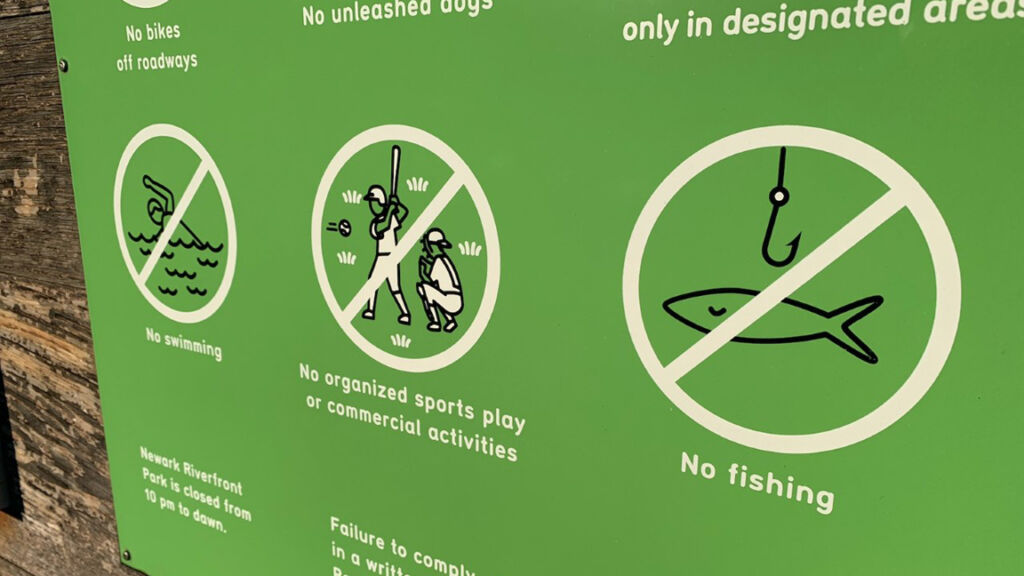
“When I was a kid, we learned that you didn’t catch fish out of the river or swim in it,” she said. “For all I know, you may never be able to swim in the Passaic. But I’ve learned that progress on this issue takes time and we have to be patient.”
Even before the big toxic spills of the 1960s and ’70s tainted the river with dioxin, Baptista said, dozens of other factories, as well as towns big and small, were pumping pollutants into the river. More than 100 such entities have already agreed to some level of liability and will pay an undetermined amount for the cleanup.
“It’s taken 300 years to ruin this river,” Baptista said. “It’s going to take a generation or two to get it back.”
