
Border Dispatches: How life goes on in a village destroyed by Russian attack
Moshchun was in the path of the Russian assault on Kyiv
Moshchun, Ukraine: A house that was destroyed in a Russian assault
The village of Moshchun had exactly 794 residents in mid-February before the Russians amassed a 40-mile convoy north of Kyiv. Like the twin cities of Irpin and Bucha, this rural village was in the path of the Russian assault on Kyiv.
The atrocities that took place in Irpin and Bucha are well documented. When the Russian army’s turbulent wave of violence receded, the horrors of its inhumanity were discovered in the wake. About 500 civilians were executed or otherwise shot and killed on city streets. Mass graves revealed many people had been bound and tortured. Women and girls were raped, some repeatedly before being killed. Bodies rotted in the street.
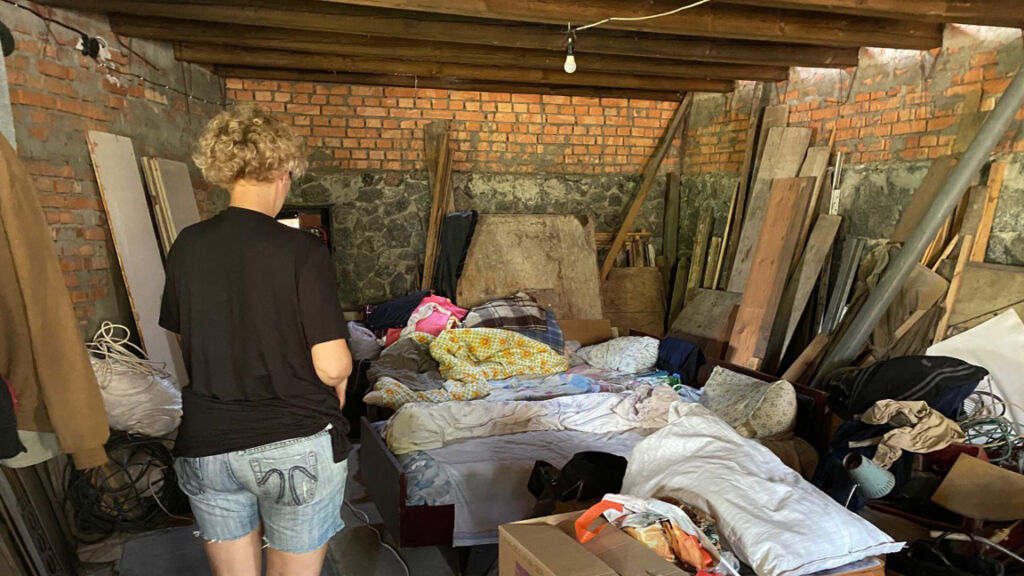
The people of Moshchun, who live on a series of dirt roads a few kilometers northeast of Irpin and Bucha, did not suffer an occupation by Russian troops because there was nothing left to occupy. Except for one small area, every home in the village was either leveled or made dangerously uninhabitable.
Living in the ruins
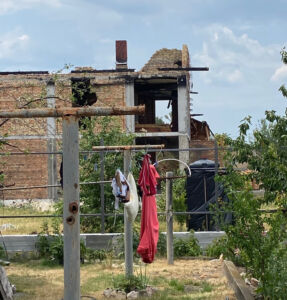
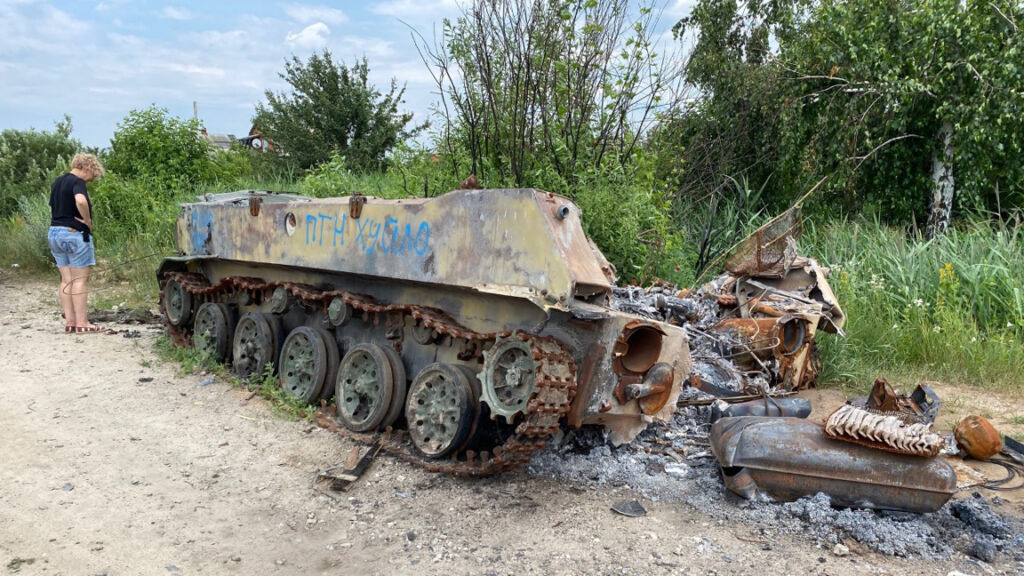
This village is now a ghost town and the few families left live in the ruins of their homes. Some houses only have a lone wall or chimney standing. Others had roofs and second floors sheared off. Most were burned, and the smell of charred wood and furnishing hangs in the air and clings to the skin a full three months after the Russians were beaten back. Deep round holes pockmark the roads where missiles hit. And there’s a charred Russian tank, with the tattered and burned uniforms of the soldiers who died in it, embedded in the dirt.
I was in Moshchun on Tuesday with a group of Ukrainian volunteers who handle the extensive donations collected by the Ukrainian Cultural Center in Whippany and distribute them where they are most needed, to civilians and military.
This is my fourth trip to Poland and Ukraine since the war started and I plan to be in Kyiv for at least a month to help move the mountain of essential supplies organized, packed and shipped by Dr. Roksolana Vaskul and the people of the Ukrainian Cultural Center.
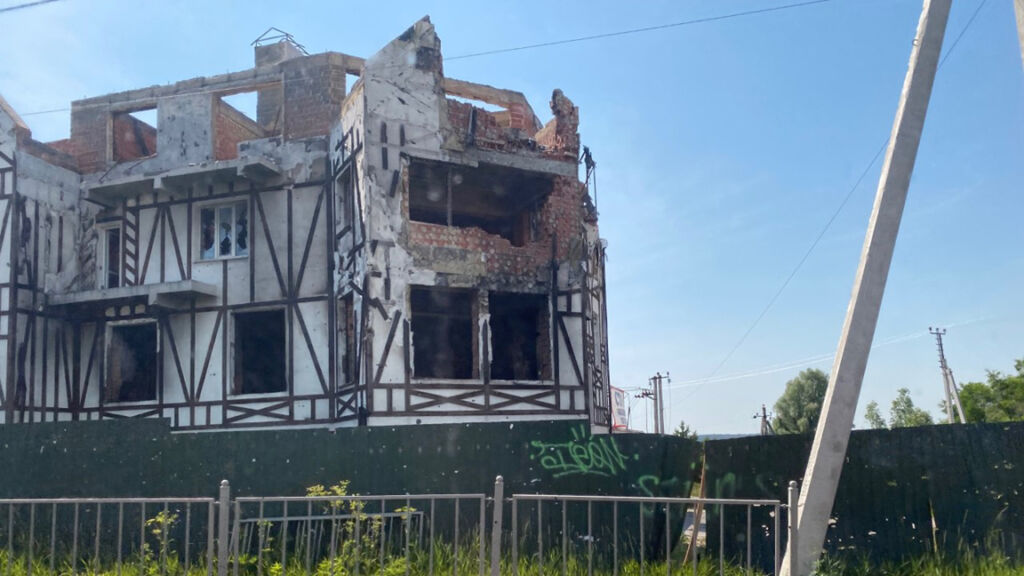
Despite its rural nature, the homes in Moshchun were substantial. Many could be described as mansions, newly and sturdily constructed of brick with tile roofs.
The ones who stayed
“This was a rich town,” said Mary Belova, one of the volunteers with whom I’m traveling to bring some measure of aid to war victims. “Some wealthy people from Kyiv built homes here and kept a flat in the city.”

Those are the people who are gone, leaving only a few elderly couples and a small number of families still living in the ruins of their once picturesque village.
At our first stop a woman named Leona was hanging clothes while her husband washed a few items in a small electric machine. Behind them, their house was reduced to a pile of bricks inside four walls, and they now live in a gardening shed. But she proudly showed her blossoming garden of basil, tomatoes, cabbage and other vegetables, and the two kittens one of her cats recently birthed.
“We try to stay happy. We have to go on with our lives,” Leona said.
Among the supplies we brought her was cat food, and she immediately fed the kittens.

Nearly everything distributed on this trip was shipped from the Ukrainian Cultural Center, including a box of pots and pans labeled from Belmar. I take pride in that.
Down the road, Natalia and Uri, both septuagenarians too, were moving forward, despite Uri suffering a heart attack two weeks ago. Among the food and hygiene supplies we delivered was a battery-operated blood pressure monitor. They left Moshchun during the invasion and came home to find their three-story home reduced to front stairs and a turret-shaped wall, and the body of a Russian soldier in their garden and three in the nearby forest of tall cedar trees.
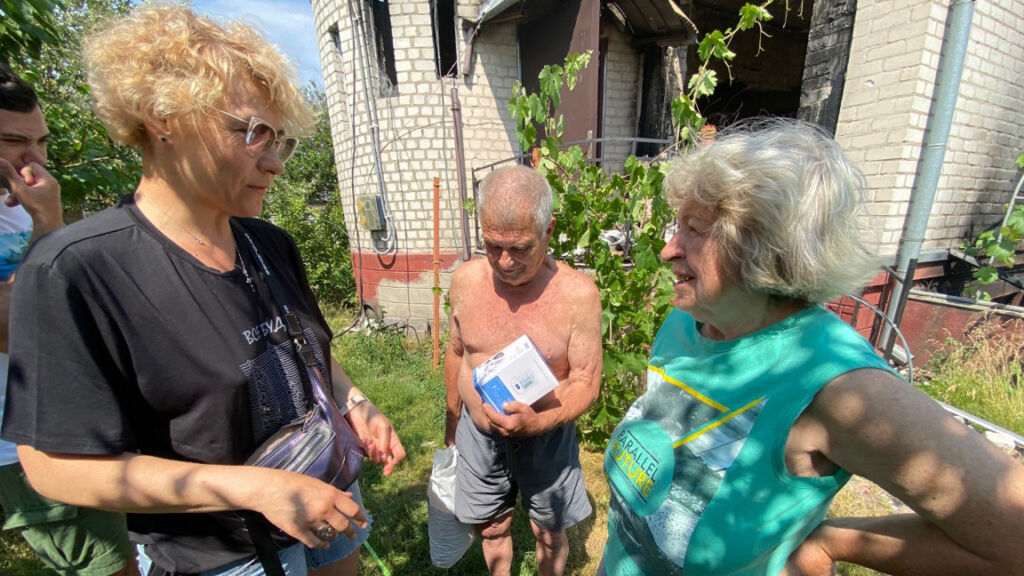
They now live in the barn where Natalia has set up a kitchen, and where she served us cheese sandwiches with sardines and a warm berry drink, while Uri poured his homemade wine, both with pride and hospitable concern for their guests.
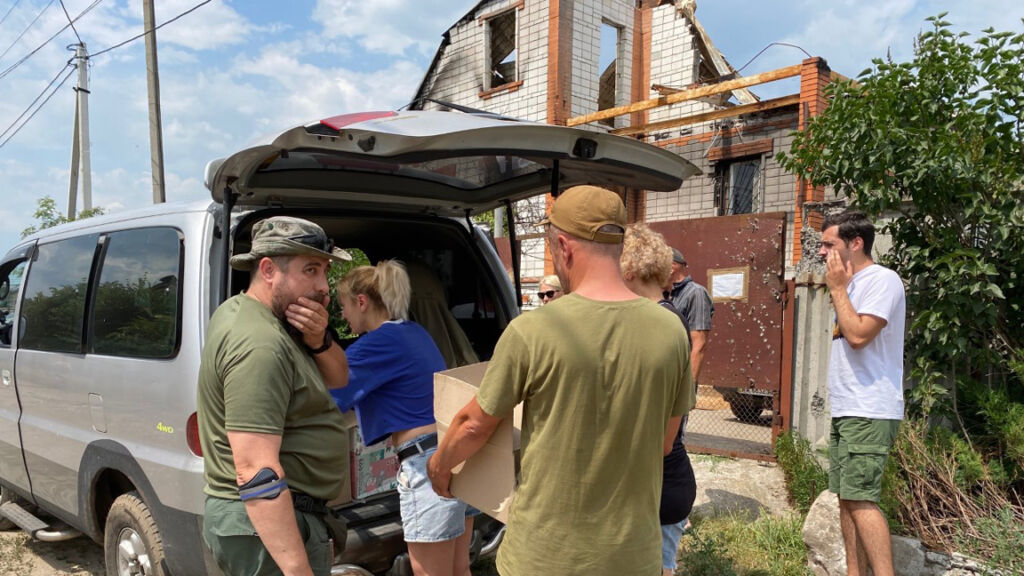
They have two daughters living in St. Petersburg, Russia and two living in Kyiv but none have room for Uri and Natalia’s dogs, Uri said, so they are staying put.
Like Leona, they are making the best of it. The garden is producing herbs, small potatoes and other vegetables, and both Natalia and Uri laugh easily and frequently.
“We wish we had more help from the government,” Natalia said. “But we are happy for the volunteers and what we have. And our garden is growing.”
Life, in all its forms, goes on.
— All photographs courtesy of Mark Di Ionno