
Border Dispatches: Indelible images of Ukraine
And the final photograph not taken, because ‘it could never capture the loneliness’
Editor’s note: Reporter Mark Di Ionno spent most of the summer in Ukraine volunteering to bring needed supplies to people caught up in the Russian war. In this, his last dispatch, he recalls some of the people he met, the journeys he took, the searing images — and the photograph he did not take.
In the basement of a Soviet-built government office building in Kyiv, there are large rooms with thick, fortified concrete ceilings and walls. The doors to these rooms are like submarine hatches, with valve wheels that turn impenetrable locks and create an airtight seal.
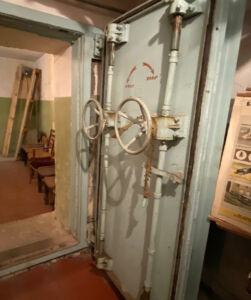
I stepped into these bomb shelters, aware of the great irony. They were built during the Cold War by Russia to protect Soviet Ukrainians from American nuclear missiles. Now, they are used to protect democratic Ukrainians from Russia.
The drab, angular building is now a military center for soldiers rotated to here from the front, and a reservist named Dmytro gave me a tour after we dropped off supplies, including boxes of saline IV bags.
Dmytro showed me the rooms where the government workers stored paper in the basement rooms before the war. These stacks served as hard mattresses for about 100 civilians the soldiers sheltered during Russia’s eight-week rocket barrage of Kyiv and its suburbs to open the war.
There are still blankets in the room and other evidence of people huddled there as residential buildings were bombed overhead for a month in late February and March.
“We went out and got the neighbors,” Dmytro said. “We had food for them, and they could be safe here.”
They sheltered underground
For a few weeks, the people mostly stayed underground. When they ventured out, it was into a shuttered city where air raid sirens were almost constant.
During my summer in Ukraine, I was given access to this bomb shelter and other places very few outsiders get to see. This privilege came through my work at a supply warehouse, mostly stocked by donations from the Ukrainian American Cultural Center of New Jersey in Whippany.
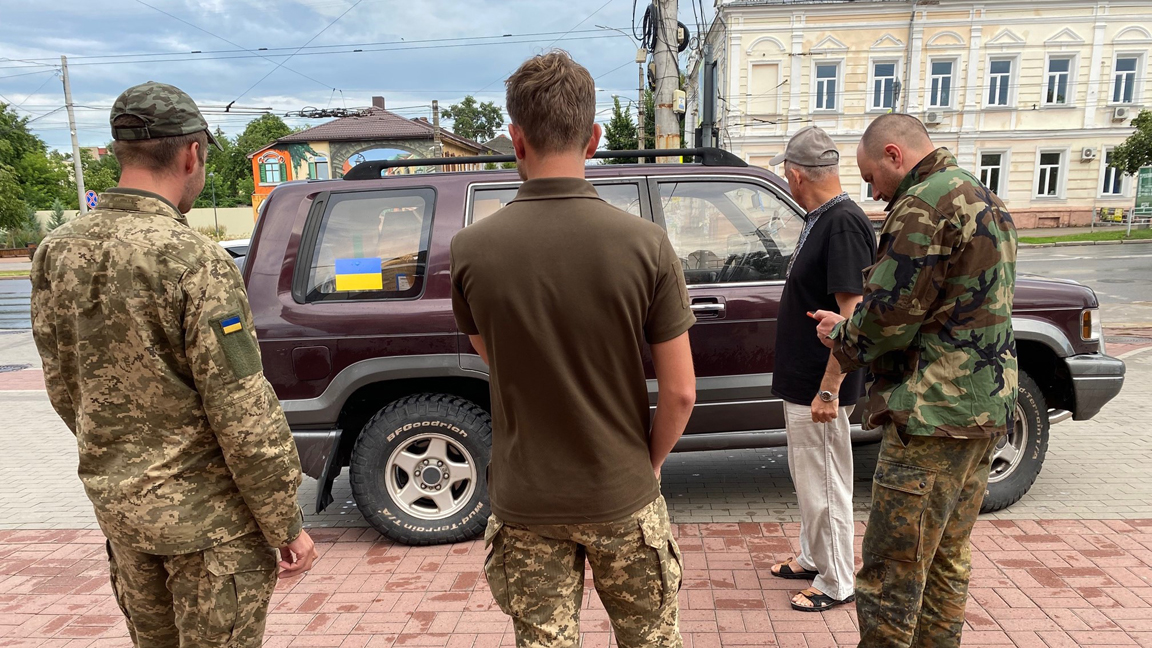
Since 2014, when Russia forcefully annexed Crimea and funded and armed insurgents in the Donetsk and Luhansk regions of eastern Ukraine, the center has sent 19 shipping containers of medical supplies and other essentials goods, including 1.5 million ready-to-eat meals, and financed the purchases of three ambulances and 12 other vehicles.
I delivered two of these myself, heavy-duty SUVs, driven to Chernihiv, 37 miles from the Russian border, and to Poltava, halfway between Kyiv and the heavy fighting in the east.
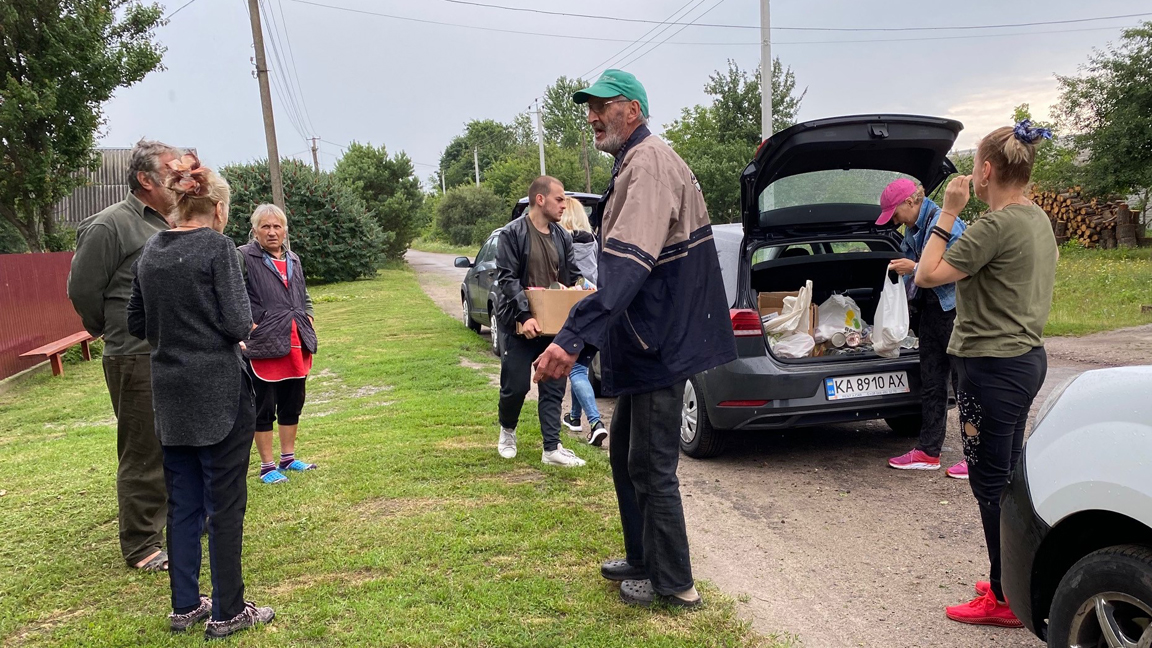
In the far reaches of northern Ukraine, where Russia launched its ground attack from its allied country, Belarus, I helped deliver supplies to remote camps. One housed an artillery battalion rotated from the front.



They live in small groups, in rustic farmhouses and shacks spread out over miles, adopting nearly 19th-century lifestyles, with sparse, low-voltage electricity to power small refrigerators and apartment-sized washing machines.
Soldiers, back to the past
There are no televisions. They cook over charcoal or wood they chop themselves. Cellphones are off, for fear that Russia can track usage clusters in usually empty areas and assume the presence of the military.
In the two most remote camps we ate pork hunks and chicken grilled over a wood flame, slightly hardened bread and cabbage salad with cucumbers and tomatoes, while the soldiers laughed and joked, and comically pantomimed their actions in the field, sometimes mocking their own fear, and talked about the war with me.

But during the storytelling and laughter, I noticed one or two would drift off, with their eyes still and unfocused. It is a symptom of post-traumatic stress disorder, called the “thousand-yard stare.”
Both these camps were under the nose of the enemy, in farm country so expansive and desolate that at night there seemed to be more glittering stars than black spaces in the infinite sky. The Milky Way’s distant orbs cut a translucent path through the sky.
But two celestial bodies sped through the sky, moving erratically.
“That’s Elon Musk,” one soldier said.
Back in March, Musk activated Starlink satellites to bolster Ukraine’s internet capabilities, free of interference from Russia, which had jammed communications early in the war. And there they were racing through the sky, visible.
Magnificent skies
Unable to make it back to Kyiv by the 11 p.m. curfew from one camp, I spent the night trying to sleep in my rental car, but the light and beauty of the sky made it impossible. I took a picture, but it failed to capture the magnificence.
Another remote camp off a series of long unpaved roads housed a transportation unit, which repaired older military trucks hidden under trees to avoid detection. The mechanics in the unit cursed the aging and unreliable Russian-made Ural and ZIL trucks they inherited from the Red Army days, while other men repaired structures, peeled potatoes and cooked. The lone woman was an army medic, a married nurse away from her husband and children.
I was allowed to photograph these scenes, part of the collection of images I’ve shared on these pages over the summer.
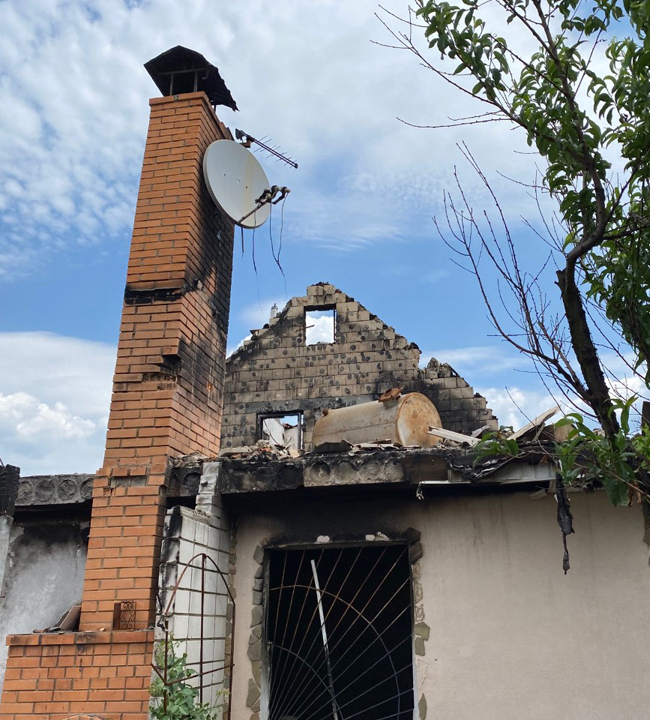
It’s hard to look away from the pictures of abject destruction, the homes, apartment and commercial buildings blown apart and blackened by fire. These images of wanton Russian malevolence are searing and unforgettable.
Keeping on, no matter what
But for me, they only give greater context to the bravery and resilience I saw in the Ukrainian people:
The woman who prepared lunch for us in the makeshift kitchen in her barn.
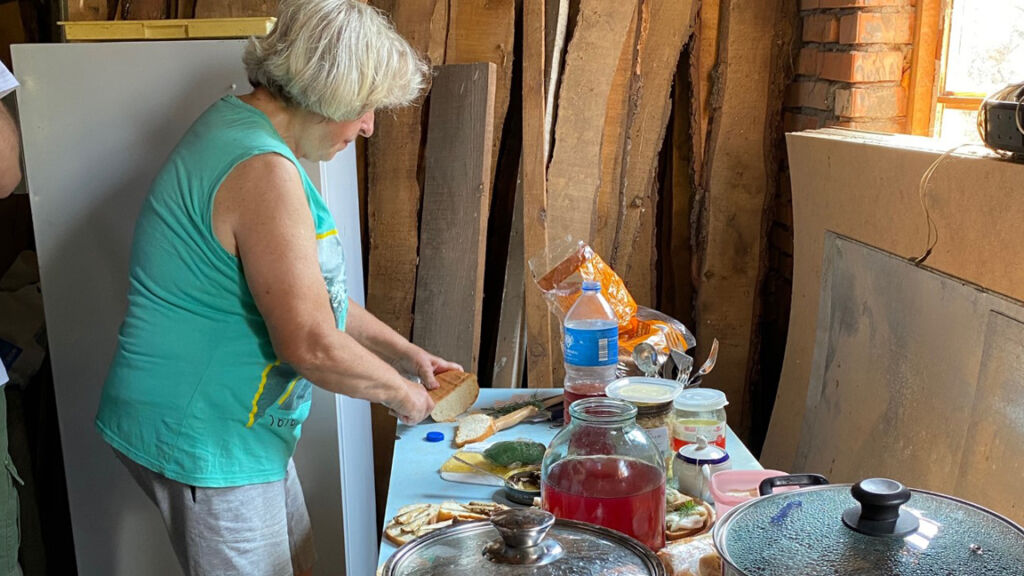
Natalia’s home was destroyed in a Russian assault on the village of Moshchun. She and her husband Uri now live in a barn, where Natalia served lunch to Mark Di Ionno and other volunteers delivering supplies.
Another working upstairs in her home office one floor above a giant hole made by a cannon blast.
The women in the basement of the warehouse, working nearly around-the-clock to painstakingly create camouflage netting for the military.
The children playing on the destroyed and rusted Russian tanks and rocket launchers on display in St. Michael’s Square in Kyiv, another example of Ukrainians being bold and unafraid to “poke the bear.”
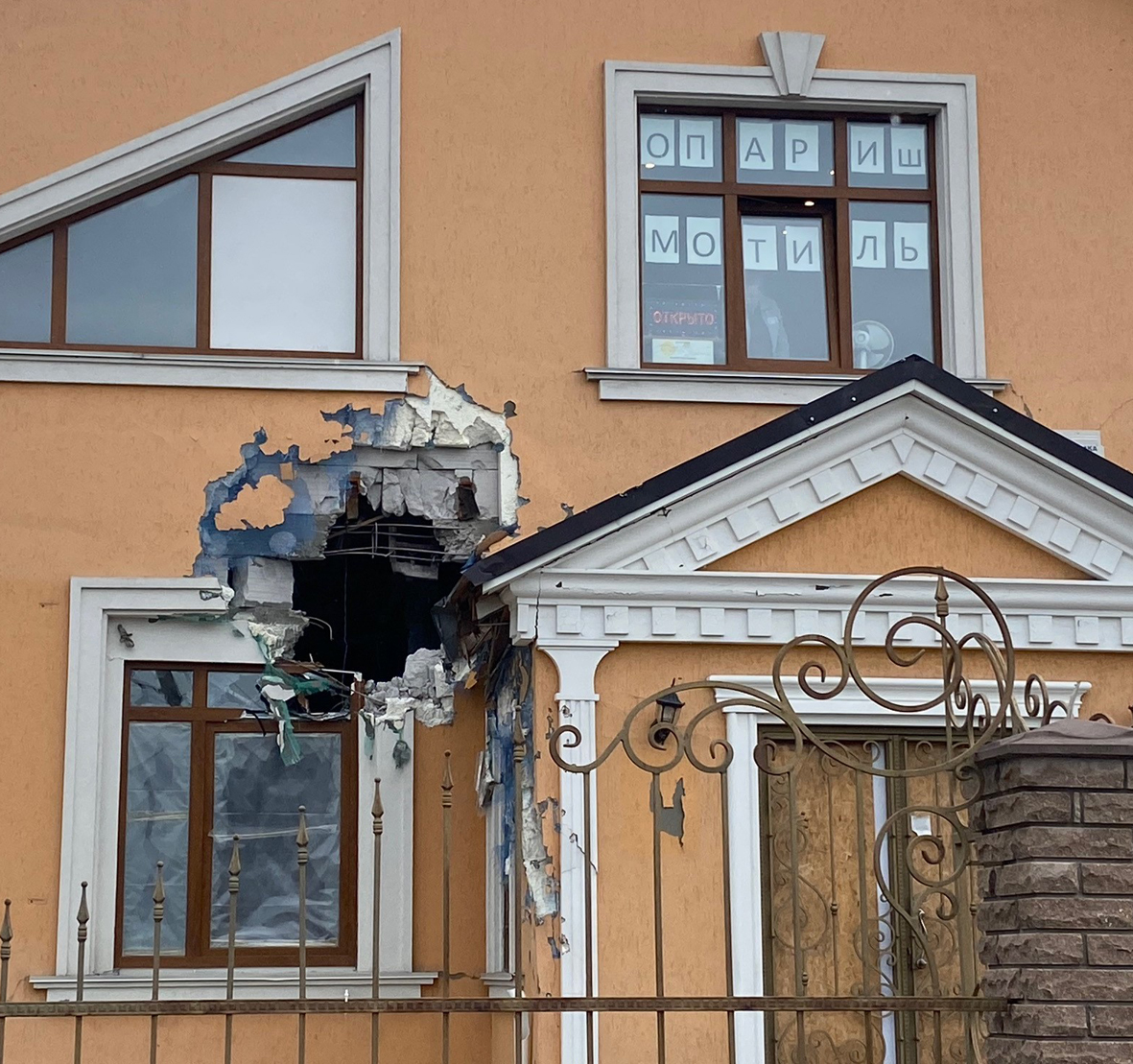
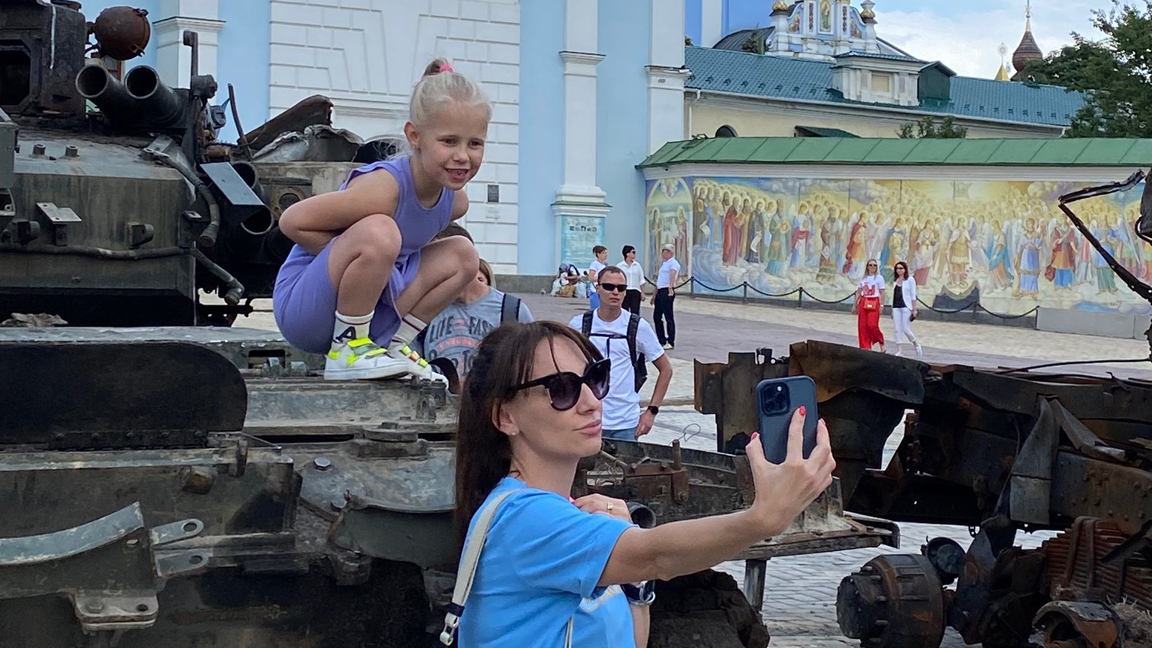
On my last day in Ukraine, I drove from Lviv to the town of Krakovets on the Polish border. Evidence of the war disappeared in my rearview mirror as the western Ukraine countryside bore no scars of the invasion.
At the border, I decided to take a country road south to cross near the unpronounceable Polish city of Przemyśl, just to extend my seven-week stay for a few more hours.
On an unpaved road through corn and hayfields where old women in babushkas slowly pedaled rickety bicycles, I saw a new grave in a field, surrounded by fresh bouquets and marked by a crucifix.
High above it flew a Ukrainian flag, the sign of a soldier’s death. I imagined the young farmer or son of a farmer buried there, who left his peaceful home untouched by Russia’s assault to fight in this brutal and destructive war for his country in a place hundreds of miles away.
It would be a symbolic final picture of the cost of freedom, an enduring final image of my time here. But I didn’t take it, because I knew it could never capture the loneliness.
— All photographs courtesy of Mark Di Ionno. The cover photograph shows a bombed-out gas station on the E95 highway north of Kyiv.