Credit: Bill Beren
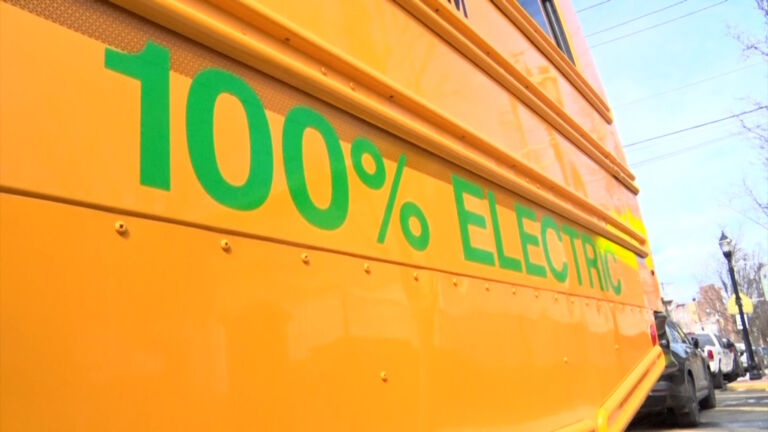
New Jersey is inching toward getting more electric school buses on the road, replacing its sizable fleet of fossil-fueled vehicles with their adverse environmental and health impacts for children.
Several school districts and private bus companies are already taking advantage of state and federal grants to speed the transition to electric school buses. A bill moving through the Legislature also aims to make it easier for schools to rent or buy electric school buses outside of a grant program.
The bill (A-1677), which advanced out of the Assembly Education Committee last week, would extend terms for lease and purchase contracts for electric school buses to last the service life of the bus. The New Jersey School Boards Association would also help local districts obtain electric school buses by working as a government aggregator.
“If we get more electric school buses in the system, taking advantage of this technology, we’re going to drive down the costs for moving kids around. We’re going to do it in a safe and healthy way, too. And it’s going to benefit the environment,” said Pam Frank, chief executive officer of ChargEVC.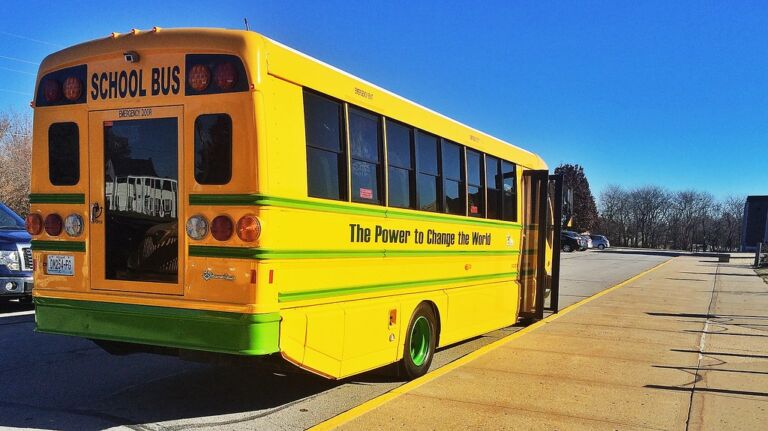
There are currently some two dozen electric school buses on the road in the Garden State, according to Environment New Jersey and state chapter of the Sierra Club. About 150 more are on order, said Doug O’Malley, director of Environment New Jersey. These zero-emission vehicles represent a small fraction of the more than 21,700 registered school buses in New Jersey, more than 99% of which run on fossil fuels, according to the state Department of Environmental Protection.
Fossil-fueled vehicles are the largest single source of emissions contributing to climate change, according to the Environmental Protection Agency. Transportation accounts for up to 40% of climate pollutants, so cutting emissions from cars, buses and trucks is considered critical to reaching the state’s goal of reducing greenhouse gas emissions to 20% of 2006 levels by mid-century.
Effects of diesel-powered buses
In recent years, policymakers, school officials and environmental activists have focused on replacing the state’s fleet of diesel-powered buses with electric ones. Diesel buses emit harmful pollutants that contribute to climate change and are harmful for young passengers. Bill Beren, transportation committee chair at the state Sierra Club, said these pollutants can lead to asthma and other respiratory conditions. Asthma is a leading cause of chronic absenteeism, when a student misses 10% or more of the school year.
Improving health outcomes also means improving education outcomes, O’Malley said. One study of 1,941 school districts that received funding under the 2012-2016 School Bus Rebate Programs found that districts that replaced the oldest and highest-polluting buses saw significantly greater improvements in district-average test scores compared with other districts.
New York announced plans to transition to a 100% zero-emission electric school bus fleet by 2035.
New Jersey launched a grant program to encourage and monitor the transition to electric school buses. The grant program includes up to $45 million over three years to replace diesel school buses with battery-powered school buses, depending on funding availability. Applications were due in May for the first $15 million.
The DEP aims to select an equal number of sites from the northern, central and southern regions of the state for the new buses. In each year of funding, at least half of the selected districts or school bus contractors must operate within a community that has a high percentage of residents who are low-income, identify as minority or have limited English proficiency.
The grant program is open to school districts that own their buses and school bus contractors that provide busing services to schools. Contractors must apply in conjunction with a specific school or district.
Assessing the pilot program
O’Malley said the program will be important to guiding the future of electric school buses in New Jersey. Momentum from the pilot program and other ongoing initiatives will show districts that electric school buses will benefit them in the long run, he said.
New Jersey has no mandate or statewide goal specifically for switching to an electric fleet of buses, but that could change after the pilot program ends, O’Malley said. He pointed to New York as a model for what New Jersey’s electric school bus program could look like. New York announced plans to transition to a 100% zero-emission electric school bus fleet by 2035.
Beren of the Sierra Club said speeding up the state grant approval process would help get more buses on the road. One holdup has been delays in installing charging stations, which have prevented some buses from being used for up to a year, he said. Beren is now advising districts to order their charging stations as soon as they’re authorized to purchase an electric school bus.
‘We know that electric school buses, to buy them outright, is a significant expense, so allowing these contracting, leasing opportunities creates an opportunity for our schools.’ — Assemblywoman Pamela Lampitt (D-Camden)
New Jersey has also received federal grants for electric school buses through the EPA’s Clean School Bus Program, which aims to provide $5 billion over five years to replace existing school buses with clean ones.
At the end of May, the EPA announced an additional 11 New Jersey school districts will benefit from over $12 million in rebates that will provide nearly 70 clean school buses in the third round of funding.
“Protecting our kids by delivering more funding for clean school buses in New Jersey is not only protective of public health, but also another leap forward in the fight against climate change by reducing harmful diesel emissions,” said EPA Regional Administrator Lisa F. Garcia in a statement. “Every child, should be able to open their school bus window and take a deep breath of fresh air, whether on the bus or at the bus stop.”Brick Township, Haddonfield, Jackson, Summit and Toms River Regional are among the school districts set to receive rebate funding in the most recent round.
New Jersey has received a total of 201 grants for electric school buses, 76 of which have been canceled by recipients, said Beren. If federal grant awardees withdraw for any reason, the EPA may award returned funds to applicants on the waitlist for the same funding opportunity or use the funds for other clean school bus funding opportunities.
High costs
Without grant funding, switching to an electric fleet can be costly for school districts. Electric school buses have higher upfront costs than diesel buses, even though they can lead to savings in the long run.
A study from the University of Delaware found that districts whose electric school buses discharge their batteries into the electrical grid when not in use and who get paid for the service could save millions over a bus’s lifespan.
Extending the time frame over which school districts can use electric buses will help them maximize their savings. Beren said extending the time frame of electric school buses leases and purchase contracts to the service life of the bus is the biggest improvement outlined in the bill that is moving through the Legislature.
“Anything that reduces the red tape involved is a benefit,” Beren said.
Under state law, fossil-fueled buses may be used by districts for 10 years. Some manufacturers estimate their electric school buses will last longer, with lifespans of up to 15 years.
“Gas and the rising cost of gas really impacts our school budgets. We know that electric school buses, to buy them outright, is a significant expense, so allowing these contracting, leasing opportunities creates an opportunity for our schools,” said Assemblywoman Pamela Lampitt (D-Camden), a sponsor of the bill and the chair of the education committee.