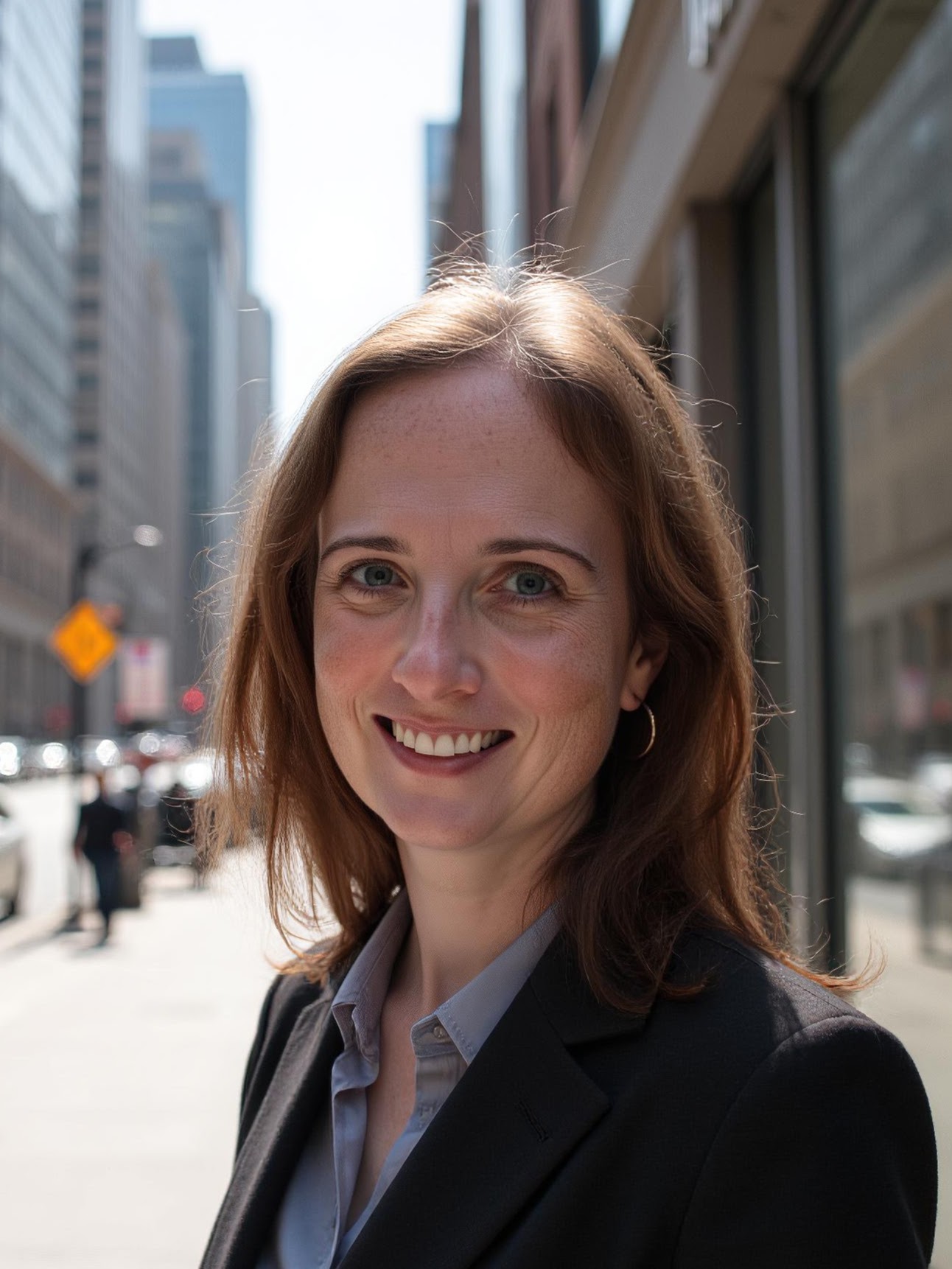
Credit: (Newark Board of Education)
 Raised in Newark’s Ironbound by Portuguese immigrants, schooled by feminist nuns, Carla Ferreira knew early on that she wanted to teach.
She took the scenic route, though: by way of Harvard, Stanford, Cambridge and Rutgers, publishing poetry and stacking degrees. English, education, creative writing.
Then, last year, she returned to a high school classroom in the working-class neighborhood where she grew up. It’s a place that inspires not only her poetry, but also her drive to dream big, climb high, then come back home to help the next kid.
“None of that would have happened if my teachers hadn’t believed in me, because I certainly did not carry that same belief in myself,” she told NJ Spotlight News.
Now, this English and bilingual teacher at the Newark School of Architecture & Interior Design is the state Department of Education’s Essex County Teacher of the Year.
She spoke to Julie O’Connor about her work and her life in the classroom, and offered blunt messages for policymakers about ICE and “not turning our students into test experiments for AI companies. ” Here is a lightly edited transcript.
Scavenger hunt
Question: In the dedication for one of your poetry books, “Ironbound Fados,” you give a shout-out to “my students, my joyful-scavenger-hunters, my English learners. For the immigrants, the Dreamers, and the fighters,” you wrote. “For us.” Tell me what you’ve learned from teaching these kids.
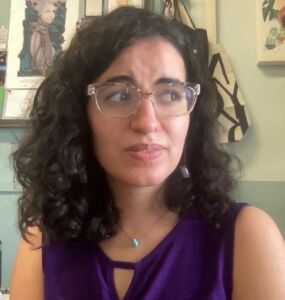 Credit: (Carla Ferreira)
Answer: I’ve learned how to be a better teacher. The “joyful scavenger hunters” – that was actually something one of my students said when I was teaching a lesson in close reading: the process of carefully noticing and analyzing patterns in literature to make meaning of what we read.
I was going through all the academic language on that, and they said, ‘Oh, so this is like a scavenger hunt, right?’ And I thought, that’s the most brilliant way of talking about close reading I’ve ever heard.
When I first started working as a teacher at a public high school in Silicon Valley, I was so struck by the compassion and thoughtfulness in my English language learner classroom. In some ways, the behaviors were the most challenging out of any class I was teaching, because they’re carrying so much trauma from their immigration experience.
But what I noticed more was the resilience, the desire to learn. One of my students, Wendy, was a transfer in the middle of the year. She came in and asked, ‘Can you please teach me more English during lunchtime?’
When I asked, ‘What motivates you?’ she said, ‘Well, my father died of cancer in Mexico. I wasn’t able to say goodbye to him. And I promised him I’d be the first to graduate from college, so I’m going to do whatever I can.’
Whether you’re working in Newark or with English language learners, there’s a sense of, ‘Oh wow, that’s such tough job.’ And a lot of it is. But it feels for me like a privilege.
Delaney Hall
Q: You’ve said this recognition lets you act as an advocate for your most vulnerable students. Do you feel a responsibility to do that? What’s the most pressing message you want to send to policymakers?
A: Oh, I do. I have to tread the line carefully here, because when I received this honor – which was such a huge surprise to me, because I don’t like the spotlight – it felt like a really important responsibility to speak up. I was told: This is an opportunity to advocate for what you care about, but don’t get too political.
And the problem with that, of course, is that the teaching profession has – against our will, for the majority of teachers – become very politicized. So, these are the two issues I really care about most.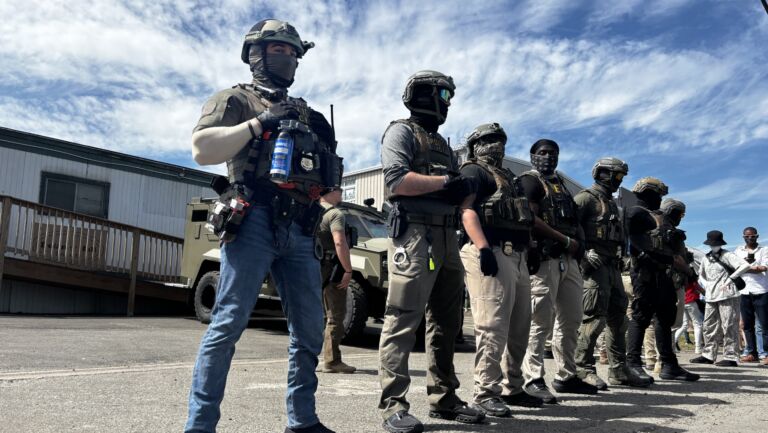
First, making sure our students feel safe, inside and outside the classroom. For so many attending school in the same zip code as Delaney Hall – the same zip code I grew up in, in the Ironbound – it’s created a culture of fear outside school that we as teachers have to work overtime to try and address. I was very inspired by a high school student in Arizona pushing for legislation to have all ICE facilities around 3 miles of a K-12 school closed down. I would love to see that happen.
The other issue is making sure we are not turning our students into test experiments for AI companies. As someone who went to school for my education degree in the heart of Silicon Valley, there was this motto amongst the tech folks there that’s become quite famous, this idea of, you want to move fast and break things. But the things that we’re breaking cannot be our students’ ability to critically analyze, their ability to maintain focused attention.
I worry we’re doing them a disservice by shoehorning this kind of technology into so much of their education. Much of my identity as a poet, alongside my identity as an educator is: How can we pay careful attention? How can we notice?
Q: What effects have you seen on your students from heightened fears of immigration raids and the protests at nearby ICE facility Delaney Hall?
A: It’s been heartbreaking, just the sense of not belonging. The hatred they’re hearing on the news doesn’t speak for the majority of people here who want to welcome immigrants, and value and affirm students’ lives beyond borders.
One of the things I did as an English teacher was teach students – whether or not they’re legal citizens – how they can make sure they’re still accessing rights afforded to them by the Constitution. I have noticed that the presence of ICE agents – and the ramped-up presence in Newark, in particular – has been creating a culture of fear. I’ve had students who didn’t want to participate in the Portugal Day parade with our school because they were afraid that heightened visibility would put themselves or their families at risk, for example.
Catholic education
Q: Growing up in the Ironbound district, what role did your own teachers or your mother – who I understand also taught in Newark public schools – play in shaping your beliefs on education?
A: My grandmother really wanted to become a teacher. She grew up in Portugal and wasn’t allowed to continue her education. Then my mom became the first in her family to graduate college and became a teacher. She taught kindergarten.
I attended small Catholic schools; the school I attended for K-8 was located across the street from the current high school I teach at. It was a Catholic education, but unusually progressive. I often joke that I was taught by feminist nuns. That sense that our responsibility here on Earth is to take care of each other became such a core part of my identity.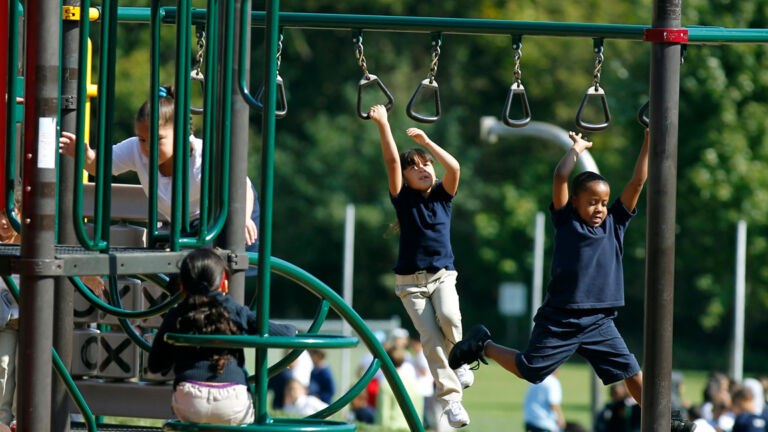
Oddly enough, it was my experiences in Catholic school that taught me that working for equity is not just a hobby. It’s a way of life. I remember that in high school, at one of our prayer services, the person who was leading it said that service is the rent we pay for living. It became such a core part of my philosophy as a teacher.
Q: You’ve mentioned that your bilingual students sometimes outperform honors students in certain areas because of their deep passion for reading. What do you think motivates that? How do you tap into it?
A: It was one of my greatest joys this past school year when I saw that my bilingual class actually outperformed my honors classes on some key vocabulary assessments. Newark public schools has this amazing initiative of bringing sustained independent reading into the classroom at all grade levels. We made it a weekly practice and it was one of the initiatives from the district I love the most. The students in my bilingual class would just devour books. It was amazing. I think that’s ultimately what pushed the needle in terms of their vocabulary acquisition.
Like a beginner
Q: Does being a poet influence the way you teach writing and literature to teenagers?
A: No matter how much I’ve written or read, every time I encounter a new poem, I’m not an expert. I have to relearn the rules. And it puts me in that state of a beginning learner. That kind of helps in terms of how I teach things to students.
I tell them, “Imagine a poem as a building, a structure, and you’re just walking around. You’re looking deeply. You’re paying attention.” That’s part of what’s often lost if you have a student who uncritically goes to something like ChatGPT and says, ‘What is the theme of this poem?’ We lose the productive struggle.
Q: When people look at your resume and ask why you chose a high school classroom over other careers, how do you respond to that?
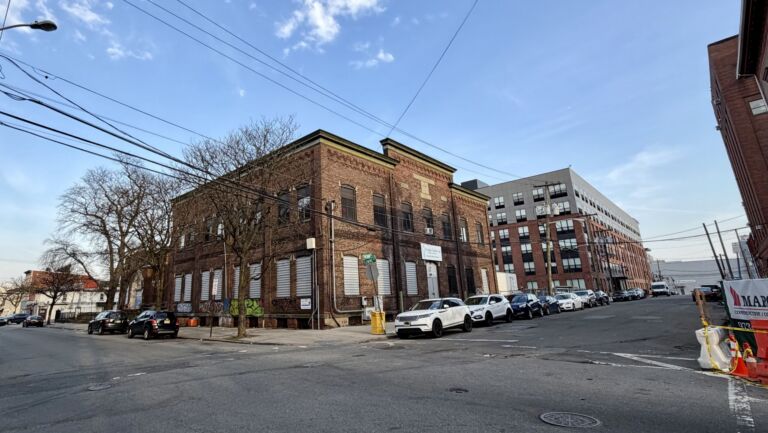
A: It’s the love of my life. I can’t imagine a career where I’d be happier, more fulfilled. And in many ways, it’s one of the most challenging careers I could choose. I knew long before I got accepted into Harvard that I wanted to be a teacher. There’s an aliveness in the high school classroom that I don’t think really exists almost in any other place. Often people will look at that and say, “Well, you have all these fancy degrees, why don’t you do something else?” Teaching is at the heart of a functional democracy. I think we’re doing such important work.
Q: What advice do you have for other teachers based on your experiences?
A: I have two books I would recommend to every new teacher: Paulo Freire’s “Pedagogy of the Oppressed,” which is phenomenal and a foundational text for me. I think it’s such a huge resource for anyone who sees education as a liberatory practice – not just teaching students to obey, but to create. The other book I would recommend would be bell hooks’ “Teaching to Transgress.” She’s coming at it from the perspective of a college professor, but so much of her experiences and insights are applicable to the K-12 classroom.
The last thing I would say is to find joy every day for yourself and your students. Remind yourself that the conditions in which you work are the conditions in which your students learn, so you want to make sure that your classroom is a space that you enjoy being in. Make time for joy. It’s not frivolous. It’s deeply important.