
 Credit: (AP Photo/Gene J. Puskar)

Direct payments will soon be sent to many New Jersey residents to help offset ever-rising rents and property taxes under state government’s signature housing affordability program.
Distribution begins on Sept. 15 for a new round of state-funded Anchor relief benefits that can total as much as $1,500 per household, according to the New Jersey Division of Taxation.
More than 1 million New Jerseyans are set to receive benefits automatically without having to file an application, officials said last month. Payments will come via check or direct deposit, the officials said.
Other homeowners and renters who meet income and residency requirements, and have not previously received Anchor benefits, have a Nov. 2 deadline to submit applications. Those under 65 can do so online here.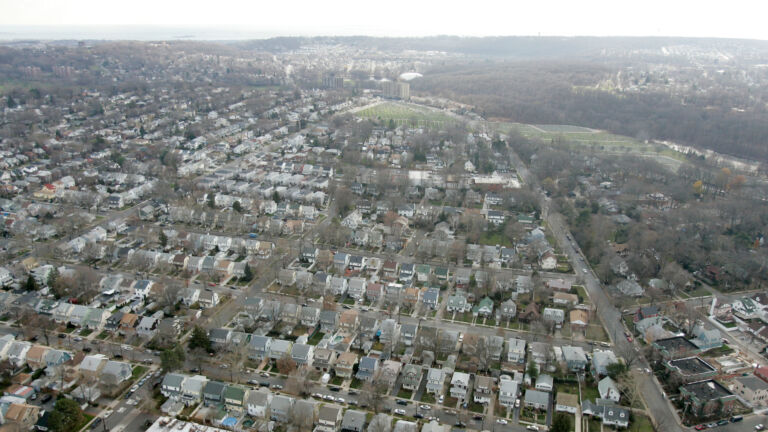
Seniors must complete a different application, called a PAS-1 (https://www.nj.gov/treasury/taxation/propertyreliefforms.shtml), that also checks eligibility for other state-funded relief programs that enhance benefits for seniors. Applications are also due by Nov. 2, officials.
Eligible residents, after applying, can check the status of their Anchor benefit online here.
Rising inflation
Funded with more than $2 billion in the state’s annual budget, Anchor’s formal title is the Affordable New Jersey Communities for Homeowners and Renters program.
Homeowners making up to $250,000 annually and renters making up to $150,000 annually are generally eligible to receive benefits under the program’s current eligibility requirements. Benefits for homeowners total $1,000 or $1,500, depending on annual income, while the benefit for enters is $450 or $700, depending on age.
Anchor debuted as a relief program in 2022, replacing the state’s long-standing Homestead benefit. Homestead also provided residents with state-funded payments, though only to homeowners in its latter years, and at smaller amounts than those currently offered under Anchor.
The return of state-funded relief benefits for tenants, who pay local property taxes indirectly through their monthly rent, came at an opportune time, coinciding with significant inflation in the wake of the COVID-19 pandemic. This year, though, Gov. Mikie Sherrill and lawmakers did not appropriate enough funding to cover increases in Anchor benefits for any eligible homeowners or renters.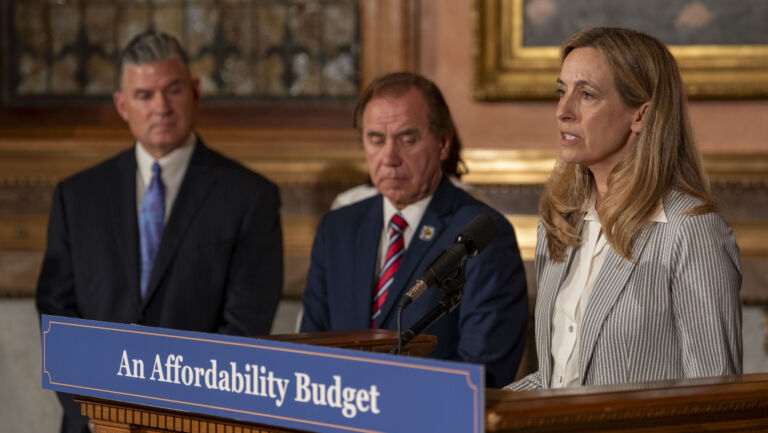
That means the flat benefits will not keep pace with annual inflation, which totaled 3.4% as of July, according to the federal government. A $250 bonus that had previously been provided to eligible senior homeowners was discontinued by Sherrill and lawmakers this year.
This came after the average New Jersey local property tax bill last year rose $475, according to state data, to help fund services like K-12 public schools and police and fire departments. The annual average hit a record-high $10,570.
Last month, the Sherrill administration sent letters to 537,000 homeowners and 549,000 renters notifying them of their eligibility for the latest round of automatic Anchor payments. That means this group did not need to submit an application to receive this round of benefits.
Recipients of these letters, though, must file a new application if key personal information, such as the name, mailing address or banking details of the recipient, has changed since their most recent payment, officials said. New applications from this group are due by Sept. 15, they said.
In all, more than $4 billion was allocated for direct property tax relief in a nearly $61 billion annual budget enacted by Sherrill, a first-term Democrat, on June 30. This includes $2.2 billion for Anchor; $756 million for Stay NJ, which benefits only senior homeowners; and $345 million for Senior Freeze, which benefits only senior and disabled homeowners.
This story is made possible in part by the Corporation for Public Broadcasting, a private corporation funded by the American people.
