Credit: (AP Photo/Rebecca Blackwell, File)
The Trump administration wants to strip federal rules for the preschool programs known as Head Start, saying that would free funds to serve about 200,000 more kids.
Many early childhood experts, though, fear the changes could degrade the programs terribly, putting hundreds of thousands of vulnerable American children at risk. Among them are thousands of youngsters in New Jersey where many federally funded Head Start classrooms operate independent of the state’s more strictly regulated universal preschool program.
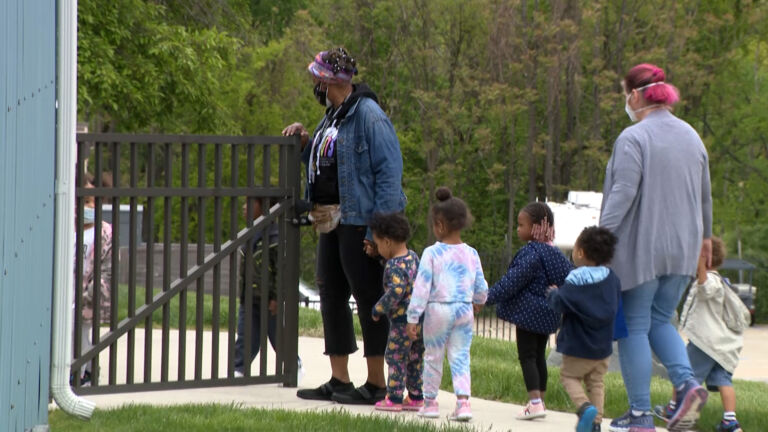
Experts worry that Head Start classes nationwide would have to cut staff, leaving more kids in each room and reducing teachers’ ability to offer personal help to struggling kids, many of whom grow up in poverty.
The programs could drastically cut hours for instruction, too.
“It’s devastating,” says Head Start parent Jai Crabbe-Gorrell, who also leads a council of families overseeing the New Jersey and Philadelphia sites. “Most Head Start centers are in communities where most parents are single-parent households struggling a little bit more. And sometimes, the children in those communities require a little bit more attention and care.”
Bigger class sizes
Trump’s proposal is a “Trojan horse” for underfunding, says Steve Barnett, the director of the National Institute for Early Education Research at Rutgers University who helped design New Jersey’s highly regarded universal preschool program.
Removing 80% of the federal rules for Head Start could double or triple teacher ratios nationally for infants and toddlers, he says. It could increase class sizes in New Jersey, too – affecting about 8,000 kids in the independent Head Start classrooms, according to Amanda Worth-Colon, head of the New Jersey Head Start Association, a nonprofit advocacy group
Two adults could be left managing 24 three-year-olds, instead of their current class of 17. Head Start’s instruction time in New Jersey and elsewhere could drop to just three hours per day, for 128 days, as opposed to a standard full-day, 180-day school schedule, Barnett says.
And the proposed 5% cap on administrative spending for overseeing the program is “magical thinking,” says Barnett, noting that 15% is typical of private programs.
“One thing I tell people is that Head Start is giving private school-quality education to inner city youth who would otherwise not be able to afford it,” said Crabbe-Gorrell, who enrolled her daughter at age 2, when private childcare for $250 to $350 weekly was unaffordable.
It’s thanks only to Head Start, she says, that she was able to pursue a master’s degree full-time. Her daughter loved it, she adds, and her initial teachers keep in touch as she advances levels.
More kids, same money
Certainly, Head Start – which serves 700,000 kids nationwide from birth to age 5 – has some bureaucratic hassles, Barnett acknowledges, like pointless paperwork. That shouldn’t be an excuse to weaken its core education standards, he argues.
Trump’s real objective is clear, says Worth-Colon of the New Jersey Head Start Association: “To serve more kids with the same amount of money.”
Head Start isn’t babysitting, experts say. When done right, early childhood programs can change trajectories. From ages 2-6, kids are like sponges, soaking up words and skills, and those in poverty tend to get less of that at home, where parents can be consumed by finding jobs, food and housing, or escaping abuse. Children in such situations often miss the early nurturing critical for brain development.
“We already have a crisis in child care with staff turnover and recruitment of staff.” — Amanda Worth-Colon, New Jersey Head Start Association
High-quality preschool programs have lasting effects, Barnett says, while lower-quality programs do not. For this reason, he recommends no more than 10 children to one staffer. Yet this rollback could mean about a 24% reduction in the Head Start teaching workforce nationwide, he says. The federal government would be handing standards over to state licensing limits for child care, which critics say would result in services more akin to babysitting.
Most Head Start classroom sizes are below these state caps, and federal budget pressure could push them to hit maximums, critics say. Teachers would be saddled with more kids for the same pay, Worth-Colon notes.
“We already have a crisis in child care with staff turnover and recruitment of staff,” she warned.
Picture more toddler meltdowns and staff exhaustion: Head Start serves young children who need constant supervision, she says, including those who need potty training.
Further, the proposed rollback could make it harder for Head Start to win federal grants for wraparound services like children’s health screenings and mobile dentistry, she says. This isn’t about saving paperwork, she argues; it’s dodging the cost of health services for low-income kids.
English-only
Even as the Trump administration says it wants to return power to the states by rolling back federal rules, it is imposing a strict federal English-only mandate on Head Start, she adds – to the detriment of Spanish-speaking kids.
And its proposed changes would weaken the voice of parent councils, stripping them of authority over Head Start programs. “The goal is to ultimately take away our power,” said Crabbe-Gorrell, noting that parents’ having a stake in operations builds their confidence and ability to advocate for their kids later.
Critics of Head Start often cite a study from around 2000 showing limited long-term effects. That research evaluated the program before major reforms raised teacher qualifications and standards, Barnett notes. High-quality preschool in general boosts brain development and teaches kids to focus and get along with others, driving more long-term academic and career success, he says.
“In the long run, this is going to cost us money,” he said of the rollbacks.
Notably, southern states like Alabama and Mississippi have built some of the nation’s strictest preschool rules because employers recognize that building a capable workforce starts early, he said: “The business community’s been one of the strongest supporters of raising standards.”
While acknowledging that he’s no expert on pre-K, the head of New Jersey’s Chamber of Commerce, Tom Bracken, called education a top-tier state asset that keeps people here and strengthens the economy, “something that’s worth continuing to invest in.”
Vulnerable target
Because New Jersey invested heavily in aligning a growing number of Head Start programs with its more rigorous state preschool standards, it would be a big step backward to align the rules with those for classrooms that operate independently, critics say.
This proposed federal rollback must go through a public comment period before becoming mandatory, and it could go into effect starting next year.

However, only Congress holds the legal power to close the agency. Lawmakers have pushed back, and in 2025, they also reportedly helped pressure the White House into reversing internal plans to eliminate Head Start.
Crabbe-Gorrell says she traveled to Washington, D.C., last year to lobby lawmakers and was struck by how many had personal connections to the program. South Jersey Democratic Rep. Donald Norcross, for example — who has spoken publicly about being a young single dad working construction — shared that he used Head Start for childcare.
Despite bipartisan recognition of its benefits, she views the ongoing threats as deliberate: “I do believe that it’s targeting lower-income and underprivileged communities,” she said, “because we are the ones who benefit from these programs.”
Benjamin Hulac contributed to this report.