
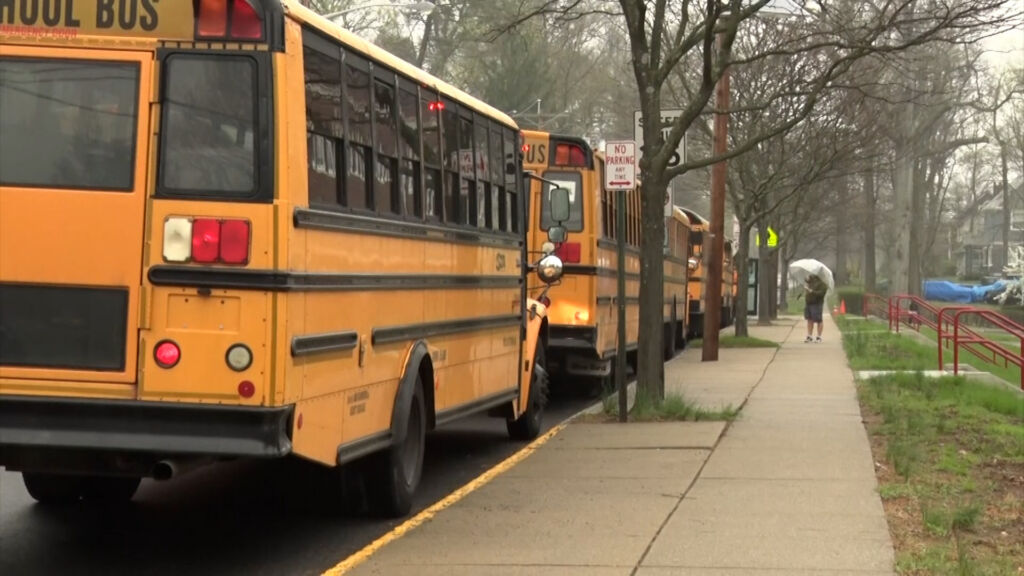
 Credit: (NJ Spotlight News)
 Skyrocketing transportation expenses, especially for students with disabilities, is among the main cost drivers for most New Jersey school districts.
Other challenges, though, go beyond costs, such as missed routes or no routes at all, and inadequately trained drivers. And a constant concern is frequent bus driver and aide turnover.
A bill pending in Trenton would help alleviate these challenges. The legislation would allow districts to contract transportation services with other public school entities, like regional jointure commissions and educational services commissions, without going through the time-consuming bidding process.
This would be especially beneficial to small to midsize districts that do not own buses and put their contracts to bid, only to hear from just one or two vendors.
Restrictive law
As superintendent of the Morris-Union Jointure Commission, I know that efficient contracted busing is an investment in reliability, safety and cost control. Amid so much discussion in Trenton and elsewhere about containing costs, this proposal offers a broadly acceptable compromise.

New Jersey special education services can be offered by regional pools that are called jointure commissions, cooperative transportation services agencies, educational services commissions and county special services school districts. Those taxpayer-supported organizations can offer reliable, cost-effect transportation with vehicles that they own or lease.
Typical public school districts are permitted to contract out to transport students with disabilities without going to bid. The law, though, prevents jointure commissions and similar entities from doing the same. As a result, the Morris-Union Jointure Commission is authorized to provide no-bid transportation services only to districts that were members when the law was enacted in 2004.
It is time for the Legislature to amend the law to expand cost-effective transportation to all public school districts.
Good outcomes
The Morris Union Jointure Commission is a collaborative of 30 public school districts in Morris, Union, Somerset, Essex and Hunterdon counties. It provides safe and reliable transportation, education and a support for students with autism and other disabilities.
Changing the law would allow for increased route sharing, which cuts costs and benefits students.
Satellite bus bases provide even greater economies because of shorter traveling distances. Added cost savings accrue because highly trained mechanics, employed by the education service providers, can repair districts’ buses more economically than commercial garages do. The Morris Union Jointure Commission hosts school bus inspection teams at its transportation depot, significantly reducing downtime.
A change to the 2004 law would not prevent districts from contracting with private vendors if they wish, but it has the potential to save time, effort and money without major disruption.
Incentivizing shared services can provide high-quality outcomes. By amending the 2004 law, legislators can take a major step toward expanding pooled transportation.