
 The buzzword right now around Trenton is “budget.” Public hearings, now underway, will help determine what will stay and what will go in Gov. Mikie Sherrill’s record $60.7 billion spending plan for the fiscal year that starts on July 1. One major challenge: The state is facing a $3 billion structural deficit, and that has put some programs at risk. One of the key lawmakers involved in the budget negotiations is Assembly Speaker Craig Coughlin. This interview has been lightly edited.
Joanna Gagis, anchor: The governor’s plan is to roll back the funds for Stay NJ. That’s a program that you championed. It’s a senior property tax rebate program. What are your thoughts about her cutting spending there?
Craig Coughlin: Stay NJ is critically important, and I think the governor recognizes that, which she has proposed some modifications to that. We’re going to go through the process of what we do every year when we get to the budget. It’s important that we continue to stick up for working middle-class folks, for seniors who we want to stay here in the state of New Jersey.
And it’s been wildly well-received. You need only ask anybody’s district office how it’s been received by senior citizens. It’s an impactful and perhaps transformative program, because when people start to think about New Jersey in a different way, they’ll make different decisions about where they’re going to retire.
JG: Why is that critical to keep them here?
CC: They are people who help build the communities that they live in, who generally love them and want to be near the people that they care about. Senior citizens play an important role. Go to any kind of historical society, go to street fairs, go to all of the things that make a community feel special about itself. And you’ll see seniors involved generally in a volunteer way. And by the way, don’t underestimate their important role in child care. They make an enormously positive impact on caring for their grandkids.

JG: Do you generally agree that changing the eligibility requirements to save the state money is moving in the right direction?
CC: Look, we set the limit at $500,000. Remember, this has been passed by both houses in the Legislature, signed by Governor Murphy. And the reason for that was to try to include as many seniors as we can.
JG: Her proposal cuts it in half.
CC: The eligibility dollar amount. That wouldn’t cut the number of people who receive in half. It’s something that we’re going to look at in the course of the budget review process. People oftentimes underappreciate the role of the Legislature in this process. There’s a constitutional process. Governor proposes a budget and then it becomes the product of the legislature.
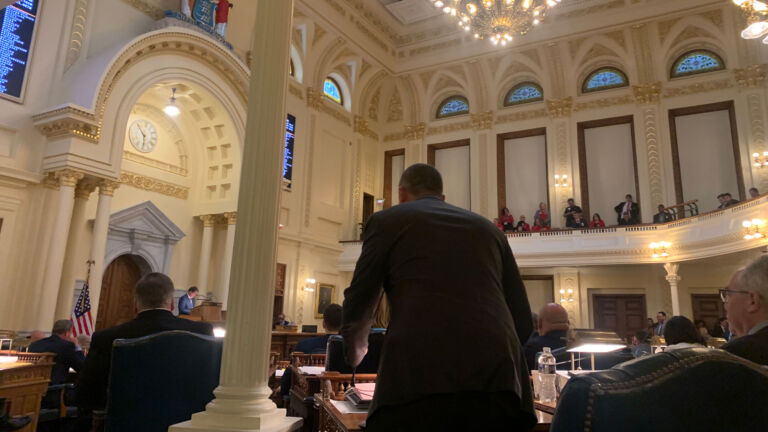
We’ve already begun the process. The budget hearings, the one public session has already occurred. There’s more to come. And then we’ll talk to the department heads and go about crafting the budget. The constitution says to us: Take a look at this. There’s two houses, the checks-and-balance system. The governor doesn’t give it to us to check the math and say: If it’s OK, give it back. It’s so that the Legislature can weigh in on what it thinks is important to the people of New Jersey.
JG: Do you think as the head of one of the chambers of the Legislature, that Christmas tree items are as big a problem as the governor has said they are? She says she wants to eliminate this in the process.
CC: The governor talked about adding things and having to find ways of reducing other costs in the budget.
JG: And these tend to be the backroom deals, right?
CC: They’re not backroom deals. That’s a preposterous notion.
JG: OK. How do you see it?
CC: I see them as investments in communities. No one knows the districts better than the legislators who serve it. We live in those districts. We routinely consult with mayors and councils and legislative leaders and people within the district. The governor can’t possibly do that, right? Because she has responsibility for all 21 counties and all 40 districts.
We know what is most important to the towns, and the notion that these things are Christmas trees or wasteful spending is just ridiculous, frankly. Look at the things that we’ve invested in. Last year, for example, $120 million was restored. Governor Murphy had cut it. We restored it for kids in higher ed and both at four-year colleges and community colleges. They would call that a Christmas tree.
Ask the people whose kids are now able to go to school — because they weren’t going to be able to afford it — if they think it was wasteful spending. Talk about people who are brain injured. Talk about people who are developmentally disabled. And now there’s a little bit more so that we can have more for the people who serve them. Talk about all of the things that go into helping a community. Those are investments in the community and the progress in the future of the state.
JG: So how do you do all that, Assembly speaker? And still keep a balanced budget when we’re already looking at a significant structural deficit between somewhere between $3 to $4 billion?
CC: Last year we cut $400 million out of the budget. The year before that it was five. So, I mean, we’re constantly evaluating what goes into, what goes out of the budget. And the governor has recognized that there’s probably reasons to add in.
That’s why I think she said, you want to add something, we got to find something to take out. I think we’ll work with her on that, trying to find things that we can reduce. Remember, too, there’s a process to all of this. For example, our revenue numbers won’t be certain until May, right? Because April 15th is tax return day. Big piece of the revenue the state gets.
JG: You find out what came in.
CC: Exactly right. And other costs will come up along, state health benefit plan, for example. We’ll know the numbers for that as we get later. So that would be a cost. So that’s why it’s a fluid document, really, until we pass it sometime in June.
JG: We did see a package of immigration bills, pretty controversial, move to the governor’s desk. It took a while to get there. Why do you believe those are right for New Jersey?
CC: It speaks to who we are, right? We celebrate our diversity here in the state of New Jersey, one of our greatest strengths. The chilling impact on people, whether they’re American citizens or whether they’re immigrants, has been profound.
People are afraid to go send their children to school for fear that they will come home to parents who aren’t there. We’ve seen it. One of the things I do, one of the cornerstones has been the fight against food insecurity. I regularly talk to food banks and food pantries. They’re seeing a decline in people wanting to come.
JG: Folks are afraid to come forward.
CC: Same thing about going to hospitals or doctors. Some of those bills are designed to do that — we codify the attorney general’s directive. So that became law, not just a directive. We’ve tried to build trust between the police and the citizenry forever. Police officers and even military people have worn identification.
ICE isn’t doing that. They’re covering their faces. That is a safety issue, certainly relative to police when they see somebody being grabbed, they don’t know whether they’re ICE agents or not. And certainly it’s terrifying for people.
JG: There’s a Republican assemblyman who filed an ethics complaint against Assemblywoman Katie Brennan. She proposed a package of bills that are titled F ICE. Does this break the decorum of your chamber?
CC: There’s some real raw emotion over these issues around immigration and other things.
JG: Would you require a rewrite of the name of those bills?
CC: I think the Assembly members and senators get to draft their bills as they see fit.
This story is made possible in part by the Corporation for Public Broadcasting, a private corporation funded by the American people.
