
 Credit: (NJ Spotlight News)
Nearly two decades ago, New Jersey’s governor used the annual State of the State address to pitch a host of government reforms in response to growing concerns about affordability and political corruption.
Among the proposals then-Gov. Jon Corzine included in his government-reform agenda were increasing state funding for property-tax rebates and encouraging more shared services among property-tax-reliant local governments.
Corzine also called for the establishment of an independent Office of the State Comptroller — the same position that’s now part of an unusual flashpoint in the final lame duck legislative session of current-Gov. Phil Murphy’s tenure as some lawmakers look to rewrite the powers of the office.
Under Corzine’s vision, the person serving in the comptroller’s role would be empowered to provide “consistent oversight and accountability of the finances of all units of government.”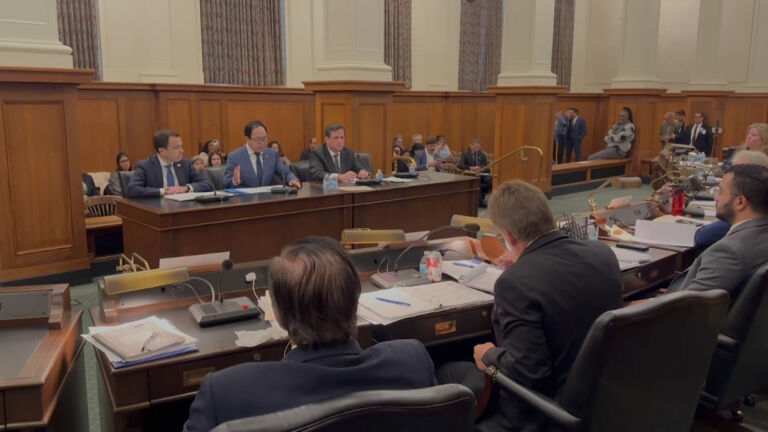
“Outside audits work in the private sector, and they will in New Jersey’s public sector, too,” Corzine said in his 2007 State of the State address, according to prepared remarks shared by the governor’s office at the time.
“The comptroller will save us money. It will improve performance. And it will be another step to clean up corruption in our state,” Corzine went on to say.
Those remarks were delivered just weeks before lawmakers voted to establish the independent Office of the State Comptroller within the executive branch.
Under the same law, the office was set up to be led by a single gubernatorial appointee serving six-year terms. That meant the comptroller’s time in office would extend beyond the governor’s own four-year term, providing some additional independence.
Since early 2020, the Office of the State Comptroller has been led by Kevin Walsh, an attorney appointed by Murphy, a Democrat who took office in early 2018.
Under Walsh’s leadership, the office has conducted numerous investigations and issued a series of eye-opening reports, flagging everything from the millions in penalties and interest that had to be paid by one of New Jersey’s county governments for delinquent tax filings to how one town in Atlantic County overpaid a departing government official thousands in severance.
Story continues below the video.
Meanwhile, another recent report from the office detailed the recovery of $132 million in funding during the 2025 fiscal year through the comptroller’s oversight of the Medicaid program in New Jersey.
At the same time, the concerns about high property taxes that helped foster the office’s creation in 2007 continue to run high in New Jersey.
The average local levy now totals well over $10,000, according to data collected by the Department of Community Affairs. That’s up nearly 50% since Corzine issued his original call for reform, which also included proposals seeking to cap annual increases in property tax bills and to curtail public-employee benefits abuses, among other measures.
For his part, Murphy has worked with lawmakers in recent years to encourage shared services and to boost funding for property-tax relief rebates, just as Corzine did nearly two decades ago.
Yet according to exit polling conducted by CNN during last month’s gubernatorial and legislative elections, 90% said property taxes remain a key problem where they live in New Jersey.
Amid this backdrop, Senate President Nicholas Scutari (D-Union) is leading a push in the current lame duck legislative session to strip away some of the oversight and investigatory powers that were originally granted to the comptroller’s office in 2007.
Scutari, citing concerns about efficiency and the need for modernization of government oversight functions, among other issues, said he wants to see more powers granted to the State Commission of Investigation.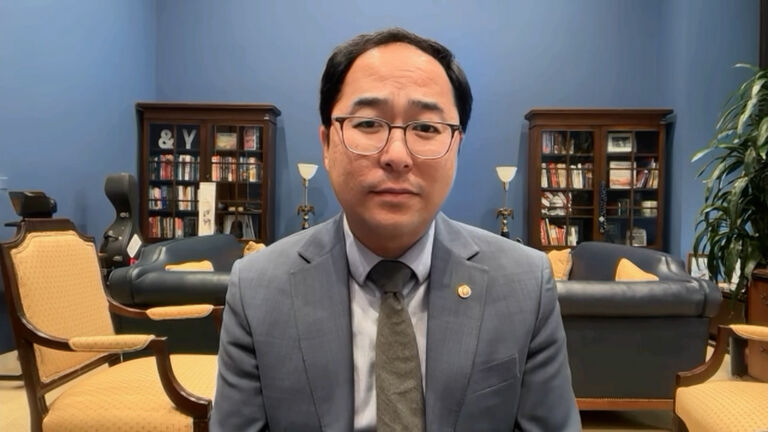
Commonly referred to as the SCI, the commission is another watchdog agency, established in Trenton nearly six decades ago. But instead of operating with a single gubernatorial appointee as its leader, the SCI is led by a panel of members appointed by both the governor and legislative leaders.
Under his bill, Scutari said the Office of the State Comptroller’s investigations unit would be transferred to the SCI, but the comptroller’s office would continue to have the ability to conduct audits and oversee the Medicaid program.
“We are not, let me repeat, we are not eliminating any functions or responsibilities today,” Scutari said while testifying before members of a Senate committee in Trenton earlier this week.
“We are simply relocating them and reallocating them to an agency whose core experience is long-form investigations,” he went on to say.
According to legislative records, Scutari was among the senators voting in favor of the establishment of an independent state comptroller in 2007, which would seem to make him an unlikely advocate for upsetting the status quo nearly two decades later.
“We want taxpayers to know that their government has let them down, if it has, or wasted money. That is the job.” – Acting State Comptroller Kevin Walsh
But in the eyes of the state’s more progressive activists, Scutari’s push to make these types of changes fits in with other policies enacted during his tenure as Senate president that have weakened rules and regulations related to good governance. These include changes to election transparency rules and the state’s public records law, among others.
And Scutari also hails from Union County, where the comptroller’s office led a bruising investigation into hundreds of thousands in stipends and tuition reimbursements paid to three top county government officials in recent years.
In a letter Walsh sent to Murphy, Scutari and Assembly Speaker Craig Coughlin (D-Middlesex) last year, Walsh publicly faulted Union County officials for failing to provide his agency with a corrective action plan by a specific deadline. He also called for the withholding of the “expenditure of state funds that may be due to be paid to Union County.”
During the hearing in Trenton, many who testified criticized the proposed reshuffling of the oversight agencies as the hearing itself took on a more contentious tone.
Among them was Walsh, who is the fourth person to hold the comptroller’s position since it was established in 2007.
He cited the agency’s probes into pension abuses, no-show jobs and “wasted COVID recovery funds” among the examples of investigations that have saved taxpayer dollars, including many that predate his own tenure.
“We want taxpayers to know that their government has let them down, if it has, or wasted money. That is the job,” Walsh said.
Among others opposing the bill were sitting Democratic U.S. Sen. Andy Kim and state Attorney General Matt Platkin, another Murphy appointee.
However, Scutari’s measure was ultimately approved by members of the Senate’s State Government, Wagering, Tourism and Historic Preservation Committee in a 5-0 vote.

It’s unclear whether the legislation — which has yet to pick up a cosponsor – will garner enough support among rank-and-file lawmakers to pass the full Senate and Assembly. From there, it would have to win Murphy’s support. And the lame duck session ends next month as the term-limited Murphy prepares to leave office.
Asked about Scutari’s prior support for the establishment of an independent comptroller’s office as part of Corzine’s original reform agenda, in a vote cast before Scutari became Senate president, a spokesman for the Senate’s Majority office declined comment.
But in a statement released by his office, Scutari cited working relationships the SCI has developed with a host of law enforcement agencies, including the FBI and New Jersey State Police, and said the SCI has “more robust investigative resources and a history of using them effectively.”
“The SCI is the premiere independent, fact-finding investigative agency in state government with a long history of success to work from,” the statement said.
