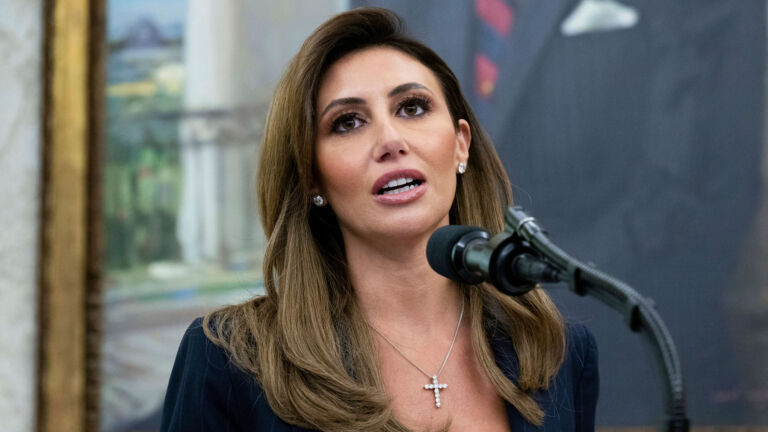
A legal showdown unfolding across the country could determine whether New Jersey’s top federal prosecutor has the authority to remain in her post and what happens to the cases she’s overseen.
A federal judge has already ruled that acting U.S. attorney for New Jersey Alina Habba is serving unlawfully after her interim appointment by former President Donald Trump expired in July. She remains in the role while the Trump administration appeals the decision, but similar rulings in Nevada, California and Virginia are increasing pressure on the courts and highlighting the potential fallout in New Jersey.
“This is snowballing,” said Jacob Elberg, former federal prosecutor and law professor at Seton Hall University in an interview with NJ Spotlight News. Elberg noted that instead of adjusting course after the initial court challenges, the administration “doubled down.” He added that by continuing to appoint interim prosecutors in the same manner, judges nationwide were pushed to reach similar conclusions.
The newest flashpoint came this week in Virginia, where a court dismissed indictments against New York Attorney General Letitia James and former FBI Director James Comey, ruling that the U.S. attorney who brought the charges was unlawfully installed. That decision, Elberg said, only increases scrutiny on New Jersey, where Habba’s fate is already before the Third Circuit Court of Appeals.
Inside New Jersey’s U.S. Attorney’s Office, the uncertainty is taking a toll. Career prosecutors continue their work, Elberg said, but questions about who has real authority can create confusion, delays and potential legal vulnerabilities.
“It’s a real challenge when folks don’t know who’s in charge,” Elberg said.
The implications extend far beyond leadership. If the Third Circuit upholds the lower court’s ruling against Habba, defendants in cases she supervised may argue that their prosecutions were improperly authorized. And while some cases could survive through alternative oversight by the Justice Department, others could be thrown into question.
With the Trump administration now 0–4 in similar challenges nationwide, the courts appear aligned in their view that federal law doesn’t support the administration’s approach to interim appointments. Historically, Elberg said, no administration has attempted such a broad assertion of appointment power.
“There are rules in place, and this isn’t it,” he said.
Whether the widening conflict reaches the U.S. Supreme Court remains uncertain. Elberg said the administration could resolve the issue quickly by naming qualified candidates who meet statutory requirements, or turning to career prosecutors who can legally serve. But if the administration continues to fight the rulings, he said, “there’s really no choice but to take it to the Supreme Court.”