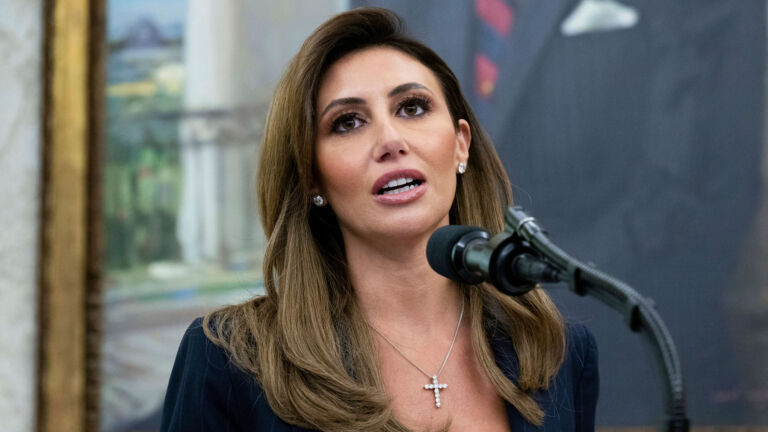
This week, a federal appeals court ruled that Alina Habba has been unlawfully serving as acting U.S. attorney for the District of New Jersey. Habba, a former personal attorney to President Donald Trump, was appointed by the president but never confirmed by the U.S. Senate. She was voted out of her position by a panel of federal judges in New Jersey, but was later reappointed by the Department of Justice after her interim 120-day stint expired.
In an interview with NJ Spotlight News, Jacob Elberg, a Seton Hall law professor and former federal prosecutor, said Habba could remain in the position while the Department of Justice determines whether to challenge the case in the U.S. Supreme Court.
“I do think if they want to take it to the Supreme Court,” Elberg said. “The Supreme Court would be likely to take it because the implications are significant. We’re dealing with this in a number of districts around the country. It raises real issues of separation of powers, real issues of presidential power and so if the administration is seeking to take this to the Supreme Court, I’d expect [the court] would take it.”
Two defendants have challenged their verdicts in drug trafficking cases brought by Habba’s office, saying their convictions should be dismissed because Habba was in the role improperly. Their cases, along with the criminal case against Rep. LaMonica McIver (D-10th) over an incident outside Delaney Hall in Newark this spring, could be impacted by a Supreme court ruling, if it went that far. But, Elberg notes that the appellate court didn’t weigh in on that matter.
“The 3rd Circuit had that issue potentially in front of them but didn’t make a decision one way or another on that issue at this point,”Elberg said. “What’s the implication and if the U.S. attorney isn’t there validly, does that mean that prosecutions can’t go forward? And that’s a challenging one that I expect courts are going to be dealing with going forward in terms of the day-to-day.”