
 Credit: AP Photo/Nam Y. Huh
The loss of federal food benefits will mean greater food insecurity and bring increased risks of depression, anxiety and stress, all of which could cause an uptick in emergency room visits statewide, healthcare experts said.
Food insecurity caused by the cuts to the SNAP program will likely worsen existing mental health issues for some people, which will then place a larger burden on emergency rooms across the state.
“Emergency rooms are often the default place for people to go to receive services. If emergency rooms are overtaxed, that places a strain on an already stressed healthcare system,” said Stephanie R. Simon, the vice president of outpatient services at Bridgeway Behavioral Health Services.
“When people can’t get their basic needs met, it results often in feelings of hopelessness, helplessness (and) even desperation,” said Simon. “And those kinds of feelings can often co-occur with depression (and) with anxiety.”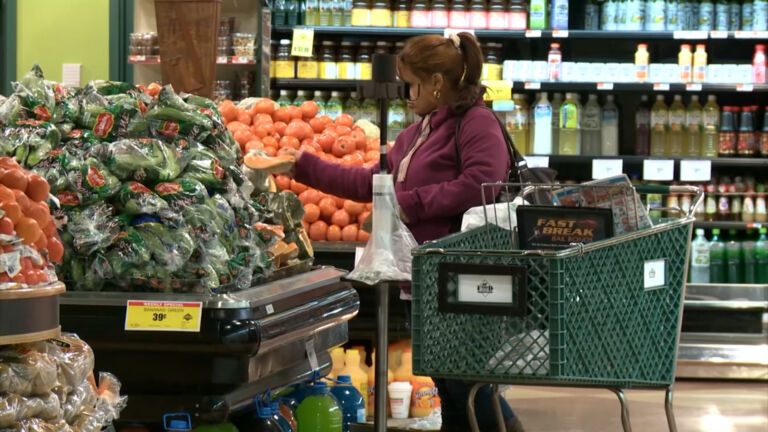
The impacts of this stress and anxiety also have consequences for physical health, including cardiovascular problems such as hypertension, gastrointestinal ailments like ulcers and a weakened immune system, according to Cathy Bennett, the president and CEO of the New Jersey Hospital Association.
“Whether it’s a parent unable to afford this year’s health insurance premiums, a family facing reduced access to food assistance, or a furloughed federal worker without a paycheck—these are not just economic challenges, they’re emotional ones,” said Bennett. “It’s a perfect storm for stress, anxiety and depression, and it’s something our healthcare teams are seeing firsthand.”
Sharon Barton of Pennsauken is one of the 800,000 New Jersey residents who rely on the food aid program to meet their basic nutritional needs. Almost half are children, while people with a disability make up over 30% of recipients, according to the governor’s office. A lapse in SNAP benefits will make it difficult or impossible for these residents to get food assistance and, as a result, they may go hungry and experience additional adverse health issues.
“I’m really scared. I don’t know what I’m going to do,” Barton said in a recent interview with NJ Spotlight News.
Story continues below the video.
Barton, a mother who struggles with mental and physical health issues, told NJ Spotlight that she had been receiving around $300 a month for food through SNAP, but did not have any funds in her account as of Monday.
“I just know I’m trying to stay calm all the time and … it’s hard to do that,” said Barton.
On Monday, the Trump administration said that it will partially fund SNAP for November after a pair of judges’ rulings required it to keep the nation’s largest food aid program running, according to The Associated Press.
However, it’s not clear how much beneficiaries will receive, nor how quickly these recipients will see value show up on the debit cards they use to buy groceries. The process of loading the SNAP cards, which involves steps by state and federal government agencies and vendors, can take up to two weeks in some states, according to the AP.
Last month, the U.S. Department of Agriculture announced that it would not tap $6 billion in contingency funds to pay for November SNAP benefits, while blaming Democrats for the ongoing budget impasse in Washington. Last week, New Jersey joined a multistate lawsuit against the USDA, arguing the decision unlawfully withholds critical food assistance.
Gov. Phil Murphy last week also announced a “state of emergency” due to the federal suspension of SNAP benefits and issued an executive order that aimed to create a “coordinated statewide response” to ensure food access for vulnerable residents by allowing state agencies to take “emergency actions” to protect public health.
While new federal funds were not made available on Nov. 1, SNAP recipients in New Jersey will be able to access any funds in their account that have carried over from October or previous months, according to the governor’s office.
In response to the federal government shutdown, food banks like the Community FoodBank of New Jersey and others across the state have stepped up to fill the void, but their efforts to provide additional assistance are not sustainable over a long period of time, advocates said. On Monday, Murphy directed the state’s national guard to help and ordered emergency food supplies to state food banks.
“People are anxious. They have shorter tempers. We’re even worried, frankly, about violence at some places,” said Elizabeth McCarthy, the president and CEO of the Community FoodBank of New Jersey. “These aren’t bad people. It’s just when you’re stressed and you can’t feed your children … everyone’s nerves are really frayed.”
At the Queen City Academy Charter School in Plainfield, the effects of the SNAP cuts have already “severely impacted” students, a majority of whom receive free and reduced-price lunches at the school, according to Danielle West-Augustin, the school’s CEO.
“When you think about each one of those 126 students that are receiving free lunch because they are direct certification of SNAP, they’re attached to a family that may have a mother, a father, (or) an older sibling that we don’t touch because they don’t go to school with us,” said West-Augustin.
West-Augustin, who said she has been an educator for over 24 years, told NJ Spotlight News that this is the first government shutdown she has seen that impacts people beyond government employees.
“It’s almost like others are becoming casualties of war, even if you don’t hold a government job, where you are really taking an immediate hit to yourself and your family,” West-Augustin said.
All children in families receiving benefits from New Jersey SNAP are automatically eligible to receive free school meals, and families enrolled in SNAP do not need to fill out a school meals application, according to the governor’s office.
In New Jersey, the Supplemental Nutrition Program for Women Infants and Children, commonly known as WIC, remains open despite the federal government shutdown, according to the state Department of Health.
Earlier this week, The New York Times reported that the Trump administration provided $450 million in temporary funding to the food aid program for low-income women and children, which has allowed benefits to continue as the government shutdown stretches into a second month.
Julie Daurio contributed reporting.
