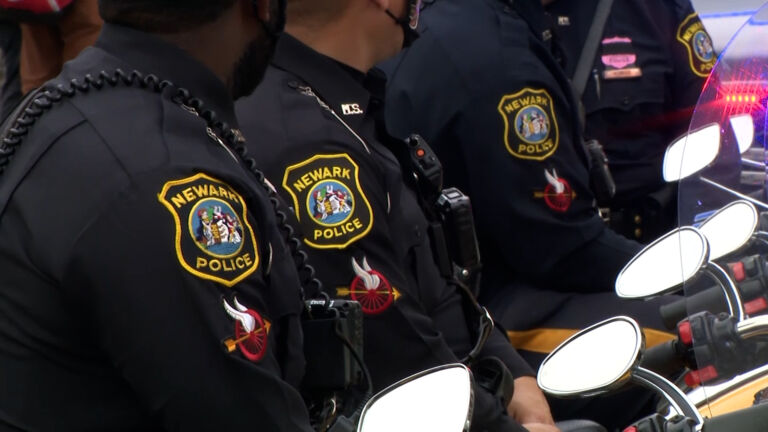
More than a decade after federal investigators uncovered widespread unconstitutional policing in Newark, a federal judge has formally ended the city’s consent decree with the U.S. Department of Justice. The move marks the close of a nine-year reform effort that reshaped the Newark Police Division through new training, updated policies and sweeping cultural changes.
U.S. District Court Judge Madeline Cox Arleo ruled that Newark is now in “substantial compliance,” with systems in place to keep improving. The consent decree followed findings of excessive force, illegal stops and failures in internal oversight.
Former New Jersey Attorney General Peter Harvey spent nine years as the independent federal monitor and said in an interview with NJ Spotlight News that the milestone reflects a “tremendous amount of progress,” although not the end of the work.
Harvey said the department adopted 15 new policies, including new rules on First Amendment rights, bias-free policing, and protections for LGBTQ+ residents. And he said some reforms went beyond what the consent decree required.
Still, Harvey emphasized several areas that need continued attention. He said the department needs to develop a robust youth engagement strategy, hire a dedicated police training director, and appoint an information technology director to manage the data systems essential for tracking officer conduct.
The city also needs stronger supervisory training, he said, so managers can review body-camera and car-camera footage to spot problems early and intervene the same day.
When the federal investigation took place, authorities said they found plainclothes officers detaining residents without cause, people handcuffed and held on the street despite not breaking the law, missing property and evidence, and an internal affairs office that failed to investigate or discipline misconduct.
“That has changed in Newark, substantially changed,” Harvey said.
While some community activists worry that progress could unwind now that federal oversight is ending, Harvey said structural reforms make that unlikely. He urged the city to follow through on plans for an Office of Constitutional Policing, an independent unit that would continue monitoring use of force, internal affairs and evidence handling.
“It’s an investment in your future,” Harvey said. “Managers need data, they need training, and they need the tools to ensure officers uphold constitutional rights.”