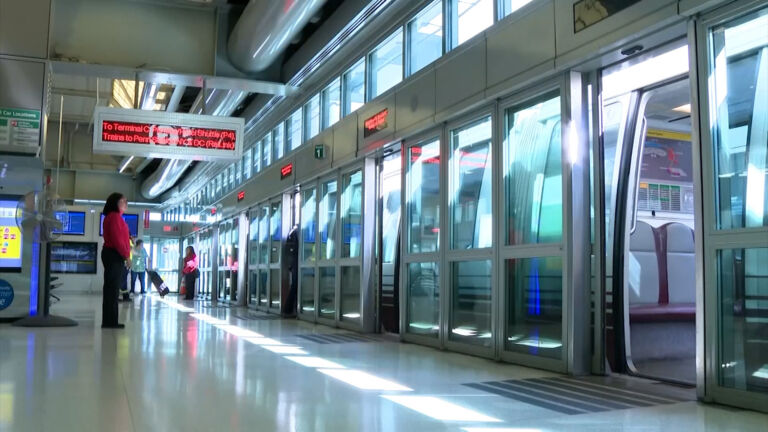
Credit: AP Photo/Seth Wenig
The ongoing federal government shutdown meant travelers at airports nationwide — including Newark Liberty International, Teterboro, and LaGuardia — encountered some 10,000 flight delays on Monday and Tuesday. Weather was to blame for some slowdowns, but most delays were due to staffing shortages amongst air traffic controllers.
As essential employees, air traffic controllers must remain on the job during a federal government shutdown. The Federal Aviation Administration said it has nearly 11,000 air traffic controllers, but it needs about 3,000 more. Many are working 10-hour shifts, six days a week — without pay.
Former FAA Administrator Randy Babbitt predicts that more controllers will call out sick as the shutdown drags on.
“As this accelerates, if someone takes sick leave, well, guess what? That means somebody else has to work overtime,” Babbitt said. “They’re all working overtime now, and how much overtime can you work? Can you work 60 hours a week? That leads to more sickness, which calls for more overtime. It’s a self-accelerating problem. And I think we’re seeing we’re right in the midst of that right now.”
President Trump and his Republican allies who control Congress have shut down talks that would end the budget impasse that forced the federal government to shutter most operations last week.
On Monday, U.S. Transportation Secretary Sean Duffy said that the number of air traffic controllers calling out sick were climbing. By Wednesday, Newark turned up on a list of airports with so-called “staffing triggers” and expected flight delays.
Newark is already operating at a reduced capacity. Earlier this year, Duffy announced a reduced number of flights allowed in and out of the airport after the FAA’s antiquated flight radar system glitched twice, causing planes to disappear from radar screens for 90 seconds.
Mental health aspect
About 22 air traffic controllers are currently assigned to handle flights for airports in Newark, Teterboro, Morristown, Caldwell and Linden. With additional shutdown pressures, the potential for burnout is very real, said Stephanie Marcello, chief psychologist at Rutgers University Behavioral Health Care.
“So people may be having headaches, feeling irritable, trouble sleeping, really being kind of cynical, not wanting to really be at work,” Marcello said. “Those are all signs of kind of burnout. Some could be, you know, how are they managing at home when they’re going home to their loved ones if they’re in such a high-stress, high-pressured position that is increasingly getting more stressful.”
Babbitt believes the current shutdown could drive some air traffic controllers to leave the tower for good.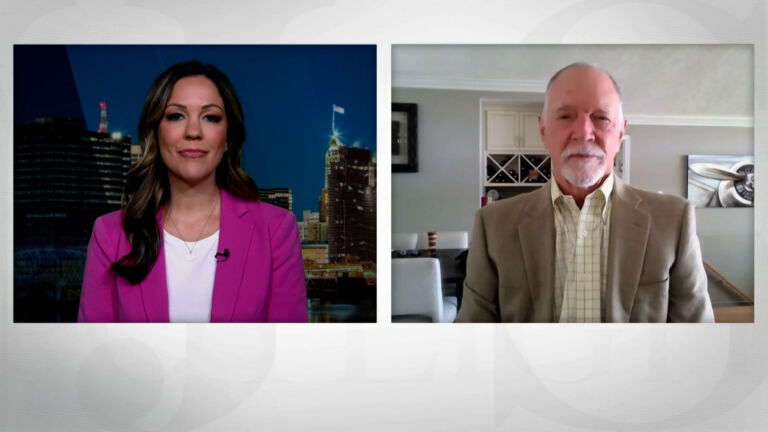
“Some of them may say, ‘I’ve had enough of this. This isn’t the first time I’ve been in this game,'” he said. “And we’re not getting any help from the top of the (Trump) administration. I appreciate pushes and bargaining, but to threaten that, ‘I’m just going to start firing people if we can’t get this resolved?’ That’s nice for the people you’re bargaining with. It’s not very nice for the people who are about to be fired if we don’t get a deal.”
Congress appears deadlocked in reaching a deal to reopen the federal government. Both parties have posted angry memes and partisan attacks, but the air traffic controller crisis may impact the political impasse. It certainly did during the first Trump administration’s government shutdown, which spanned 35 days across 2018 and 2019.
Trump demanded $5.7 billion to build a wall along the Mexican border, which Congress refused. The shutdown ended after ten air traffic controllers called in sick, kicking off a cascade of flight delays and cancellations that eventually led to the White House reopening the federal government.