
 Credit: (AP Photo/Seth Wenig)
In the final weeks of an election where voters will choose a new governor and who controls a key state legislative body, Gov. Phil Murphy’s administration is sending thousands of New Jersey seniors letters detailing their state-funded property-tax relief payments.
Starting this week, seniors who have submitted applications for the Anchor, Senior Freeze and Stay NJ programs will get the letters, according to the Department of the Treasury.
Only seniors who submitted a new, combined application form called PAS-1 prior to an Oct. 31 application deadline will get the letters.
In response to questions from NJ Spotlight News, Treasury spokesman Darryl Isherwood highlighted recommendations issued in 2024 by a task force set up to implement the Stay NJ program and to streamline the application process for seniors seeking state-funded relief benefits.
In those recommendations, which led to the establishment of the PAS-1 application specifically for seniors, November is highlighted as a key deadline for informing applicants of their individual benefits.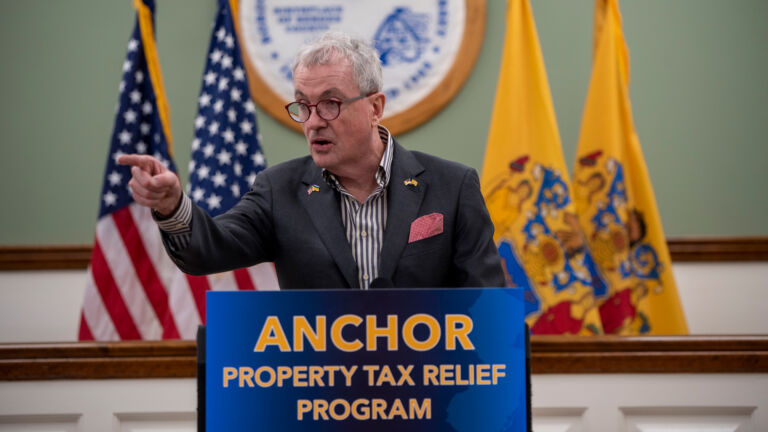
So far, nearly 300,000 letters breaking down individual payment amounts have been distributed by Treasury, and additional letters will be sent out to applicants on a rolling basis, Isherwood said.
The latest state budget enacted by Murphy with the backing of fellow Democrats who control both houses of the Legislature included more than $4 billion in funding for the direct property-tax relief programs.
They set aside $600 million of that funding to pay for the first round of benefits provided through the newly established Stay NJ program, which has been championed by Assembly Speaker Craig Coughlin (D-Middlesex).
More than 430,000 senior homeowners making up to $500,000 annually have been made eligible to receive Stay NJ benefits, which are due to begin going out to qualified applicants early next year, according to Treasury officials.
Control of the 80-member state Assembly, currently led by Coughlin and his Democratic caucus, is at stake this year in the Nov. 4 election. Vote by mail is underway and early in-person voting is due to begin this Saturday.
When asked via email whether it is appropriate for taxpayer resources to be used to distribute letters like these so close to an election, a Coughlin spokesman pointed to the communication requirements adopted by lawmakers that were included in the lengthy report issued by the tax force in 2024.
Among the recommendations was a call for the development of a “standard education packet” to be mailed annually to homeowners applying for relief benefits.

“This mailer should be provided to homeowners as soon after the August quarter as possible, or just before or with the November tax bill,” the report said.
Coughlin, the longtime leader of the Assembly, also issued a statement detailing his own sponsorship of the Stay NJ program, as well as his support for the broader $4.3 billion budgeted this year for the state-funded, direct property-tax relief programs.
“I’ve made it a priority to make New Jersey more affordable, and that includes delivering on property tax relief for millions of residents,” Coughlin said in the statement.
Democrats have held the majority in the Legislature for more than two decades, and this year’s Assembly election comes as voters are also deciding who should replace the term-limited Murphy in the governor’s office.
Concerns about taxes and the cost-of-living have are running high in New Jersey this campaign season, according to numerous public-opinion polls, amid a period of persistent inflation and lingering high interest rates.
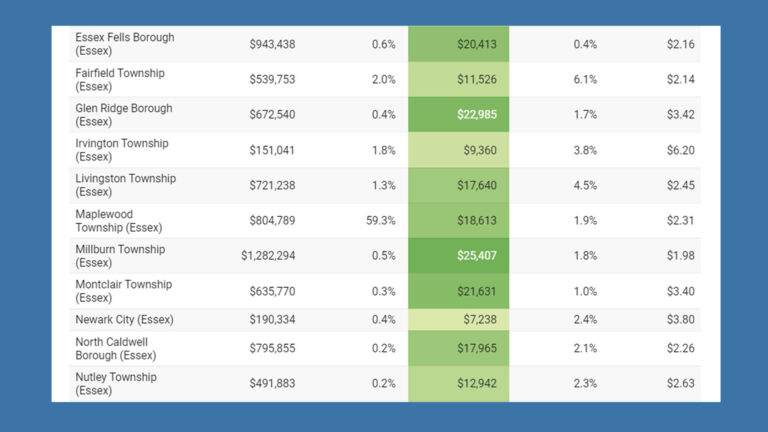
This year’s elections are also being held in the wake of the latest increase in the size of the average New Jersey property-tax bill, which rose above the $10,000 threshold for the first time last year, according to data collected by the Department of Community Affairs.
In New Jersey, property taxes are levied at the local level to fund services including K-12 public education and local law enforcement.
In recent years, Murphy and majority Democrats in the Legislature have prioritized relief benefits for seniors, including by expanding eligibility for the Senior Freeze program.
The benefits provided annually to senior renters and homeowners through the Anchor program have also been enhanced compared to those distributed to non-senior renters and homeowners who meet that program’s eligibility requirements.
Meanwhile, many senior homeowners are also in line to receive benefits being provided early next year through the Stay NJ program, which has a much higher income limit than the other state-funded relief programs.
Earlier this year, advocates for lower-income residents urged policymakers to further hike Anchor benefits for senior renters making up to $150,000 annually instead of setting aside new funding to further enhance relief benefits for senior homeowners, including those making up to $500,000 annually through Stay NJ.
But Murphy, Coughlin and Senate President Nicholas Scutari (D-Union) rebuffed those overtures in the final budget enacted on June 30.
