 Credit: (Courtesy of World Animal Protection US)
Animal rights activists are urging Six Flags Great Adventure in Jackson to give up its herd of five African elephants and raising concerns that the animals are not being given suitable living conditions at the theme park.
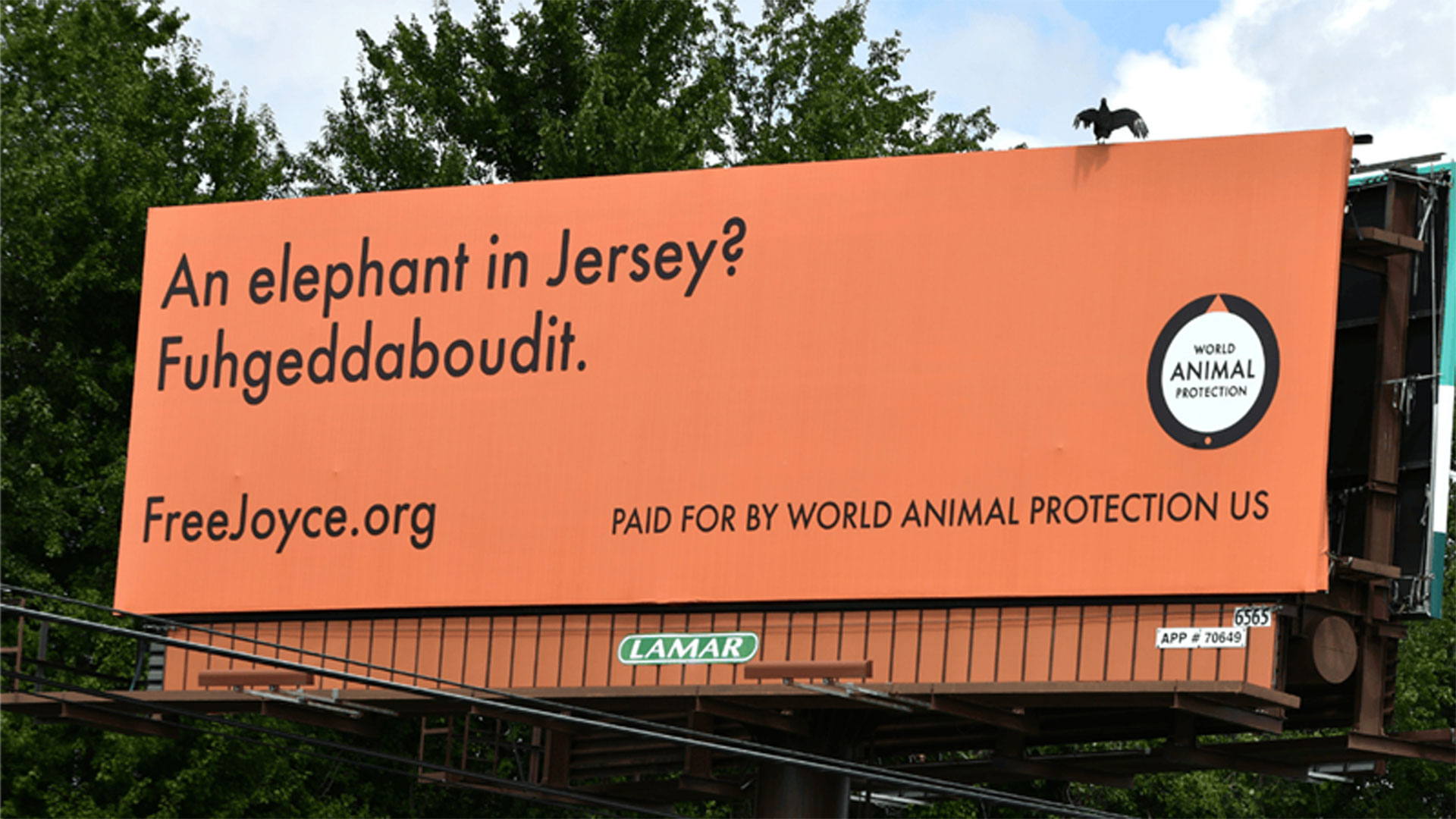
World Animal Protection US has put up a pair of billboards on Route 9, directing people to the website FreeJoyce.org, where visitors are asked to sign a petition calling on Six Flags to give up the elephants. The group hired an artist to build a sand sculpture on the beach in Ventnor City on Tuesday — World Elephant Day — to promote the same website. The petition has collected more than 60,000 signatures, according to the group.
The campaign focuses on Joyce, an African elephant believed to be in her early 40s living at the Great Adventure Wild Safari. Joyce, the subject of a 2019 NJ.com investigation, was born in the wild in Zimbabwe but was whisked away to Florida by the millionaire entrepreneur Arthur Jones, who had set out to save more than 60 elephants from government culling operations. Eventually Jones hit financial hardships and was forced to give up the elephants, sending Joyce and others scattered around North America in circuses and zoos.
 Credit: (Courtesy of World Animal Protection US)
Nicole Barrantes, the wildlife campaign manager for World Animal Protection US, said the focus is being put on Joyce because so much is known about her life through the decades.
“Because we know so many details about her background, when we try to tell people her story, it’s those details that really help a lot,” Barrantes said. “It just paints a picture of this poor elephant’s life.”
No abuse is alleged, inspections have found no issues
Joyce has been at Six Flags Great Adventure since 2010, but the park’s safari has had African elephants since it opened in 1974. The size of the herd has changed over time with five elephants, all females, now at the safari park.
 Credit: (AP Photo/Julio Cortez)
World Animal Protection is not alleging that Joyce or the other elephants are being abused. The U.S. Department of Agriculture routinely inspects the safari under the federal Animal Welfare Act, and the most recent inspection in May found no issues.
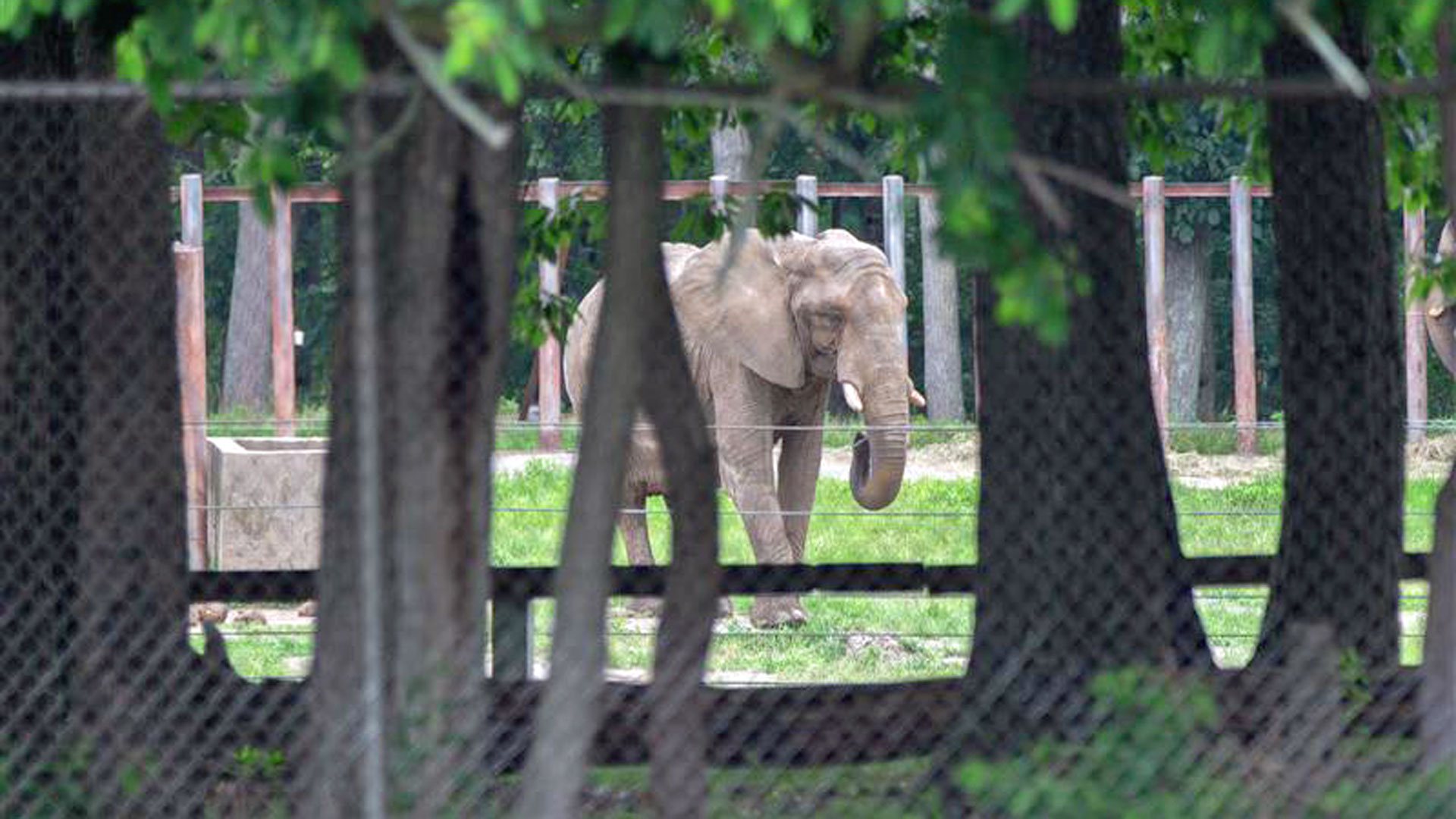
Instead, the animal rights group is raising concerns about the small size of the enclosures that Joyce and the other elephants are kept in at the safari. The group estimates that the display enclosure that guests see covers less than 4 acres, while the enclosure attached to the park’s elephant barn is just over 1 acre. That’s a fraction of the size of elephant sanctuaries in the U.S., which have hundreds of acres of land for the animals to roam.
‘Relocating her [Joyce] would mean separating her from her companion and forcing her to adapt to new surroundings, staff, and herd dynamics – changes that could cause significant stress, health decline, and even death.’ — Ryan Eldredge, a spokesperson for Six Flags Great Adventure
The group is also worried about the long-term health effects of having elephants live close to large roller coasters and other amusement rides. African elephants are highly sensitive to vibrations in the ground and are known to use their feet to listen for low-frequency soundwaves traveling through the Earth.
“The noise must have some negative impact, to be surrounded by all of that rumbling,” Barrantes said. “It’s definitely far from ideal for an elephant.”
Six Flag says the elephants will stay put
Six Flags disputed World Animal Protection’s characterizations of the herd’s living conditions, and told NJ Spotlight News it planned to keep Joyce and the other elephants at the safari.
“We often provide sanctuary to animals that have previously endured poor or uncertain conditions, offering them a permanent home where they can thrive,” Ryan Eldredge, a spokesperson for Six Flags Great Adventure, said in a statement. “Many of these animals have exceeded their expected lifespans because of the quality of care they receive here — a direct reflection of the skill and compassion of our animal care team.
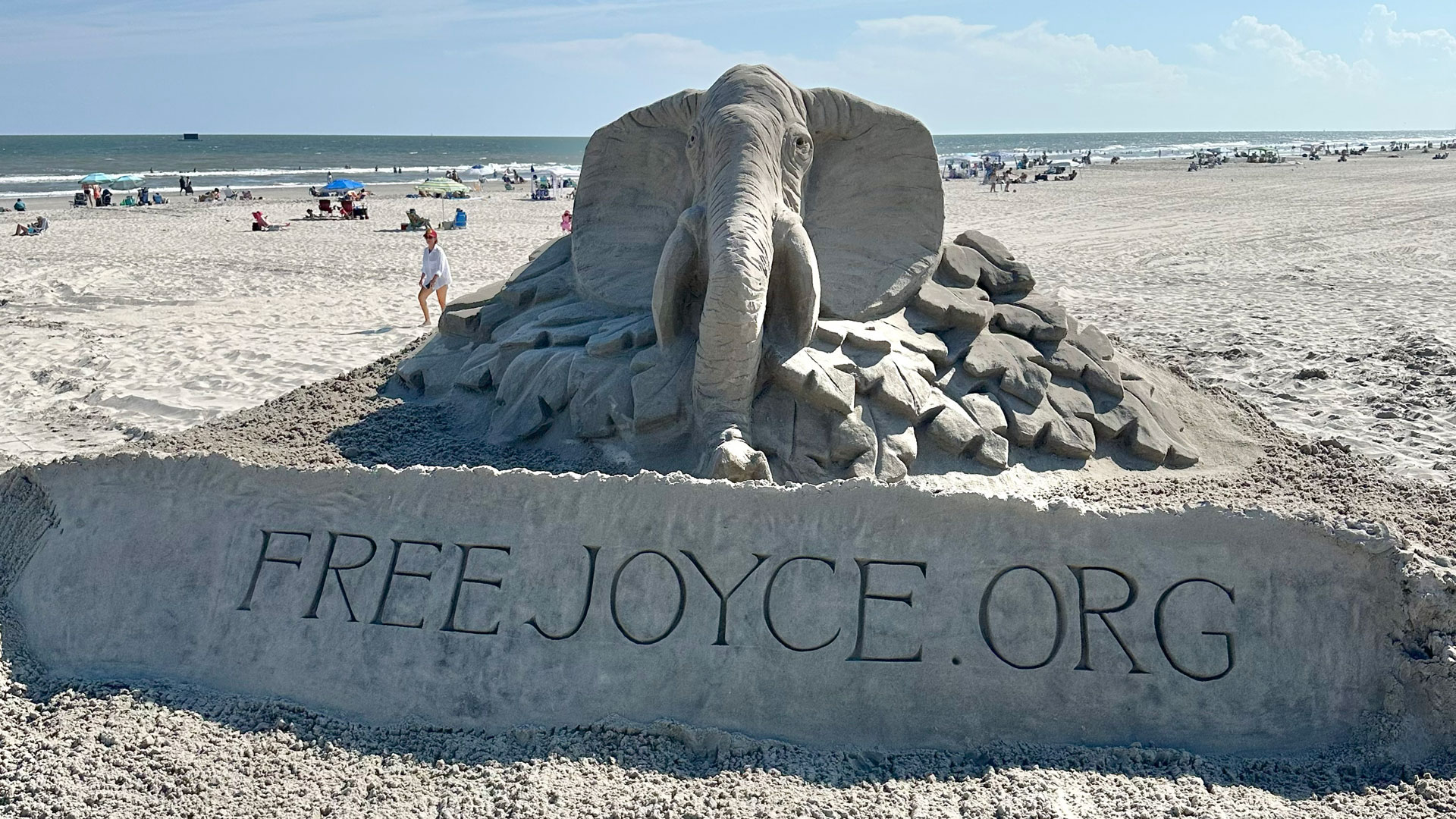 Credit: (Courtesy of World Animal Protection US)
“Joyce, who has lived at Six Flags Great Adventure since 2010, is a geriatric African elephant with unique medical and social needs. She is part of a bonded pair, a deep and lasting relationship that is critical to her emotional wellbeing. Relocating her would mean separating her from her companion and forcing her to adapt to new surroundings, staff, and herd dynamics — changes that could cause significant stress, health decline, and even death,” Eldredge continued. “Our foremost responsibility is Joyce’s welfare. Based on veterinary expertise, daily observations, and decades of animal care experience, we know that keeping her in her familiar environment is the most ethical and humane decision.”
World Animal Protection is asking Six Flags Great Adventure to send the herd to an elephant sanctuary elsewhere in the country. The group is offering to cover the costs of that transfer — estimated to be about $50,000 — and to handle the administrative work.
It’s the type of arrangement the group has experience with. In 2023, World Animal Protection assisted other groups to carry out the transfer of an African elephant named Mundi — who was in the same group of elephants rescued by the millionaire Jones as Joyce — from a shuttered zoo in Puerto Rico to the Elephant Refuge North America sanctuary in Georgia.
Barrantes said Six Flags has not responded to requests to discuss the proposal. She hopes the World Animal Protection campaign will pressure Six Flags to meet with them.
“Ideally Six Flags responds to us, they agree with what we’re saying, they agree to release Joyce and the other elephants, close down the elephant exhibit permanently and then we help facilitate the transfer to one of the sanctuaries,” Barrantes said. “We’re experienced with this. We’ve done it before.”