Credit: (Genesis Obando/NJ Spotlight News)
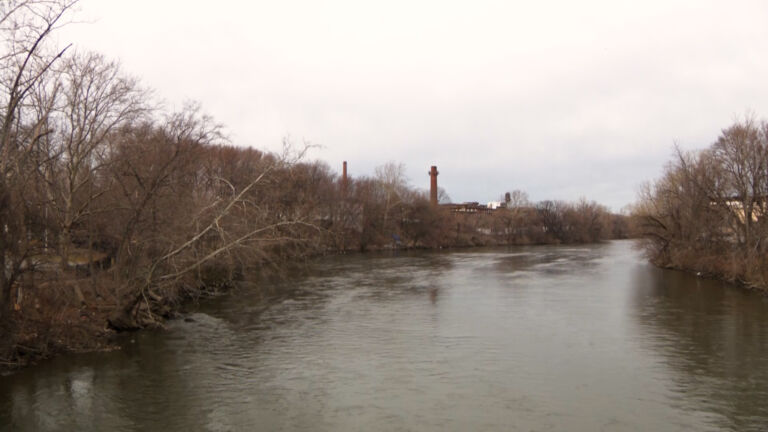
After decades of court battles and hundreds of thousands of pages of documentation, the companies that have contributed to severe pollution in an eight-mile stretch of the Lower Passaic River are still fighting over who pays — and how much — for the cleanup.
The latest shot was fired by Occidental Chemical (OxyChem), which says it has already designed an approved cleanup plan but it wants dozens of other companies to share the estimated $1.84 billion cost of removing or capping the cocktail of toxic chemicals on the bottom of the river.
On July 28, OxyChem appealed a federal district court ruling that upheld a consent decree by the U.S. Environmental Protection Agency saying the company is responsible for nearly all the cleanup costs. In 1986, the company bought Diamond Alkali, which made dioxin and other deadly chemicals in its manufacture of herbicides and pesticides in Newark from the 1940s to the 1960s.
OxyChem’s argument
The chemical giant maintains Diamond Alkali was not responsible for many of the chemicals in the river, including those resulting from prior industrial production by about 80 other companies starting in the 19th century.
“This extraordinary consent decree — which leaves OxyChem holding the bag for practically all the estimated $1.84 billion cost of cleaning up the Lower Passaic, while purporting to eliminate its right to seek contribution toward that cost from any settling party — cannot be sustained,” the company said in its appeal to the U.S. Third Circuit Court of Appeals, based in Philadelphia.
OxyChem said the river contains ‘staggering amounts’ of contaminants.
OxyChem accused the District Court of New Jersey of ignoring the requirements of the Comprehensive Environmental Response, Compensation, and Liability Act, also known as the Superfund law, and of effectively nullifying Congress’s intent to subject settlements related to the law to meaningful judicial review.
“Instead of letting OxyChem spend its own money to clean up the river and try to recover some of its costs via private-party litigation, EPA decided to let virtually everyone but OxyChem off the hook for a pittance,” the appeal reads.
“Companies that indisputably spewed vast quantities of contaminants into the Passaic for decades — many before OxyChem’s predecessor even came on the scene — thus have been relieved of all risk of liability for pennies on the dollar (if that),” the appeal said.
What the EPA decided
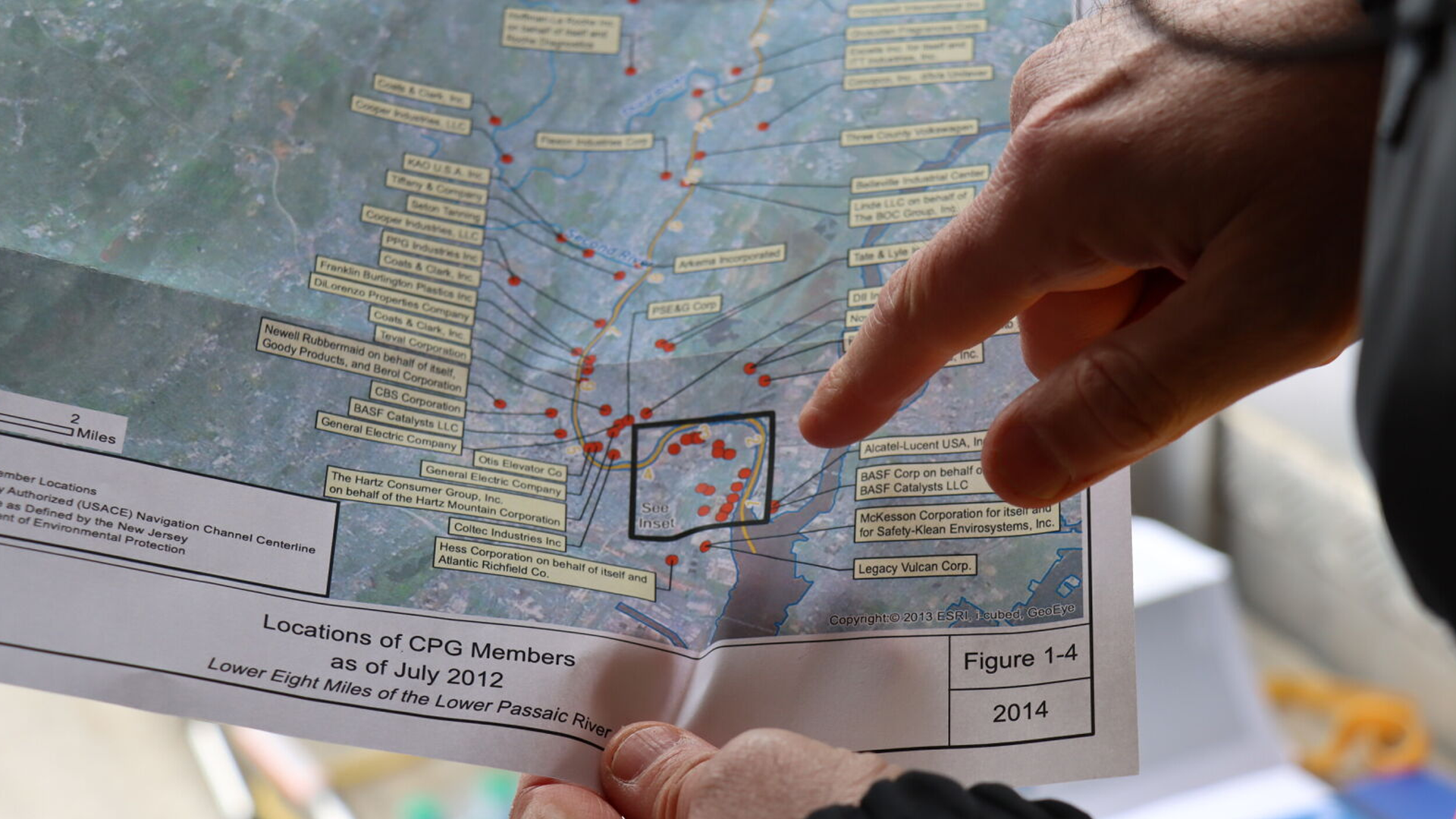
The EPA consent decree said the other companies, known collectively as the Small Parties Group, would pay a total of $150 million toward the cleanup, a sum that OxyChem says is nowhere near their liability. The EPA designated the lower 17 miles of the Passaic River as the Diamond Alkali Superfund Site in 1984; it is one of the nation’s most costly Superfund sites.
The Small Parties group — a collection of small and large manufacturers — defended the EPA’s settlement and its endorsement by the district court.
‘All OxyChem has asked in return is to be allowed to pursue its statutory contribution rights to recover some of the costs of that massive undertaking from the dozens of other polluters of the Passaic River.’ — OxyChem appeal
“The settlement is fair, reasonable, and will help facilitate EPA’s selected remedy for the Lower Passaic River, which has yet to begin,” the group said in a statement. “The surrounding communities have waited far too long for action, and objectors to the settlement should not be allowed to delay the river cleanup any further. We will strongly defend the settlement in court and encourage EPA to force these parties to begin to dredge and cap the lower eight miles of the river as called for in the remedial design that EPA approved over a year ago.”
OxyChem said the river contains “staggering amounts” of contaminants, including more than 3 million kilograms of lead, 2 million kilograms of copper, 400,000 kilograms of polycyclic aromatic hydrocarbons (“PAHs”), 42,000 kilograms of mercury, and 26,000 kilograms of polychlorinated biphenyls (“PCBs”). The pollutants also include 38 kilograms of dioxins — by-products of Agent Orange, a notorious defoliant used by the U.S. military in the Vietnam War and made by Diamond Alkali at Lister Avenue in Newark’s Ironbound section.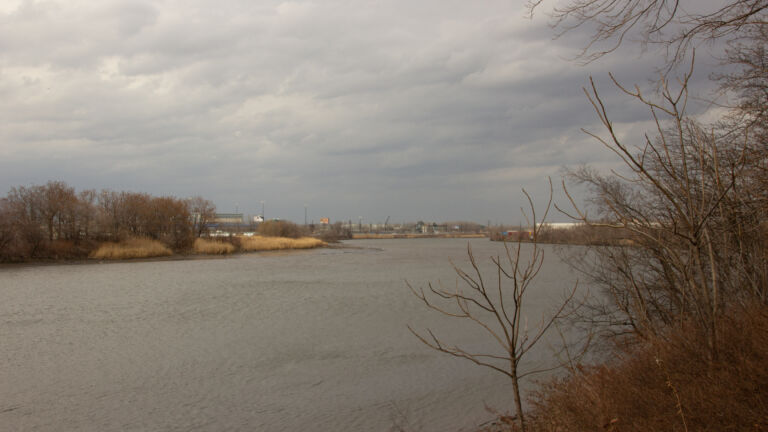
Even before that, the contamination was so great that the federal government declared aquatic life destroyed in that section of the river in 1926. That was more than a decade before Diamond Alkali opened on the site, OxyChem said in the appeal.
The appeal recognized that Diamond Alkali contributed “significantly” to the dioxin contamination and OxyChem, as its corporate successor, has “long acknowledged” its responsibility to contribute to the cleanup.
What OxyChem wants
OxyChem reported it has already spent $260 million on designing and preparing for the cleanup of the lower river and expects to spend another $257 million on designing the cleanup of the upper nine miles of the Lower Passaic. It has offered to implement the cleanup work.
“All OxyChem has asked in return is to be allowed to pursue its statutory contribution rights to recover some of the costs of that massive undertaking from the dozens of other polluters of the Passaic River,” the company said in its appeal.
 Credit: (Genesis Obando/NJ Spotlight News)
The district court ruling, issued by Judge Madeline Cox Arleo last December, said the EPA’s consent decree advances the goals of the Superfund law by requiring the other companies to pay a total of $150 million toward the cleanup.
“It is reasonable because it extracts $150 million from Settling Parties — a sum significantly more than their estimated liability for the decided upon remedial action — that will be immediately available for cleanup efforts,” Cox Arleo wrote for the district court in a 47-page opinion.
Legal considerations
Steven Miano, an environmental lawyer at Hangley Aronchick Segal Pudlin & Schiller in Philadelphia, predicted that the appeals court will hear the case, because it addresses what he called the important matter of EPA’s authority to reach a settlement in such cases.
But Miano said the appeals court is unlikely to overturn the district court ruling, because EPA has a record of acting within its authority in allocating financial responsibility.
“I would be surprised if the lower court will be found to have been wrong in approving the consent decree,” said Miano, who is not connected with the case. “EPA is typically fairly careful in taking positions on allocations in CDs [consent decrees]. It has a good track record on having such CDs approved. However, it remains to be seen how the Third Circuit analyzes this case and whether it will delve into the underlying facts.”
‘Superfund consent decrees historically have been treated extremely deferentially by the courts.’ –– Steve Gold, professor in environmental law, Rutgers Law School
If OxyChem loses the case, it could appeal to the U.S. Supreme Court, but it’s unlikely that court would take it because the case doesn’t have enough wide legal implications, Miano said. It’s more likely that the Third Circuit will send the case back to the district court with an instruction to take another look at whether the cost allocation in EPA’s consent decree is fair, he said.
“It’s possible the Third Circuit might say, ‘There’s not adequate evidence. We’re returning it to the District Court to do a better job of parsing out all of the elements here.’ That would be new and different, and create a lot of issues for those of us who routinely enter into these types of consent decrees,” Miano said.
Cleanup timeline?
Steve Gold, a professor in environmental law at Rutgers Law School, also said the odds are against the appeals court overturning the lower court’s approval of the EPA settlement. He said there is a long record of the courts upholding Superfund consent decrees.
“Superfund consent decrees historically have been treated extremely deferentially by the courts,” Gold said. “The trial court is deferential in the choices the government makes in how to settle its enforcement claims, and then the appellate court is typically extremely deferential to the district court’s judgment about what the government did.”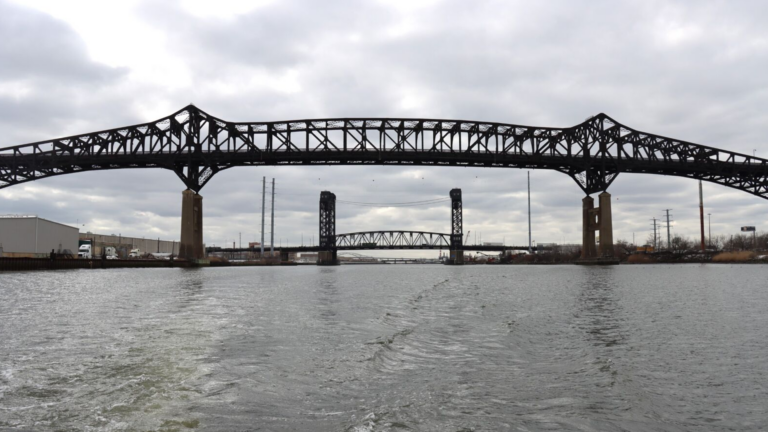
Gold said OxyChem appears to be expecting to lose at the Third Circuit and would then appeal to the U.S. Supreme Court. But he predicted that the high court wouldn’t take the case because it has no constitutional significance, and there’s no “really dire” statutory question.
But whatever the legal machinations, they don’t necessarily signal more delays in the river’s cleanup because the EPA could simply order the work to proceed.
“I don’t know that the fate of this settlement has to delay the cleanup,” Gold said. “I could imagine EPA securing a cleanup for the river even if this settlement is voided.”