
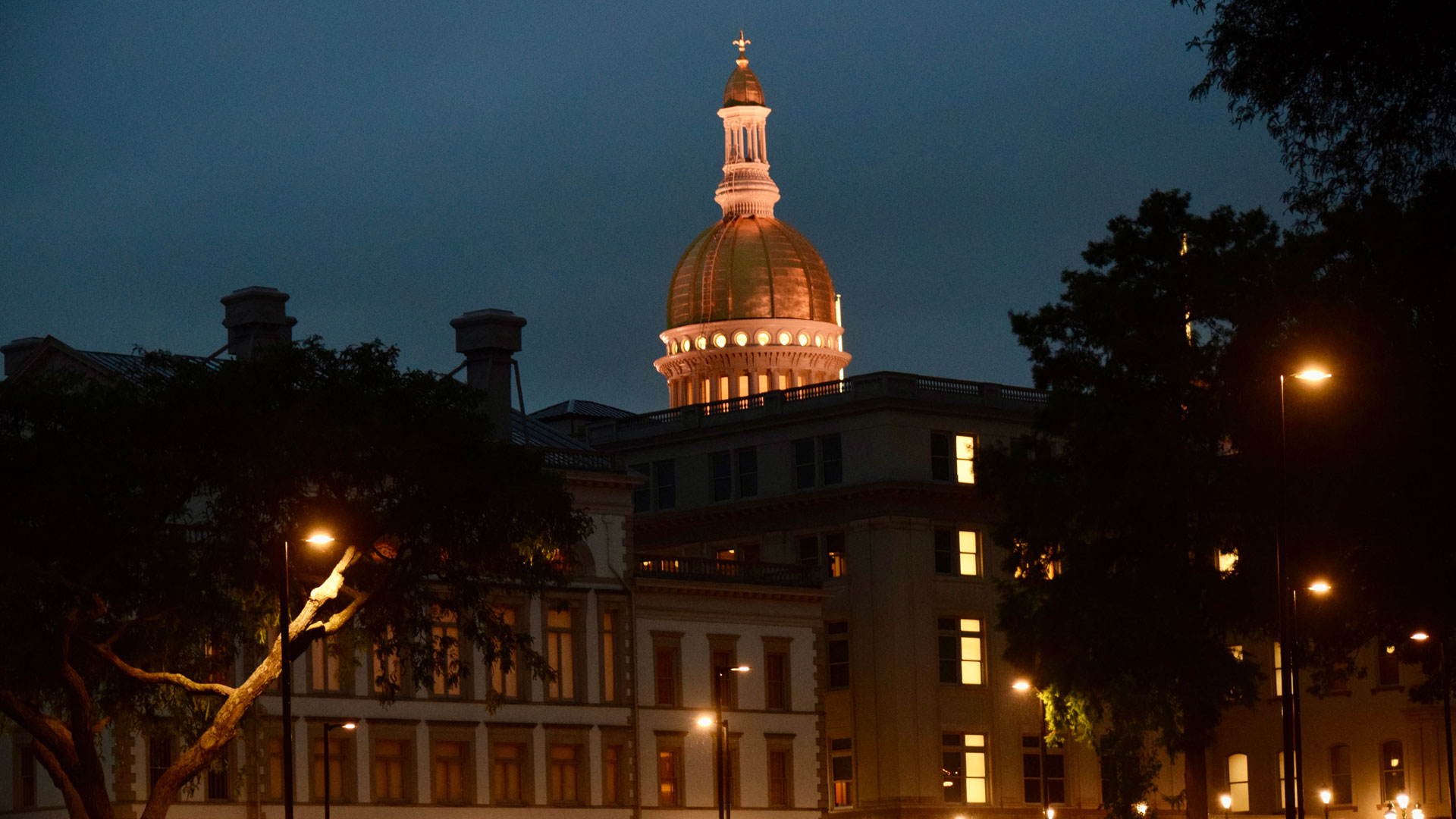
 Credit: (John Mooney/NJ Spotlight News)
More than a month after lawmakers wrote their pet projects into the state budget, the full documentation behind these and other last-minute legislative spending additions is not yet public.
The eleventh-hour spending changes were authorized by majority Democrats in late June, around the same time they also gave final approval to more than $600 million in tax and fee hikes.
The tax increases on a range of things including smoking and sports betting are now in effect, but the individual sponsors and other key details related to the hundreds of millions in last-minute spending lawmakers added remain shielded from public view.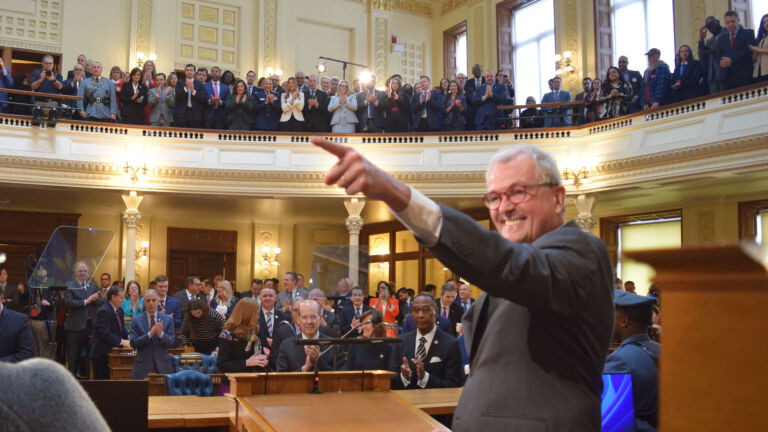
These same legislative additions — which came just days before the July 1 start of a new fiscal year in New Jersey, leaving little to no time at all for public scrutiny — pushed the size of the state’s latest annual budget to a record-high $58.78 billion.
Yet even with the tax hikes, the state budget sponsored by majority Democrats calls for total annual spending to outpace projected revenue collections by nearly $1.5 billion through June 30, 2026.
What’s supposed to happen
Written “budget resolutions” are supposed to officially document each last-minute addition by disclosing the sponsors and providing a statement to justify a proposed budget change. But as of late last week, these written resolutions have yet to be made available to the public by lawmakers.
The rules for both the Assembly and Senate generally require members to submit budget resolutions a full two weeks before the final votes on the annual spending bill, which occurred this year on June 30.
The same rules also require lawmakers to use the budget resolutions to disclose any business, personal or family ties to “the intended recipient of any increased funding.”
Some of the add-ons
In all, lawmakers at the end of June added more than 500 new line items to Gov. Phil Murphy’s final draft of the proposed fiscal year 2026 budget, according to an analysis of budget documents published by NJ Spotlight News in early July.
These additions included $20,000 to upgrade a fire museum in Logan Township in Gloucester County and $20 million to Atlantic Health System for a mobile health training center.
Other legislative add-ons included $9 million sent to Middlesex County for “Parks and Recreation Youth Sports Infrastructure,” as well as $9 million set aside for the Middlesex County Improvement Authority to fund “Educational Infrastructure.”
In more recent years, there has been a tradition of not releasing budget resolutions until long after the start of the new fiscal year.
Other added line items paid for sports programs, groups that help those facing homelessness or food insecurity, cultural organizations, senior citizens centers and groups focused on health, according to the NJ Spotlight News analysis.
To be sure, adding such spending items to a governor’s proposed budget in the final days before it wins the approval of the full Legislature is a tradition in Trenton.
Moreover, since the state Constitution gives lawmakers the authority to draft the annual spending bill, it provides a direct way for lawmakers to ensure their priorities — and not just the governor’s — receive attention.
High priorities
It also gives lawmakers a way to secure state funding for high-priority local projects, much like the federal “earmark” process, all while easing the tax burden on their constituents by using the state budget as a funding source.
However, the legislative additions documented by the budget resolutions are often referred to as “Christmas tree” items inside the State House since they are often used to fund pet projects and other discretionary spending approved outside of state-administered competitive grant programs and funding formulas.
They also often inflate the size of the overall state budget by shifting the burden of funding parochial line items onto state taxpayers.
And unlike a governor’s formal draft of the budget, which receives months of close inspection — including a series of public hearings that follow a late-February public address — the legislative changes are typically made just days before the final adoption of the annual spending bill.
Under the legislative rules, the written budget resolutions are required to be made public through the nonpartisan Office of Legislative Services. But when that must occur remains a subject of debate because legislative leaders maintain the rules don’t spell out a clear timeline.
A year when things were very different
In 2007, more than 400 requested budget changes were published online in mid-June, according to media reports at the time.
The resolutions that year were disclosed well before the final budget was adopted — and just months after the former chair of the Senate’s budget committee was indicted on corruption charges related to the annual budget process.
‘Resolutions undergo thorough review for accuracy and will be made publicly available as soon as possible.’ — Assembly Majority Office
In more recent years, there has been a tradition of not releasing budget resolutions until long after the start of the new fiscal year. Last year, it took until early August for the Office of Legislative Services to make public the individual sponsors of the fiscal year 2025 add-ons.
This year, all 80 seats in the Assembly are on the ballot in November. Democrats are hoping to retain control at a time when taxes and cost of living appear to be key issues for voters, according to recent public opinion polls.
The latest word?
When asked by NJ Spotlight News about the status of this year’s written budget resolutions, and why they have yet to be made available to the public, spokespeople for the Assembly and Senate majority offices responded via email with written statements.
The statement from the Assembly Majority Office said the Legislature “follows all rules and laws to ensure the public is able to understand how the state budget reflects their values and improves their lives.”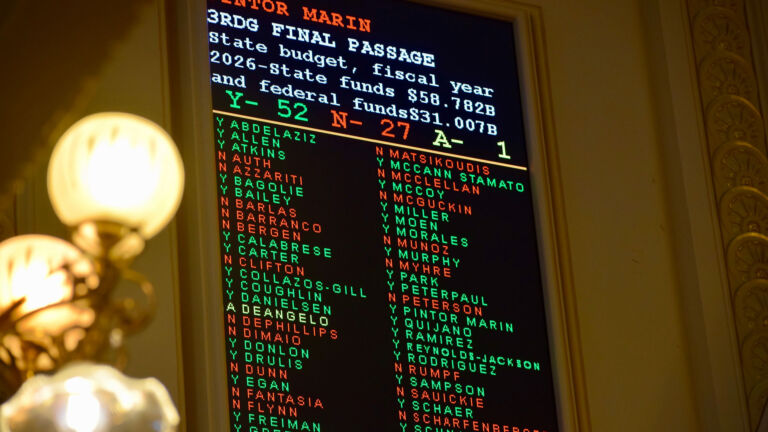
“Resolutions undergo thorough review for accuracy and will be made publicly available as soon as possible,” the statement said.
Meanwhile, the statement from the Senate Majority Office also suggested disclosure of the budget resolutions is forthcoming.
“Every resolution that was included in the state budget will be made public, providing additional information on how the funds are being used to address statewide priorities and to meet the needs of local communities without added expense to local taxpayers,” the statement said.
“We are making effective use of resources to support services that will improve the quality of life for our residents, including additional funding to make higher education more affordable,” the statement said.
— Colleen O’Dea contributed reporting.
