Credit: (AP Photo/Mariam Zuhaib)
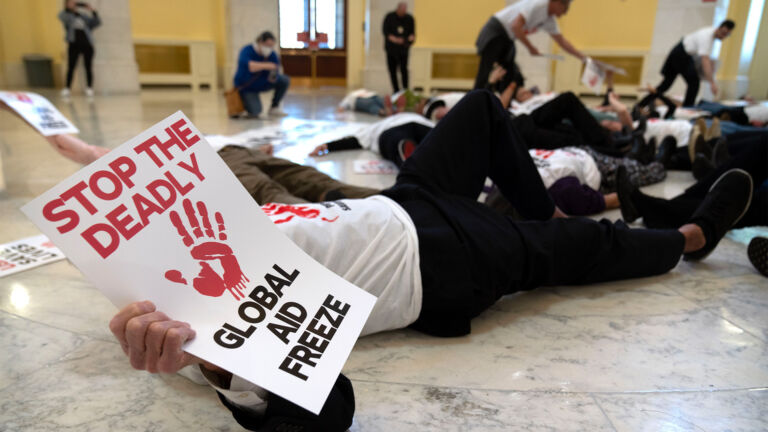
WASHINGTON — Federal legislation to cut $9.4 billion in foreign aid and public media funding could soon become law, a blow to vulnerable people abroad and to rural America.
The legislation would retroactively cancel $8.3 billion Congress had already authorized for foreign assistance programs largely at the State Department and the U.S. Agency for International Development, and $1.1 billion for the Corporation for Public Broadcasting, which provides money for local public radio and television stations, including NJ Spotlight News.
In a party-line vote, the House passed the bill (H.R. 4) in mid-June, and the Senate is scheduled to vote Tuesday.
Russ Vought, head of the White House budget office, said the package could be the first of several the Trump administration sends to Congress under a procedure that allows lawmakers to cancel already-approved funding.
“We have other rescissions packages that we will send if we have a good vote,” Vought said to reporters, describing the Senate vote as potentially a “huge pivot point in how this town does business.”
The context
The administration is targeting small pockets of federal funding, often for causes that have been bugaboos for Republicans, like public media, which many arch-conservative lawmakers view as skewed against them, after the Republican-majority Congress passed sweeping legislation this month that will cost trillions of dollars and expand the national debt.
Simultaneously, the administration has also set aside money for pet projects of President Donald Trump during his second term, including a missile defense shield, a sculpture project, renovations to the Rose Garden at the White House and a presidential jet.
The $9.4 billion the Senate is expected to vote on Tuesday is a speck out of a broader pool of federal spending, which reached $6.9 trillion in the latest federal budget period, including both the annual budget Congress approves and social safety-net programs like Social Security, Medicare and Medicaid.
Overall, foreign aid makes up about 1% of the federal budget, according to the Pew Research Center, a nonpartisan research organization.
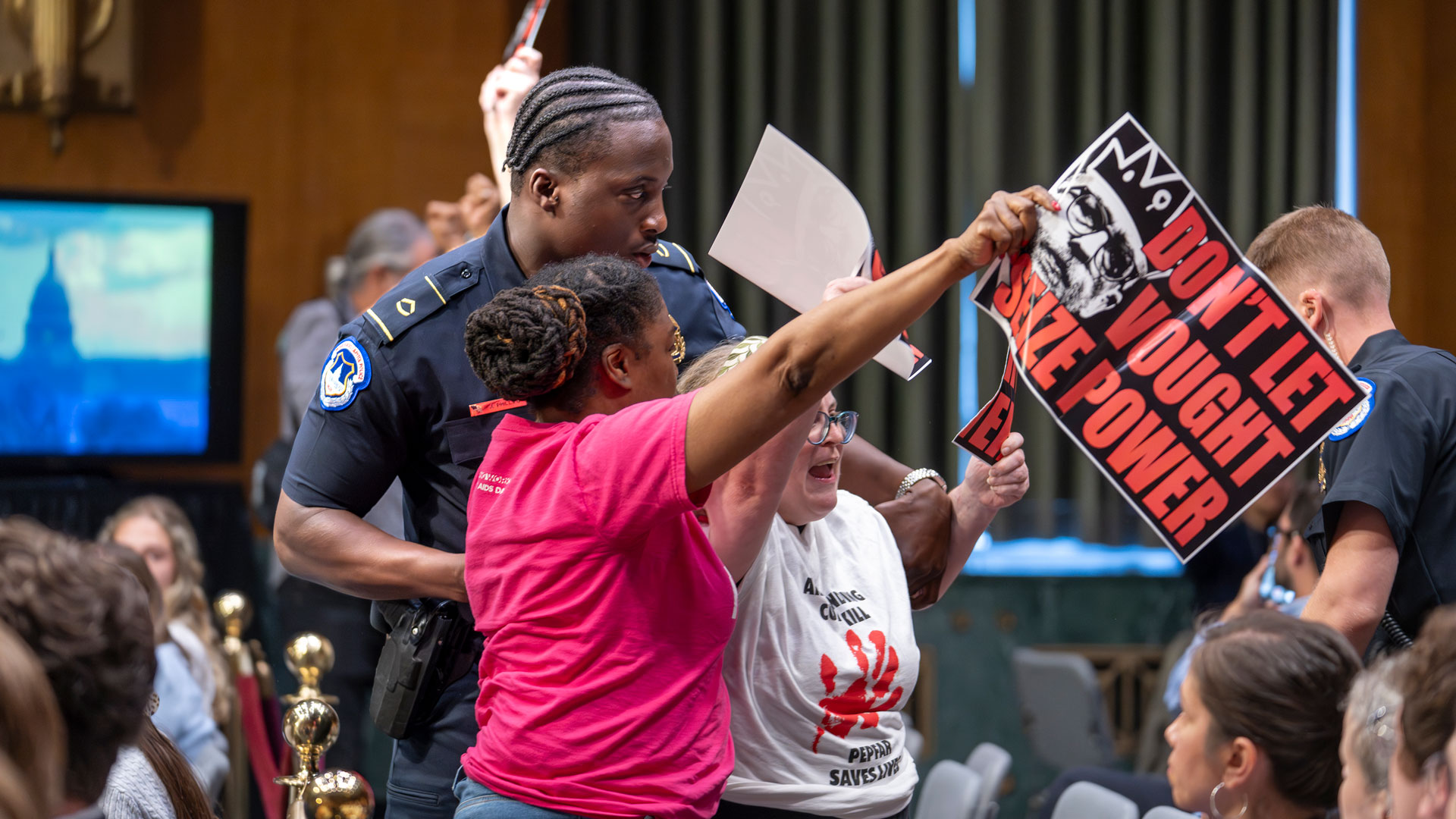
Among the targets in the rescissions package are programs that combat illness, violence and humanitarian crises, such as $400 million for a program called PEPFAR former President George W. Bush started in the 2000s to fight HIV and AIDS globally.
As the Trump administration pushes spending cuts this week on minor programs, it is gearing up to implement the immense tax and spending-cut law that, among other steps, slashed funding for Medicaid and food assistance.
Also targeted is $500 million to combat diseases including HIV/AIDS and malaria, plus $800 million for programs to provide shelter and nutrition to families fleeing their home countries.
The United Nations Aids Agency said funding cuts this year from donor nations — in its annual report, the agency described that development as a “sudden collapse in funding” — risk progress made over decades addressing the HIV/AIDS crisis.
 Credit: (AP Photo/J. Scott Applewhite)
Republicans for and against the cuts
At an appropriations hearing in June, Sen. Mitch McConnell of Kentucky said “there’s plenty of absolute nonsense masquerading as American aid that shouldn’t receive another bit of taxpayer funding.”
Yet, he said, the Trump administration has been “unnecessarily chaotic” in trying to cut foreign aid, giving a geopolitical edge to rival powers.
“In critical corners of the globe, instead of creating efficiencies, you’ve created vacuums for adversaries like China to fill,” said McConnell, once the top-ranking Republican in the Senate.
Some Republicans in the Senate, including Lisa Murkowski of Alaska and Mike Rounds of South Dakota, have balked at the cuts to public media, arguing they will close local radio stations, which can be vital during weather emergencies.
 Credit: (AP Photo/Julia Demaree Nikhinson)
Seventy-nine public radio and 33 television stations in 34 states are “vulnerable” to the possible cuts, Senate Democrats said in a report that cross-references weather data and PBS and NPR stations.
“These stations rely heavily on federal funding, with some depending on it for over 70 percent of their budgets,” the Senate report says. “Some rural areas depend on their local public media station as their only source of information in emergencies.”
No stations in New Jersey are considered at risk, according to that analysis.
Booker, Kim
New Jersey senators Cory Booker and Andy Kim, Democrats, will almost certainly vote against the bill. The Senate’s 47 Democrats and Independents need four Republicans to join them to block it.
As the Trump administration pushes spending cuts this week on minor programs, it is gearing up to implement the immense tax and spending-cut law that, among other steps, slashed funding for Medicaid and food assistance.
‘We need ships, we need aircraft, we need a new presidential plane.’ — Russ Vought, head of the White House budget office
That law is expected to add $3.3 trillion minimum to the national debt over the next decade, said the Congressional Budget Office, a nonpartisan advisory arm of Congress.
“Despite the focus on cost-cutting in Washington, we’re still seeing an annual rise in spending — largely due to the automatic growth of programs like Social Security and Medicare,” said Maya MacGuineas, president of the Committee for a Responsible Federal Budget, a nonpartisan budget watchdog.
“Lawmakers should commit to fixing the root causes of our unsustainable trajectory, rather than racking up debt we can’t sustain,” MacGuineas said.
Adding to the national debt
Under the new federal law, the debt will increase 7.7% over the next decade, according to the Penn Wharton Budget Model, a University of Pennsylvania group.
The national debt is about $36.6 trillion and has grown steadily in recent years under both Democratic and Republican presidents.
The new federal law includes funding for projects that are favorites of Trump’s, including about $50 billion for a national missile defense shield, called the “Golden Dome,” based on Israel’s Iron Dome system.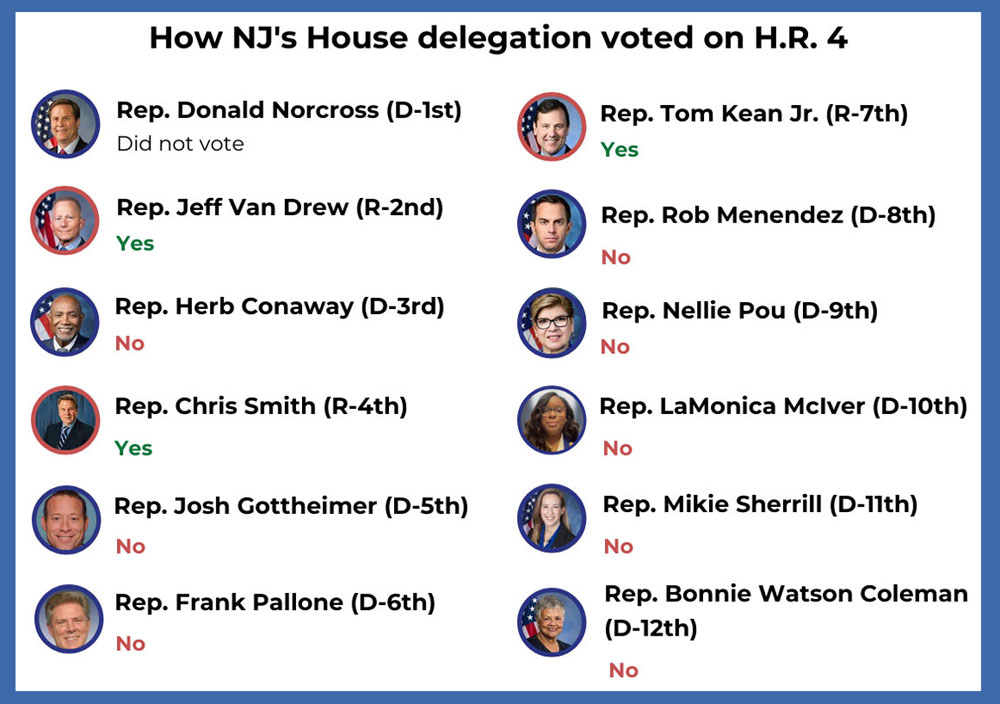
The law also includes $40 million for a new park of statues, called the “National Garden of American Heroes,” as Trump outlined in an executive order two days before he left office at the end of his first term, in January 2021.
Statutes would include hundreds of famous figures in American life, from politicians like John Adams and Thomas Jefferson, to musicians like Miles Davis and Irving Berlin, to military leaders like George Patton and Ulysses Grant to writers like Laura Ingalls Wilder and Walt Whitman.
Separately, Trump directed an overhaul of the Rose Garden and accepted a Boeing jet from Qatar, the tiny oil- and gas-rich nation, expected to cost hundreds of millions to overhaul into a plane for the president.
“We believe the actual retrofit of the aircraft is probably less than $400 million,” Air Force Secretary Troy Meink told lawmakers in June.
“We have a lot of administration priorities and I hope what you’ve learned from our first term, this term we need to spend in areas,” Vought said Friday when asked about spending on White House priorities. “We need ships, we need aircraft, we need a new presidential plane.”