
 Credit: ( Courtesy of Julie Flores-Castillo)
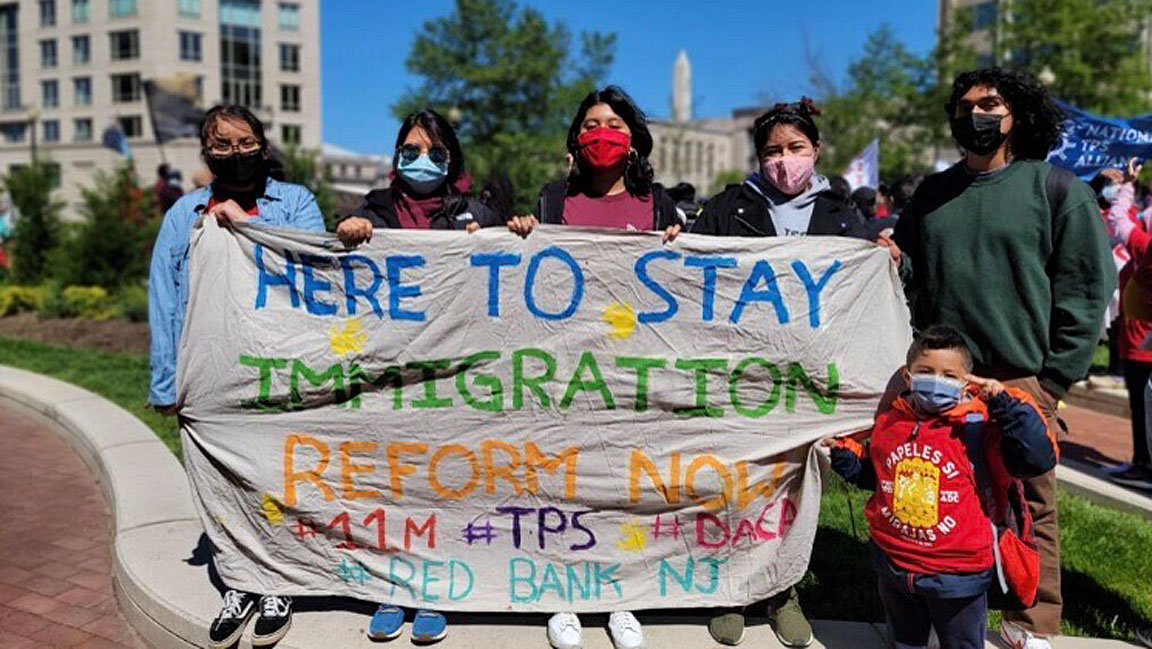
On the afternoon of April 18, 2018, Julie Flores-Castillo arrived home from high school to find that her father had been pulled over by immigration agents in Red Bank on his way to work that morning.
Flores-Castillo, then a freshman at Red Bank Regional, said her father was taken to the Elizabeth Detention Center, where he was given moldy food and had no access to natural light. She was not allowed to visit her father while he was detained there and in less than a week he was deported to Mexico, Flores-Castillo said.
 Credit: (Courtesy of Julie Flores-Castillo)
“I felt very isolated. I didn’t really know where to go or what to do after that,” she said in a recent interview with NJ Spotlight News. “I just knew that I had to start maturing and stepping up. I knew I had to take on this big role of helping my mom out at 14 [years old],” she said.
In addition to attending school, Flores-Castillo began working at a flower shop in Red Bank to relieve some of the financial stress on her mother, who began working two jobs to support the family.
“I feel like for a lot of young, first-generation youth like myself who have immigrant parents [and] who come from mixed-status families, it’s that overwhelming anxiety for years, that constant anxiety where it’s like ‘Could something happen?’” she said.
Detentions, deportations
The trauma and fear that Flores-Castillo experienced in 2018 when her father was deported is similar to what many families in New Jersey are currently living through, mental health professionals say, as the Trump administration has significantly increased arrests and detentions of immigrants since President Donald Trump began his second term in January.
Trump came into office promising the largest mass deportation in U.S. history by aiming to target the more than 10 million undocumented immigrants living in the United States. Since then, data shows border crossing have plummeted, arrests by Immigration and Customs Enforcement agents have doubled, and the number of people in detention is at an all-time high, with well over 55,000 people in ICE detention as of late June, according to NBC News.
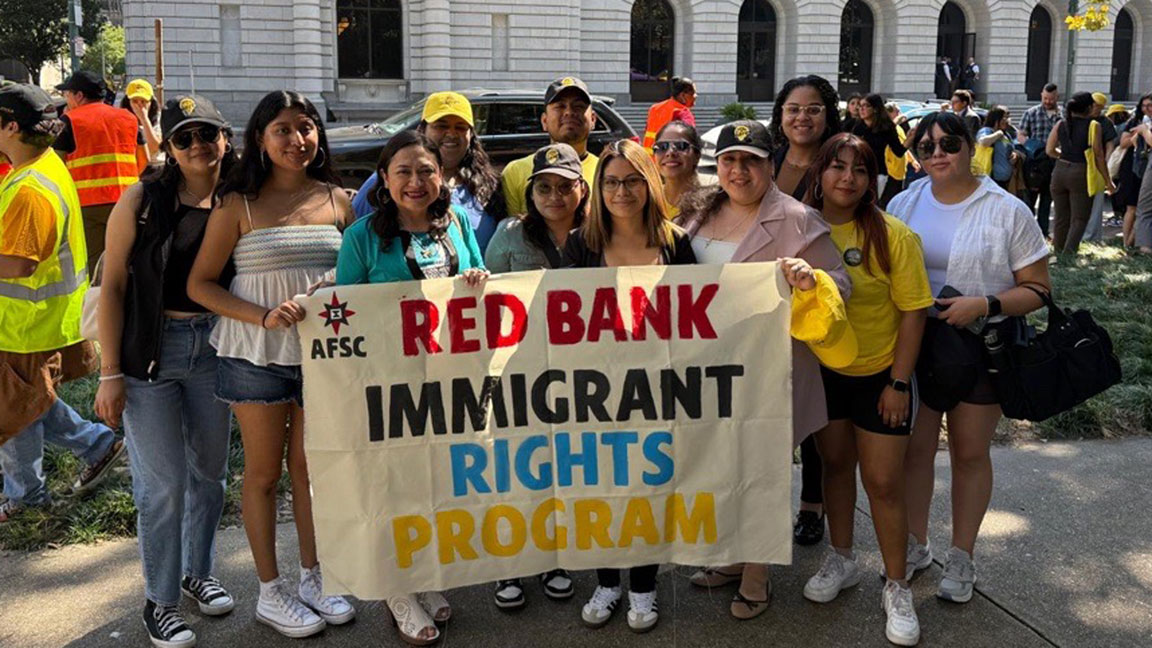
Flores-Castillo is now the youth organizer for the New Jersey Immigrant Rights Program at the nonprofit American Friends Service Committee. In that role, she helps first-generation young people with the college application process, including helping them to fill out financial aid applications, among other tasks.
The immigrant rights program at the nonprofit also provides legal representation for immigrant communities, conducts presentations on immigrant rights and advocates for the elimination of immigration detention.
Federal legislation that became law last week includes about $170 billion for the Trump administration’s hardline anti-immigration agenda.
Massive increase in ICE’s budget
Much of that sum would go to ICE, including $45 billion for new immigration detention sites — such as Delaney Hall in Newark and the detention center in Elizabeth, both run by for-profit companies. And $29.85 billion would go for ICE operations; Congress set aside that portion for the hiring and training of new ICE officers and to pay staff bonuses.
The law also provides funding to expand the number of detention beds at ICE facilities from about 56,000 to more than 100,000.
All told, the law makes ICE “the largest federal law enforcement agency,” Lauren-Brooke Eisen, senior director of the Brennan Center’s Justice Program, said Thursday.
The influx of money dwarfs ICE’s average annual budget of about $8 billion.
‘Lasting anxiety and emotional distress’
With the massive domestic policy bill now signed into law, the Trump administration’s hardline stance on immigration continues to have a significant mental health impact on children and families in New Jersey, as ICE raids, deportations and news reports of these events leave a “deep emotional scar,” according to Dr. María Rodríguez of Care Counseling Center.
 Credit: (Courtesy of Julie Flores-Castillo)
 “Kids come into my office worried that their parents might not be home when they get off the school bus. Adults can’t sleep at night. Even if they haven’t personally been detained or deported, the threat alone is enough to create lasting anxiety and emotional distress,” said Rodríguez, the CEO and founder of the center, which has offices in central and northern New Jersey.
Rodríguez said she’s worked with parents who no longer go to the grocery store during the day or who only send one parent out at a time, so there’s one to take care of the children in case the other is detained by ICE. Mothers have told Rodríguez they avoid school events or have stopped driving because they worry that a routine traffic stop could lead to detention, she said.
“These aren’t isolated stories. This is a pattern. People are retreating from their communities, which leads to more isolation, more anxiety, and less access to the very things that keep families healthy — school, medical care, connection,” Rodríguez said in an email.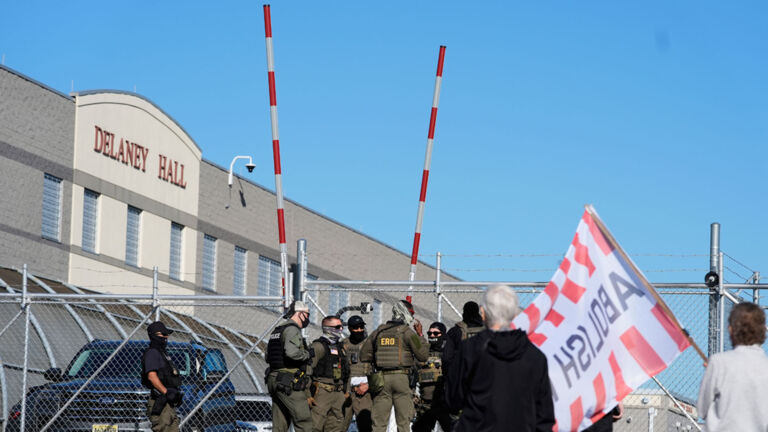
During Trump’s first administration, a report from KFF detailed the impacts of detention and deportation on family finances, health and well-being. The report was based on interviews conducted in California, Texas and Washington, D.C. during the summer of 2018 with 20 families that recently had a family member detained or deported and 12 legal services providers, health centers, educators and community organizations serving immigrant families.
Decline in school performance
Parents reported abrupt declines in children’s performance in school, according to KFF. In some cases, children missed days of school due to the disruption and emotional trauma in the family. Drops in school attendance were also reported after raids within a community, the report says.
Dr. Schenike Massie-Lambert of Rowan-Virtua School of Osteopathic Medicine said in a recent interview with NJ Spotlight News that raids and deportations involving loved ones are adverse childhood experiences because these events can overwhelm children’s capacity to function and create fear and a lack of predictability.
“It’s an ongoing stressor. It is not something that occurred and ended. They’re still potentially being exposed to that real threat,” said Massie-Lambert, an assistant professor at the school.
“That chronic fear of deportation or witnessing arrests can create some generalized anxiety [and] could create symptoms of post-traumatic stress disorder (PTSD) or depression not just in children, but also in the adults around them,” said Massie-Lambert.
Adverse childhood experiences
Adverse childhood experiences, or ACEs, are traumatic events that occur in childhood that are linked to chronic health problems, mental illness and substance abuse in adulthood, according to the Centers for Disease Control and Prevention. The toxic stress from these experiences can change brain development and affect how a person’s body responds to stress, according to the CDC.
Edna Urgilez, a bilingual therapist at Care Counseling Center, told NJ Spotlight News that the intergenerational trauma of ICE raids is “very real” in American families and occurs when parents and grandparents carry unresolved trauma from displacement, separation or fear. It often gets passed down to younger generations not just through stories, but through behaviors, emotional responses and even silence, said Urgilez.
Urgilez said she sees children and adolescents growing up with fear, anxiety and people-pleasing tendencies, sometimes without fully understanding where those feelings come from.
“If it’s left unaddressed, this trauma can impact their relationships, their confidence and their ability to cope with stress as they grow older. It’s a cycle that can continue through generations and generations until it’s intentionally processed and healed,” said Urgilez.
After her father was deported, Flores-Castillo said she was in “constant survival mode” in order to help her mother and knew she needed to serve as a role model for her two younger siblings, which is when she first began her work in advocacy for immigrant rights.
“I knew that I had to do something and that I wanted to do something about what happened for my family and for my community, for my siblings, [and] for me because I knew that I wasn’t going to let this break me in any way,” said Flores-Castillo.
— Benjamin J. Hulac contributed reporting.
