Credit: (AP Photo/Julio Cortez)
Polls in New Jersey close at 8 p.m. Tuesday, ending the most expensive election to choose Democratic and Republican nominees for governor in state history.
Reminder for voters
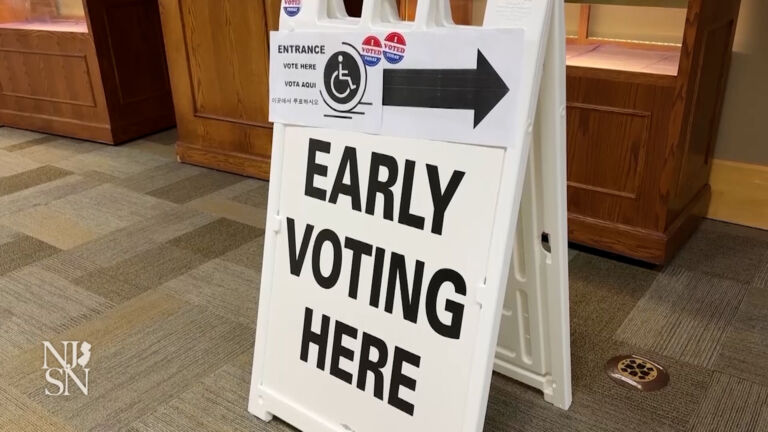
Polling locations are listed on the sample ballots sent to voters’ homes or can be found through NJ Spotlight News’ elections page or the state Division of Elections website. It’s also the last opportunity to return a mail-in ballot, either getting it postmarked Tuesday or putting it into one of the drop boxes within a voter’s home county by 8 p.m.
The open governor’s seat — Democrat Phil Murphy cannot serve more than two four-year terms — drew large fields of candidates from both major parties, with well-funded and offering voters detailed platforms.
The Democrats are Ras Baraka, mayor of Newark; Steve Fulop, mayor of Jersey City; Rep. Josh Gottheimer (D-5th); Rep. Mikie Sherrill (D-11th); Sean Spiller, president of the New Jersey Education Association; and Steve Sweeney, union leader and former president of the state Senate.
The Republicans are Justin Barbera, owner of a construction firm; Sen. Jon Bramnick (R-Union); Jack Ciattarelli, a former state Assembly member making his third try for the office; Mario Kranjac, a lawyer and former mayor of Englewood Cliffs; and Bill Spadea, a former talk radio host.
 Credit: (AP Photo/Mike Catalini; Steve Hockstein/NJ Advance Media via AP, Pool; AP Photo/Mike Catalini; Kranjac campaign; Barbera campaign; AP Photo/John Minchillo; Newark Mayor's Office; AP Photo/Andrew Harnik; Sweeney campaign; NJSN; Spiller campaign)
 More interest than usual
Each of the major candidates tried to carve out a lane to victory and they, and the committees supporting them, blanketed television, the internet and mailboxes with ads. The race got the attention of New Jersey voters, most of whom tend to ignore nonfederal election years, and primaries in particular.
Fewer than a quarter of registered Democrats and Republicans vote in a typical year. But early voting reports point to an engaged electorate and turnout could exceed expectations. As of end of day Monday, close to 481,000 people had voted, close to 12% of registered Democratic and Republican voters, more than half the number many had predicted. Registered voters unaffiliated with either major party can vote in the primary by declaring for one party or the other at the polls, though few in New Jersey do that.
 Credit: (AP Photo/Heather Khalifa)
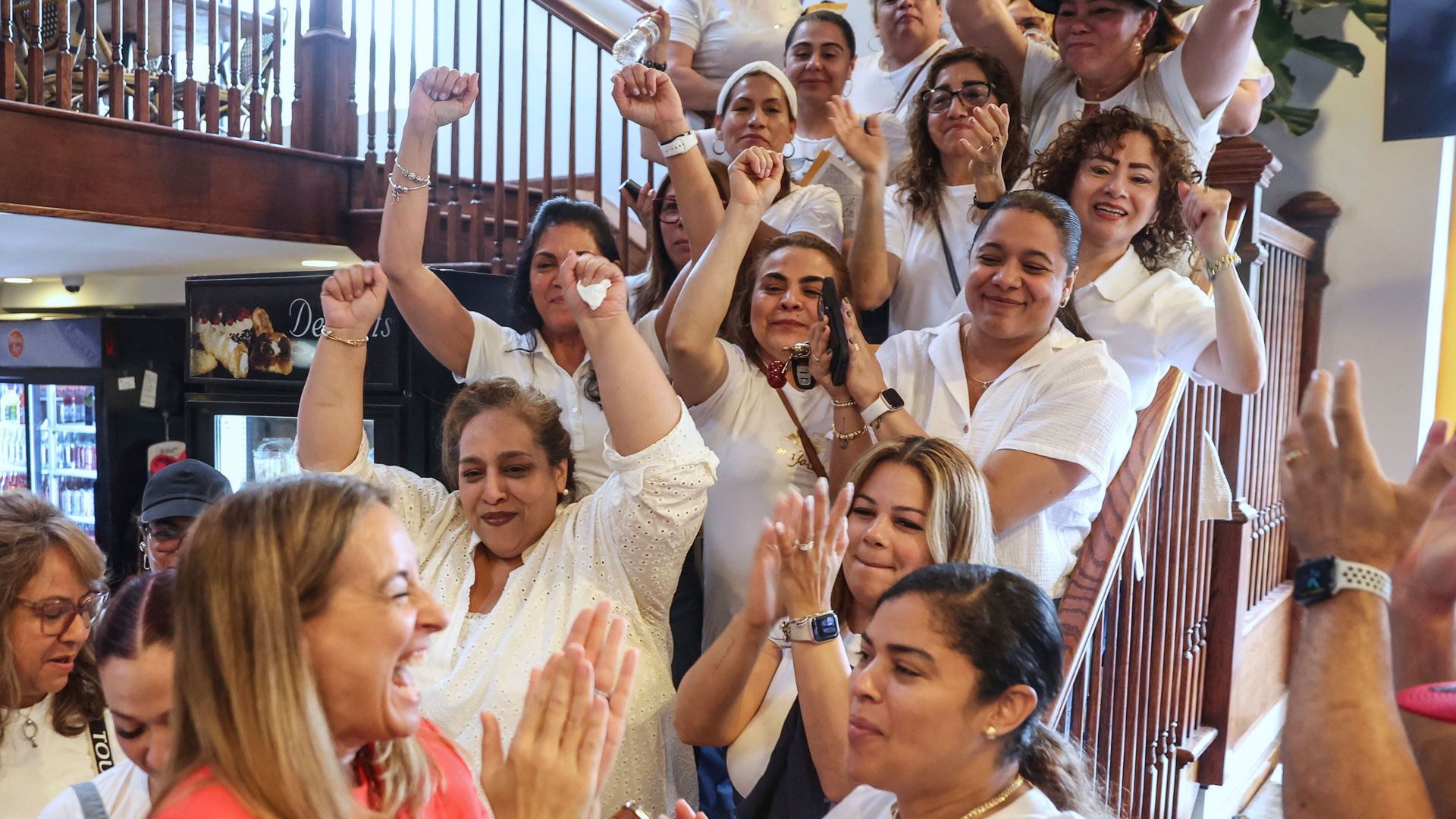
More Democrats voted early than Republicans, potentially an indication of interest in their party’s six-person field of candidates for the gubernatorial nomination. In five counties — Burlington, Camden, Cape May, Gloucester and Ocean — more than half of Democrats who got a mail-in ballot returned it. Contested Assembly races also appeared to draw voters in some districts. In the 33rd District in Hudson County, where a slate running on Fulop’s Democrats for Change ticket is challenging the candidates endorsed by the Hudson County Democratic Party and backed by Sen. Brian Stack, the mayor of Union City, some 9,000 Democrats voted early in person, at least four times more than any other district.
Early voting at polling locations ended Sunday. Ballots sent by mail and postmarked by Tuesday will be counted for six days after Election Day.
Assembly competition
There are an unusually high number of contested Assembly primary elections this year: Democrats have races in 23 legislative districts and Republicans have six.
This is the first year a new ballot design is being used statewide by both major parties. There is no longer a county line, though candidates endorsed by county parties promote that support in the slogan that appears beneath their names on the ballot. Offices are arranged in a block style on the ballot, with the candidates for each office listed within the same block. In adopting the new design, the Democratic-controlled Legislature added a letter and number for each candidate, which allows parties and candidates in their campaign literature to urge voters to cast ballots by name as well as by number designation.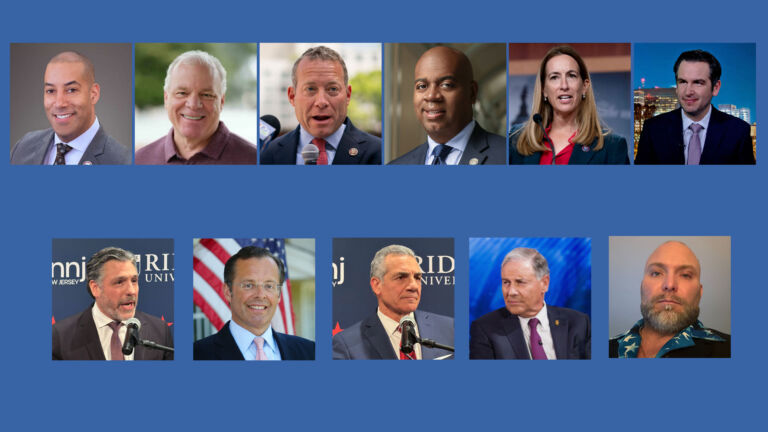
It is also the first year for a governor’s race under a campaign finance law signed in 2023. That law requires independent spending committees, which by law cannot coordinate with candidates, to report their fundraising and spending to the state Election Law Enforcement Commission.
Big spenders
Candidates and independent groups spent $122 million on the race as of May 30, a record for gubernatorial campaign spending, the commission reported Friday; the figure includes public matching funds for eight candidates who qualified. But that total only covers groups organized in New Jersey. Including federal committees and nonprofits, the total spent since 2022 on committees supporting the candidates tops $151 million, according to an NJ Spotlight analysis.
Spiller is the candidate with the largest publicly known financial backing. Even though he raised less than $440,000 as a candidate, the NJEA gave $40 million through another committee to Working New Jersey, the independent committee backing Spiller. Combined, Spiller’s campaign and Working New Jersey spent almost $38 million through May 30.
Campaign financial activity has been robust in Assembly races as well. Candidates raised more than $26 million, with almost $4 of every $5 taken in by incumbents, according to ELEC. They spent $15.3 million as of May 30, with incumbents spending about three times more than challengers. That only includes candidate spending and not independent committees.
Where to follow the results
NJ Spotlight News will have live, updated results from The Associated Press after polls close at 8 p.m. on its website, social media and during a special live broadcast beginning at 8 p.m. on NJ PBS stations and on NJ Spotlight News’ YouTube channel.