
 Credit: (NJ Spotlight News)
Two-thirds of some of New Jersey’s highest-need school districts are overcrowded, as proposed funding for school construction remains low.
Schools in 19 of the 31 Schools Development Authority districts, where construction is paid for entirely by the state, are over capacity or do not have enough square footage per student, according to a new state report. More than 11,000 seats are needed to address capacity needs, about half of which are in Elizabeth. The agency estimates addressing facilities needs that aren’t already funded would cost about $6 to 7 billion.
The governor’s proposed budget for the fiscal year beginning July 1 would allocate $350 million from the off-budget Debt Defeasance and Prevention Fund to the agency. Over the last three years, the state allocated almost $2 billion for school construction projects, but the funds are already being spent on emergency projects.
“This funding, combined with funding previously allocated to the Authority, allows for the advancement of projects that will alleviate capacity needs and outdated facilities for thousands of schoolchildren,” Schools Development Authority Chief Executive Officer Manuel Da Silva told the Senate Budget Committee at a hearing on Tuesday.
The new report, called the Educational Facilities Needs Assessment and Prioritization of School Facilities Projects for SDA Districts, is required every five years to determine which school construction projects get completed first. The prioritization plan considers capacity and square footage deficiencies, as well as building conditions and other construction-related factors.
Da Silva said the agency is evaluating the report. The Schools Development Authority was developed after a 1998 New Jersey Supreme Court ruling ordering the state to fully fund school construction and renovations in some of the poorest districts at the time. The condition of school facilities was preventing students in these districts from receiving the “thorough and efficient” education they are entitled to under the state Constitution, according to the ruling.
Some advocates and lawmakers are calling for the inclusion of more money for school construction in the budget for the next fiscal year to address overcrowding and aging buildings.
“The [report] clearly identifies widespread and urgent capacity issues in the SDA districts, but the State has almost no resources left to address them,” Theresa Luhm, an attorney at the Education Law Center, said in a statement.
Robert Kim, executive director of the center, said failure to act could lead to legal challenges for the state.
Senate Majority Leader Teresa Ruiz (D-Essex) said during Tuesday’s hearing there is a need for school construction in Newark. The state’s largest school district, Newark is about 2,000 students over capacity, according to the report, which uses enrollment data from the 2023-24 school year. The district’s buildings are also some of the oldest in the state, with one building that hosted former President Abraham Lincoln still in use. In 2023, Newark Superintendent Roger León estimated it would cost more than $2 billion to update and repair all the district’s buildings.
Sen. Renee Burgess (D-Essex) who represents Irvington, also called for greater state support. Irvington High School is over capacity and does not meet square footage requirements, according to the report.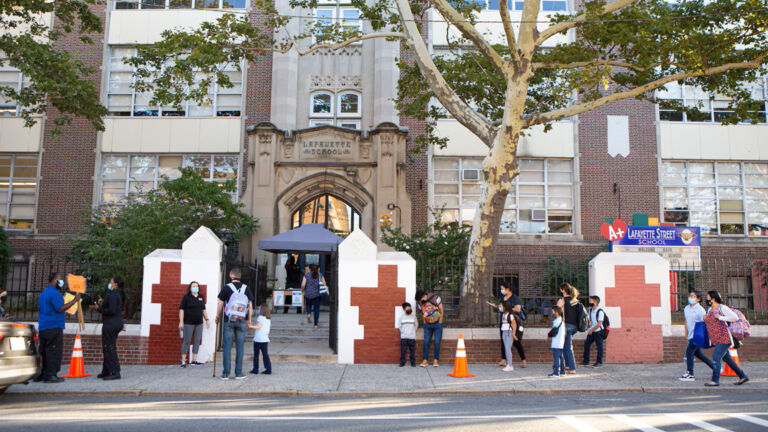
“The truth of the matter is, bonding for this falls on all of us,” Ruiz said. “It requires the legislature to have the fortitude to go out and take a common sense approach, to go out and bond for SDA districts, which we are constitutionally responsible for in providing thorough and efficient which includes facilities.”
About half of the projects from the agency’s 2022 Capital Plan will be delivered or have design-build contracts initiated by the end of the year, according to Da Silva. But once those projects are done, there will still be “significant school facility needs.”
“We do not have a long-term solution for a revenue source for construction and facilities in a state that we know is saddled with school buildings in need of repair from one corner to the other,” Ruiz said.
