 Credit: (David Goldman/AP Images for Frito-Lay, File)
WASHINGTON – Republicans in the House this week moved to block California from carrying out state requirements to sell more electric trucks, limit a type of pollution that generates smog and ban the sale of gasoline-fueled automobiles by 2035.
The resolutions to thwart these three policies from California, the biggest automobile market in the country, passed the House with support from the fossil fuel industry, the trucking lobby and business groups.
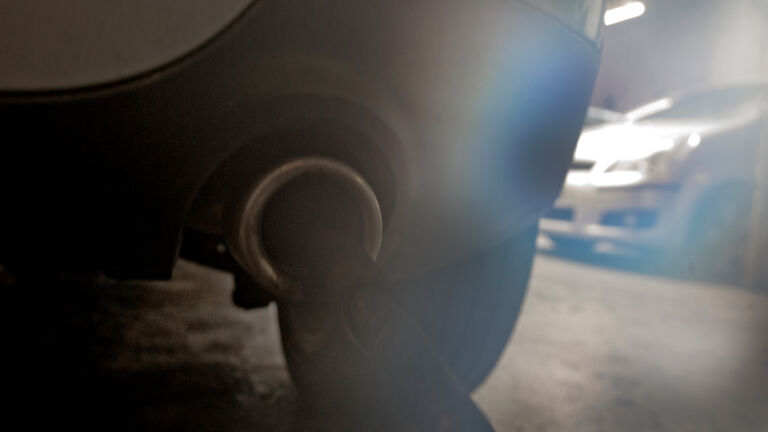
New Jersey, like other states in the Northeast, follows many of California’s air pollution and transportation standards that govern cars, trucks and heavy-duty trucks, and the resolutions this week will have massive environmental ripple effects if President Donald Trump signs them into law.
The resolutions now go to the Senate, where a parliamentary snag could deny passage.
New Jersey’s congressional delegation split almost entirely on party lines, with Republicans voting for the resolutions and Democrats against.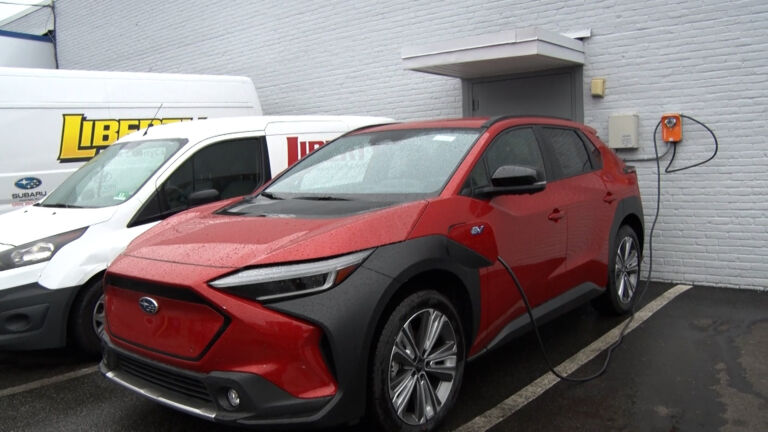
Democrats Donald Norcross (D-1st) and Josh Gottheimer (D-5th) did not vote. Norcross is recovering from a medical emergency that concerned his gallbladder and has not been in Washington for weeks, though his office said Thursday he was discharged from the hospital.
A Gottheimer spokesman said the congressman would have voted “no” on the three resolutions.
Representatives for New Jersey’s three Republicans — Jeff Van Drew, Chris Smith and Tom Kean — did not respond to questions about why they voted for the resolutions.
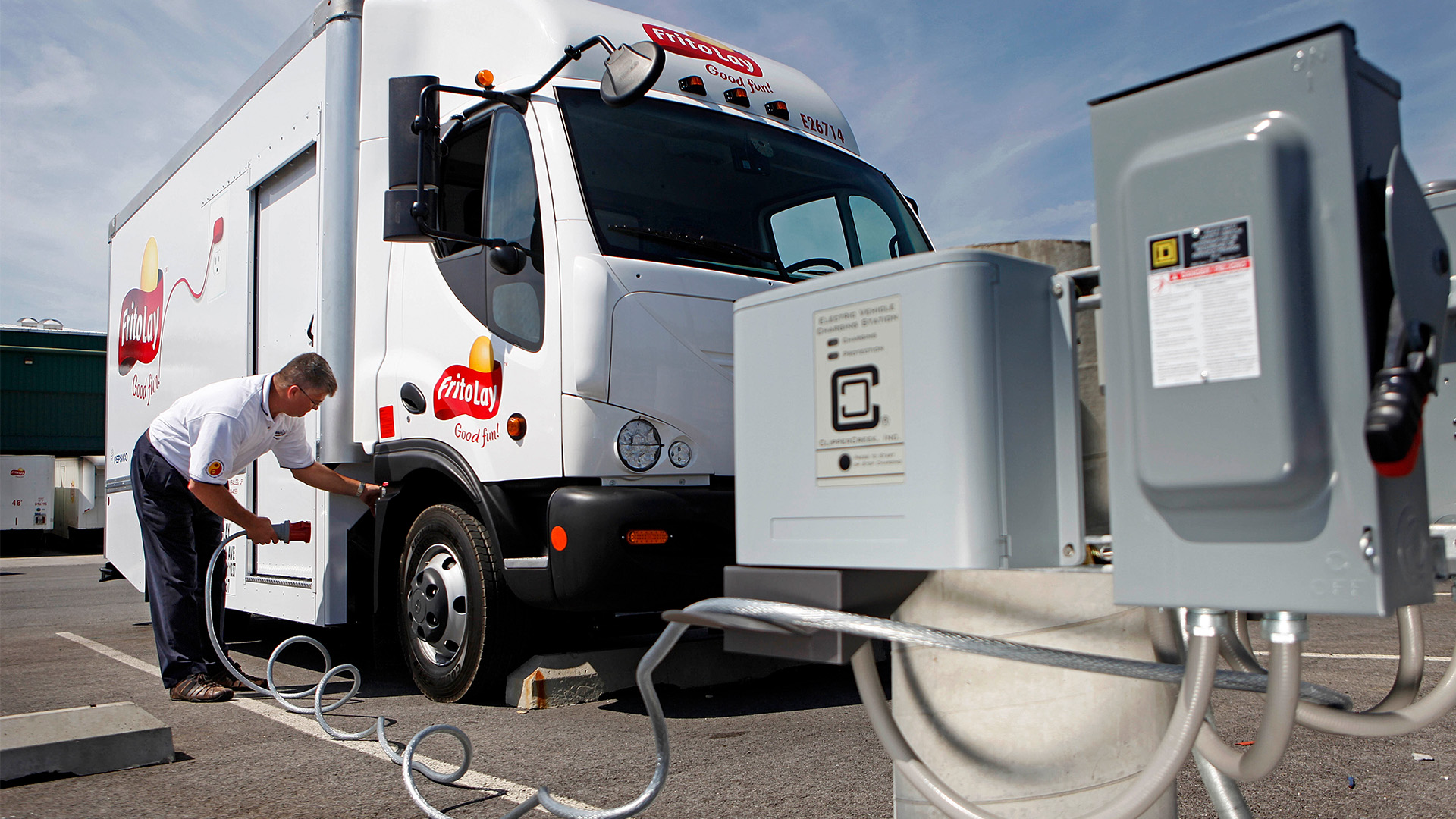
In two votes Wednesday night, Republicans in the House, with support from some more conservative Democrats, voted to block two state rules California has adopted. One would help get more electric trucks on the market and a separate measure to limit nitrogen oxide from heavy-duty vehicles, a transportation class that spans smaller trucks like dump trucks and trash trucks to cement mixers and 18-wheelers.
In the atmosphere, nitrogen oxide mixes to create ground-level ozone and smog.
The Newark and New York City metropolitan area is ranked No. 16 on the American Lung Association’s list of regions with worst ozone pollution. Ozone exposure can inflame the lungs and airways and worsen lung conditions like asthma, bronchitis and emphysema.
And on Thursday, the House voted to block California, and in turn other states, from banning the sale of gasoline cars by 2035.
John Bozzella, head of the Alliance for Automotive Innovation, an industry group that represents Toyota, General Motors and Volkswagen, among other auto brands, called Thursday’s vote a “targeted action”, adding that it would “avoid automotive marketplace distortion and prevent the inevitable jobs and manufacturing fallout stemming from unachievable regulations.”
“This positive House vote is a vote for common sense,” Ray Cantor, deputy chief government affairs officer for the New Jersey Business and Industry Association, said in a statement of the Thursday vote. “We can work, and are working, toward reducing carbon emissions. But as we have said for nearly two years now, the ban on gas-powered cars in such an expedited time frame has never been feasible or practical or affordable.”
The Trump administration has made that path harder.
It froze a $5 billion program, started under the Biden administration, to build networks of electric-vehicle chargers nationwide.
In Congress, Republicans are moving along a mammoth piece of legislation to cut taxes and cut federal programs. To pay for some of that bill, Republicans are eyeing ending federal climate programs including those to make transportation less polluting.
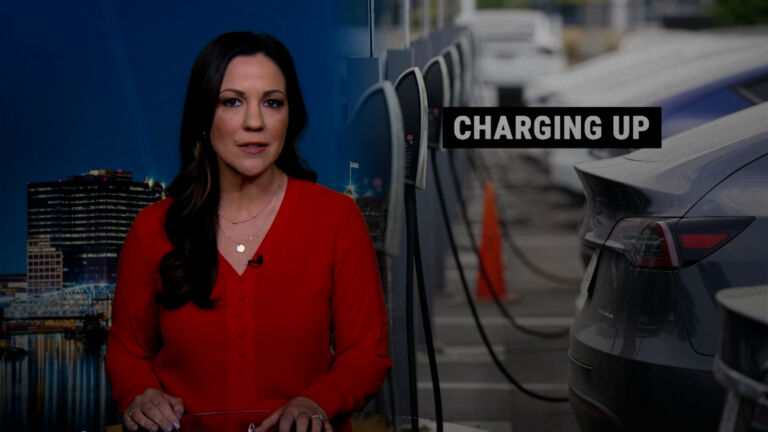
Transportation emissions are the most common type of greenhouse gas emission in the U.S., ahead of emissions from electricity generation, agriculture or building operations.
Global greenhouse gas emissions – heat-trapping pollution that comes from burning oil, coal and fossil gas, and worsens as humans tear down rainforests – must be cut in half by 2035 to limit Earth from warming beyond a perilous point, climate scientists and experts say.
The world’s nations and industries are on pace to easily overshoot that mark as demand for electricity, in part to stay cool with air conditioning as the world warms, increases.
Blanketed with smog from industrial plants and cars, California began regulating air pollution in the 1940s and 1950s, before the U.S. government approached the issue.
Because of this early history, California is the lone state in the country that can issue its own emission standards for new cars. This special status is carved out under the Clear Air Act, a federal law.
Whenever California wants to issue a new standard, it has to receive what is called a “waiver” from the U.S. government, something that’s happened more than 75 times, according to the Natural Resources Defense Council, an environmental and legal advocacy group.
Congress has never stepped in as it did this week to block California’s standards.
Two recent decisions from the Government Accountability Office, a nonpartisan investigative arm of Congress, found that the California waiver should not be treated as a regulation.
Those findings complicated Republicans’ desire to end the California vehicle standards because they used a procedure, established through a 1996 law, that allows Congress to strike down recently completed federal regulations.
But the GAO found the California standards are simply state-level standards rather than a broad federal regulation, meaning they could not be repealed in the way the Republican majorities in both chambers are attempting.
“These resolutions are illegal, plain and simple,” Rep. Frank Pallone (D-6th) said Wednesday, before passage of the three measures. “Passing these resolutions would allow more nitrogen oxides, fine particles, and climate disrupting emissions to poison our air.”
Rep. Nellie Pou (D-9th), who voted no on all three resolutions, said she was concerned about how a phase out of gasoline-powered cars would affect the public in New Jersey, one of the states scheduled to follow California’s phaseout.
“Our state should work with consumers, environmental advocates, auto manufacturers and dealers to understand what is happening in the marketplace, seek common ground, and find a workable path for New Jersey families that balances choice, cost and our environment,” Pou said in a statement.
The Senate parliamentarian, a procedural expert who serves in a referee-like role in that chamber, also found the California standards could not be undone by using the 1996 law.
If Senate Majority Leader John Thune, a Republican from South Dakota, adheres to that ruling, the three measures to undercut air pollution standards in California and the states that follow its lead could survive.