
 Credit: (John Mooney/NJ Spotlight News)
 “Under the Dome,” a new NJ Spotlight News’ reporting project, takes a deep look into the workings of New Jersey’s state government and how it impacts our daily lives and communities.
The ongoing series will include regular reports and multimedia features that examine how the wheels of power turn — or not — in the Garden State. These will include articles, video segments, Q&As, profiles and data. We will be asking our readers and viewers for their opinions and questions, too, and we will have a weekly podcast, “Hey, NJ.”
No one is more important in the workings of New Jersey’s state government than the person who runs it all, New Jersey’s governor.
A little history: New Jersey’s first state Constitution in 1776, and second governing document in 1844, sought to diffuse power from a single person. The Legislature held much of the power, itself electing the governor and to only one three-year term. That all changed in 1947, when a new state Constitution gave centralized and considerable powers to the governor, not to mention a new limit of two four-year terms, just like the president.
 Credit: (John Mooney/NJ Spotlight News)
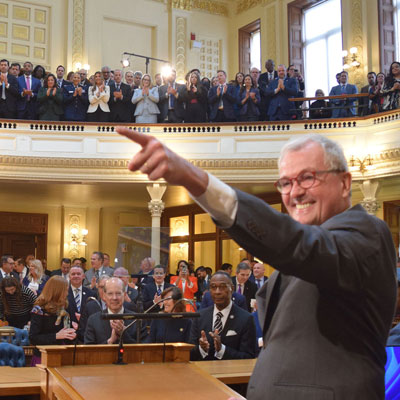
Current occupant: Philip D. Murphy (2018-2026, term-limited), 56th in history
Salary: $175,000
Why the governor matters: Because of the 1947 Constitution, the New Jersey governorship is now arguably the most powerful in the country. The governor appoints all state judges and prosecutors, agency heads and state board and commission members, and controls billions in state finances through the budget process and the veto pen. The power of the governor’s executive order is also profound; it’s essentially the power to write laws unilaterally. Until a few years ago with the addition of a lieutenant governor, the position was the only statewide elected office in New Jersey’s government.
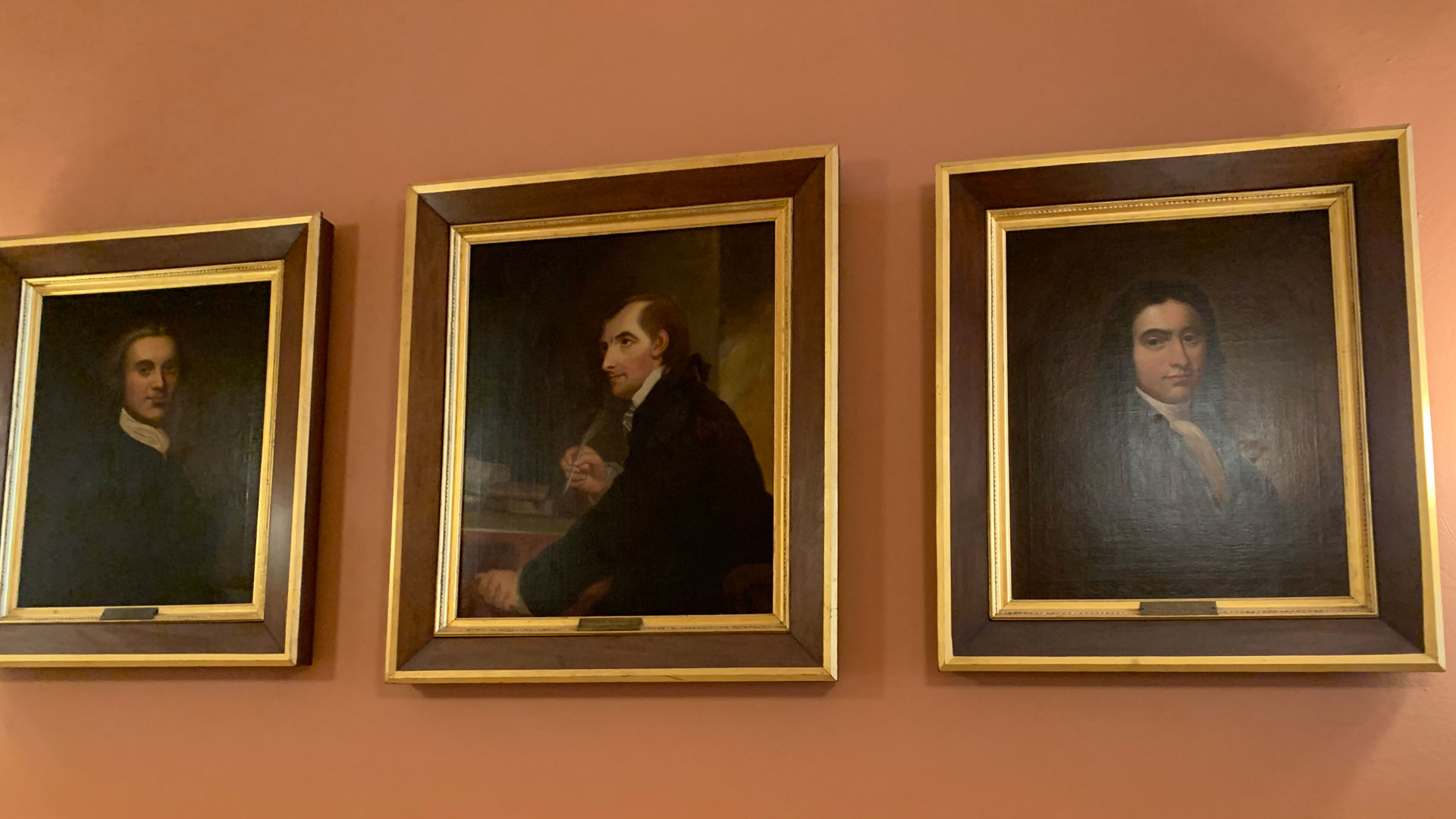
NJ governor’s hall of fame
From someone who knows: “The New Jersey governorship was the best job in the country, because it was the most powerful. I could do things that no other governor could do.” — Former Gov. Thomas Kean
Why the NJ governorship may especially matter this year: The spotlight on the position in 2025 couldn’t be brighter, with the coming election of the first new governor in eight years and the job’s unprecedented role in the face of a Trump administration on a rampage.
 Credit: (John Mooney/NJ Spotlight News)
Executive orders: At 387 and counting, Murphy’s list of executive orders is easily the longest of any governor in the last four decades. Former Gov. Chris Christie’s list was second, with a total of 241. Murphy’s most significant orders so far concerned the COVID-19 pandemic and the state of emergency that he decreed, directing state and local governments — and indeed much of civic life — in unprecedented ways. More recently, he signed an order to stockpile mifepristone, a medication used in abortions in the face of ”anti-choice” policies supported by the Republican majorities in Congress.
Other notable executive orders: Former Gov. Brendan Byrne used an executive order to stop all building in the 1 million-acre Pinelands, leading to the Pinelands Preservation Reserve. Kean did the same to block wetlands development, leading to the Wetlands Preservation Act.
More resources
This story is made possible in part by the Corporation for Public Broadcasting, a private corporation funded by the American people.
