 Credit: (Taylor Jung/NJ Spotlight News)
Newark Grounds is a street art initiative that creates a walkable connection between public art installations, promoting the city’s own artists.
The project is a pathway that connects over 75 public art installations created over the last decade. Spearheaded by local arts organization Project for Empty Space, in partnership with city officials, Newark Grounds aims to spotlight Newark’s artistry and prompt deeper engagement with public art.
 Credit: (Taylor Jung/NJ Spotlight News)
“I think that there is this misconception that Newark is an unfriendly, unsafe city. And we’ve kind of been a best-kept secret for a while, and been OK with being a secret. But I think now we really want people to know the beauty that we have here,” said Fayemi Shakur, arts and cultural affairs director for the city of Newark.
“I think public art can really inspire future generations of artists. I think about children when they walk down the street and how it can invigorate their imagination,” Shakur added.
Project for Empty Space co-directors Jasmine Wahi and Rebecca Jampol said Newark Grounds began in part as a desire to connect two Project for Empty Space buildings with the murals of Four Corners Public Arts, the artworks along the Gateways to Newark corridor on McCarter Highway, and installations within Newark Penn Station.
Four Corners is an area in downtown Newark that sits at one end of Newark Grounds. Local artists, city officials and private companies came together to form Four Corners Public Arts in 2019, bringing nearly 30 murals to Treat Place and Beaver Street. The area was a once-vital economic zone that has experienced “disinvestment,” organizers said on their website.
“We really wanted this [area] to be narrative-based, so for the stories that were in the murals to really mean something about our community and to engage our history and our hope for the future, and to be community-engaged work and to involve youth in it,” said Jampol.
To connect the various street art installations, Project for Empty Space partnered with Rutgers University-Newark’s Design Consortium. Students in the program dedicated two semesters to the project, developing its name and visual identity. This gave students an opportunity to contribute directly to the public art initiative within their community, those students said.
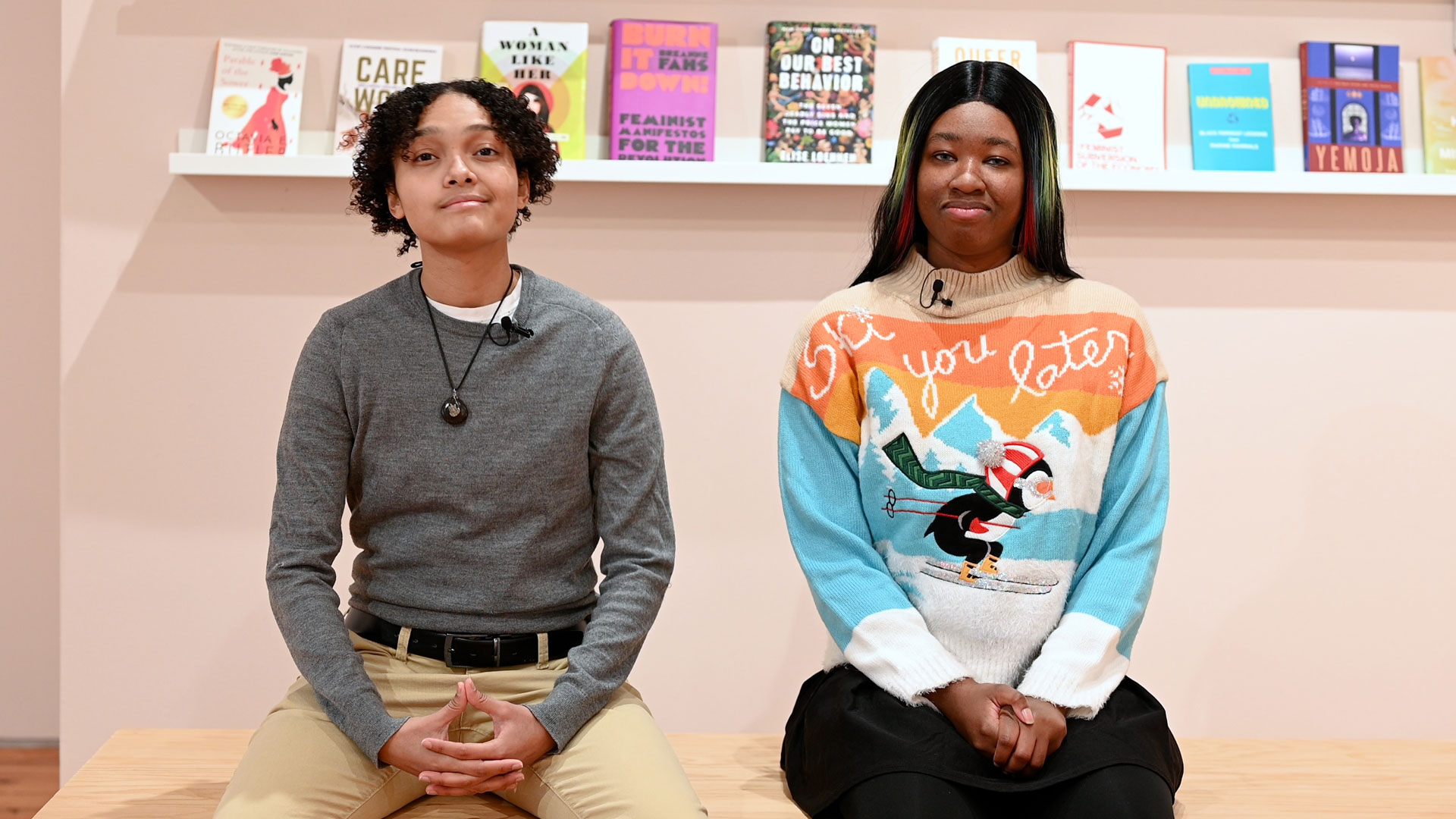
“As a Newark resident, having these voices, having these images be heard and known by the world…Yes, welcome to my city. This is what we’re about. Let us speak to you through this message, this corridor that’s more than just a corridor,” said Vylette McKnight, a Rutgers University-Newark Design Consortium student.
 Credit: (Taylor Jung/NJ Spotlight News)
Wahi and Jampol say the students’ involvement was integral to shaping the project. Through brainstorming sessions, they explored various concepts and ideas, ultimately landing on the name “Newark Grounds,” a choice informed by their understanding of the city’s character and landscape.
Part of the inspiration for the name, said Rutgers University-Newark Design Consortium student Princess Andrews, came from the imagery of the city’s physical ground and the idea of being grounded. They were inspired, in part, by “Ballad of the Morning Streets,” a poem by Newark poet and advocate Amiri Baraka:
“The ballad of the morning streets, sweet
voices turns
of cool warm weather
high around the early windows grey to blue”
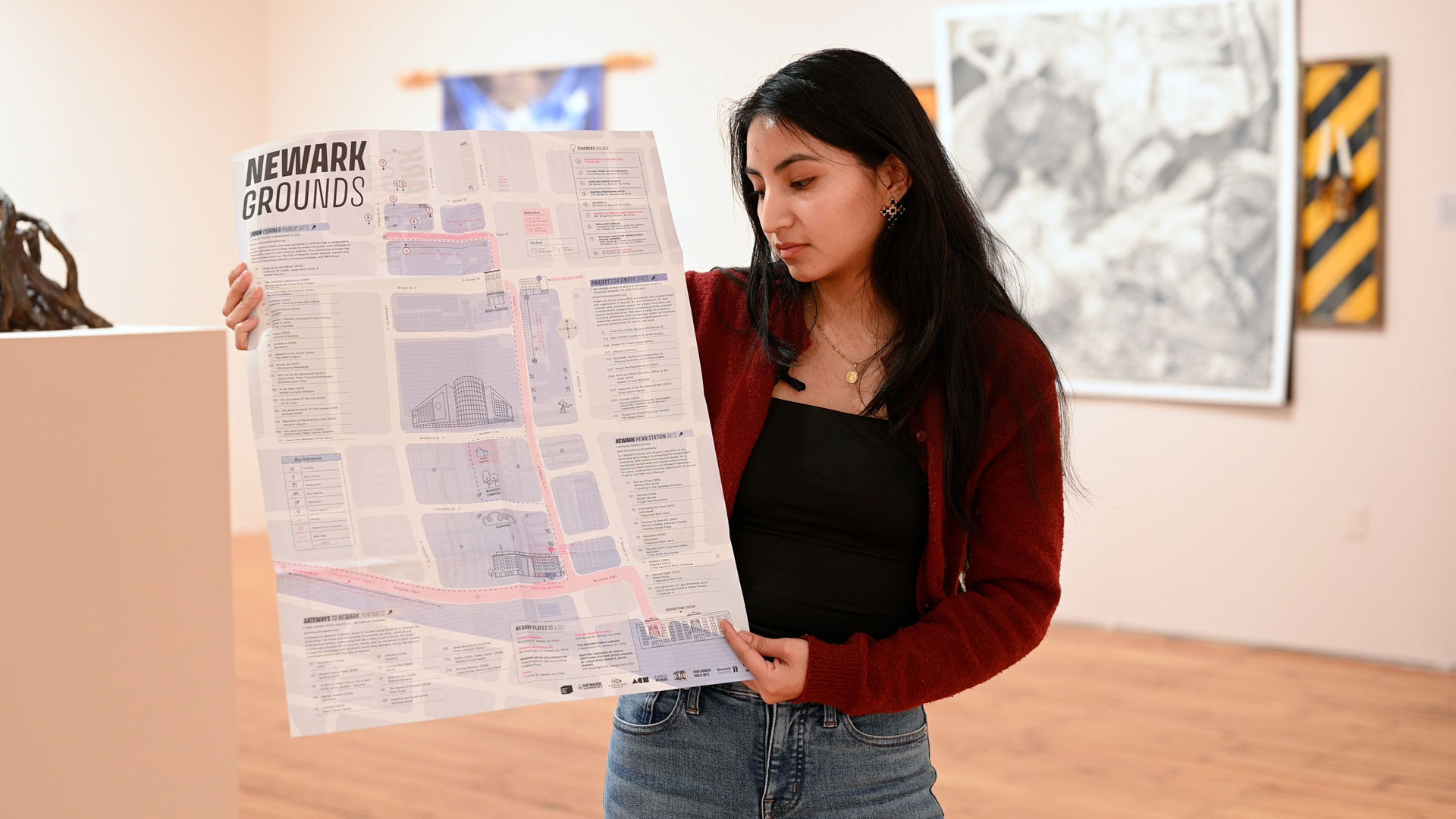
The poem was incorporated into a physical map for the project, designed by Rutgers University-Newark alum and visiting professor Gisela Ochoa.
“I was really inspired by having the map being the main event, the main thing that people see, because I felt it was necessary for not only it to act as a map for someone to use, but also as something that someone can hang up and display on the wall,” Ochoa said.
 Credit: (Taylor Jung/NJ Spotlight News)
The hope at Project for Empty Space is to continue growing Newark Grounds through sculptures and more murals throughout the city to demonstrate the power of collaborative art projects for local artists.
“We really genuinely believe that art impacts and sparks social change and has an impact on what happens around us. And so, with that in mind, public art is an essential component to making a difference in communities. And so that’s why this particular project here in Newark, which is our home, is really important,” said Wahi.