
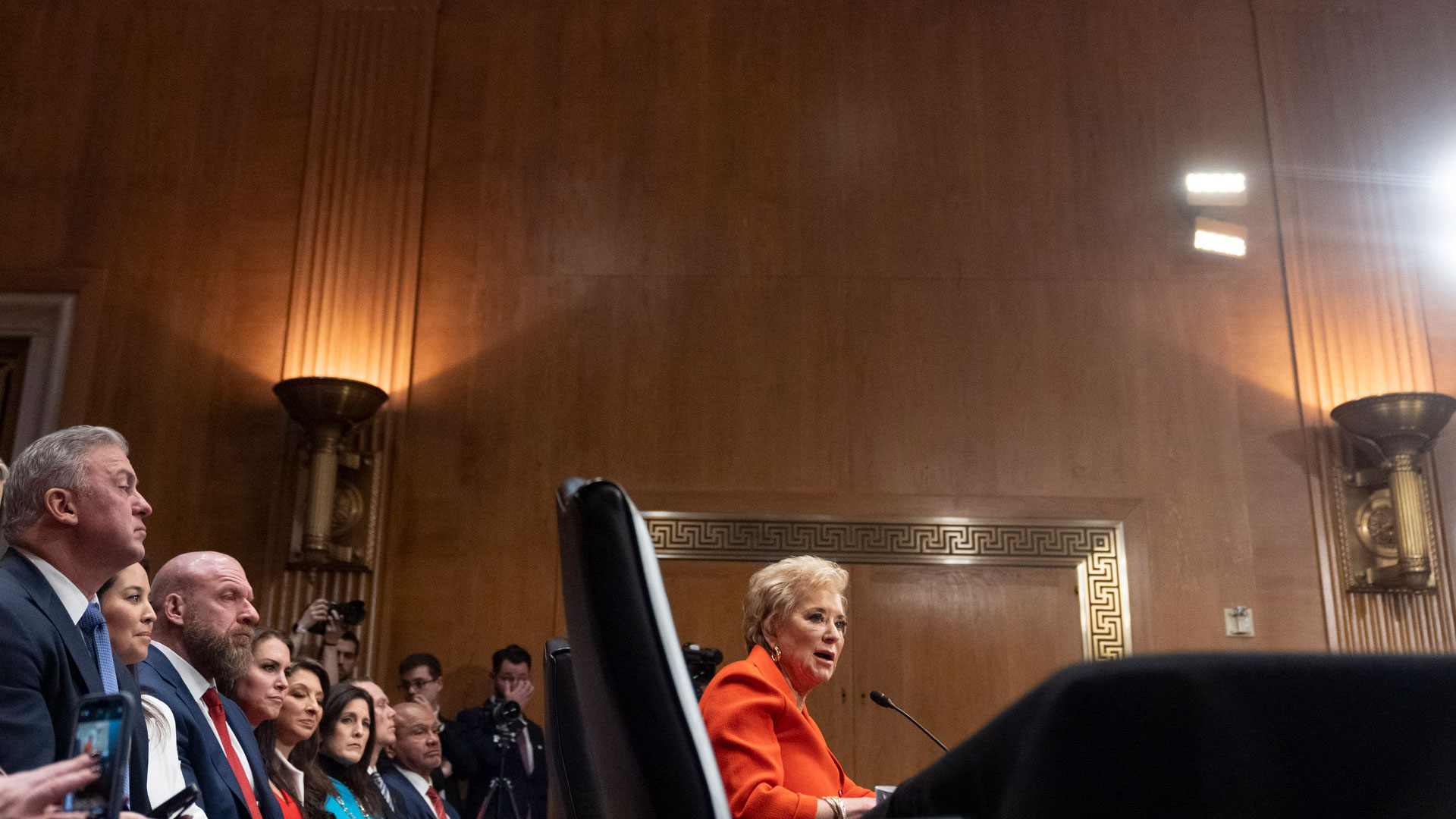
 Credit: (AP Photo/Jacquelyn Martin)
Many New Jersey school leaders are already preparing for a tight budget year, which could mean near-flat funding from the state to schools.
Now they warn that possible cuts in federal aid would make it even harder for them to meet students’ needs. And as President Donald Trump reportedly prepares an executive order to dismantle the federal Department of Education, lawmakers and superintendents are worried about the potential impact on local schools.
The state Department of Education notified school districts on Tuesday that their state aid for the 2025-2026 school year will not decrease by more than 3% of their state aid from the current school year. Superintendents have said that even flat funding can feel like a cut due to rising costs of health care and other goods and services schools must pay for.
“By limiting potential decreases in State school aid, we are seeking to reduce volatility in the school funding process and provide school districts across New Jersey with more information about what they can expect to receive in State aid as they begin to build a balanced budget for the 2025-2026 school year,” said Maggie Garbarino, a spokesperson for the governor’s office.
Trump’s nominee for education secretary Linda McMahon said she is ready to follow through with Trump’s plan to get rid of the federal Education Department and laid out a road map for doing that during her confirmation hearing last week. McMahon suggested that key functions, such as distributing funding for students with disabilities and investigating alleged civil rights violations, could be moved to other agencies. Still, concerns remain about who would oversee the department’s $79 billion annual budget without its more than 4,000 employees.
“It is not the president’s goal to defund the programs, it is only to have it operate more efficiently,” McMahon said.
What McMahon said about certain funding
New Jersey public schools are funded by local property taxes, state aid and some federal aid. New Jersey typically receives about $1 billion in federal funding each year, which makes up around 5% of education funding in the state.
Much of the federal portion flows to the state’s most vulnerable students, including students with disabilities who receive funding through the Individuals with Disabilities Education Act and students in high-poverty school districts that receive funding under Title I. In fiscal year 2025, New Jersey is estimated to receive about $465 million in Title I funds and $463 million in disabilities education act funds.
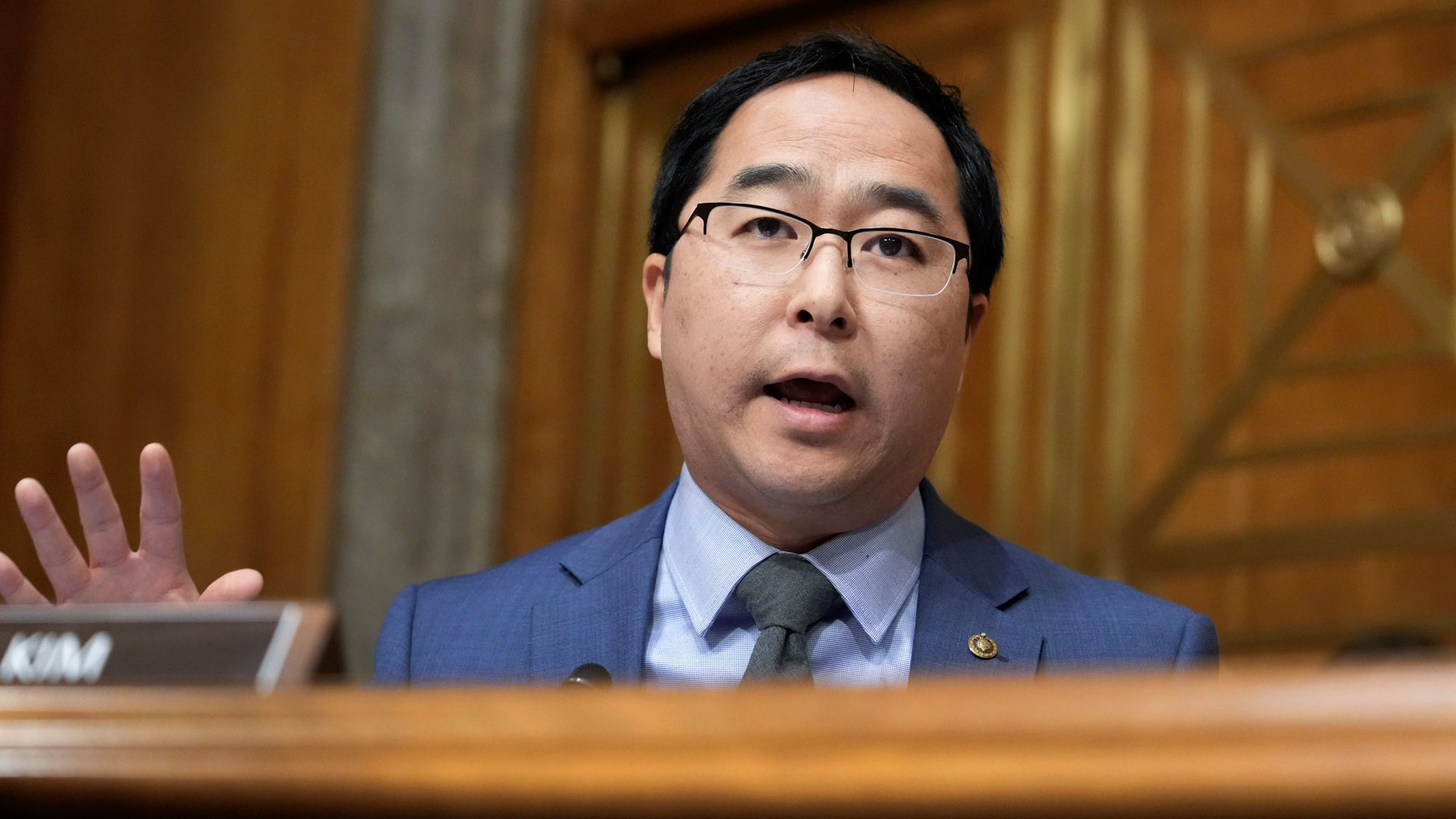 Credit: (AP Photo/Ben Curtis)
In response to a question from Sen. Andy Kim (D-NJ) during her confirmation hearing, McMahon said she believes both funding sources are protected by statute.
McMahon acknowledged that congressional approval would be needed to defund the Department of Education and to stop the flow of certain types of grant funding to states. She said she would permit the department to spend the money Congress appropriated, as is required by law.
Following the Project 2025 line
“How do we maintain the administration and oversight of these programs if we abolish or substantially reorganize the Department of Education?” asked Sen. Susan Collins, a moderate Republican from Maine, during the confirmation hearing.
McMahon suggested that functions required by the disabilities education act could be overseen by the Department of Health and Human Services. This is proposed in Project 2025, a playbook for Trump’s second term drafted by the conservative Heritage Foundation think tank. While campaigning, Trump distanced himself from Project 2025, but since taking office he has followed through on many of its suggestions.
At a Joint Committee on the Public Schools meeting in January, superintendents and advocates urged state lawmakers to step in to meet students’ needs if New Jersey schools lose federal funding.
McMahon suggested the Office for Civil Rights could fit better in the Department of Justice, another move also suggested in Project 2025. She said she would like to eliminate the backlog of cases in the office, which includes 330 ongoing investigations into New Jersey schools as of Jan. 14, before Trump took office.
“I do believe it is a responsibility to make sure our children have equal access to excellent education,” McMahon said. “That is best handled at the state level, closest to the states.”
Education Department officials who worked for the civil rights office and the special education branch have been terminated, according to reporting by POLITICO.
Asking for state to step in
At a Joint Committee on the Public Schools meeting in January, superintendents and advocates urged state lawmakers to step in to meet students’ needs if New Jersey schools lose federal funding. Other superintendents, who have seen academic recovery in reading, math or both since the pandemic, said federal funds are necessary to pay for programs and supports that have helped with recovery.
“I’m concerned about what’s happening on a federal level and how it’s going to impact states,” Daniel Fishbein, interim superintendent of schools in Livingston, told NJ Spotlight News.
Kerri Lawler, director of curriculum and instruction for the Beverly City School District, told NJ Spotlight News she hopes New Jersey recognizes the need for funding to support the most vulnerable students if states are given more oversight of education under Trump.
“There are really needy students in really needy schools that need funding in order to survive and to break the cycle of poverty,” Lawler said. “My concern is disbanding the federal Department of Education is a way to perpetuate this caste system where people who live in poverty are going to stay in poverty because they don’t have the resources they need.”
Even if the larger federal funding sources, such as Title I and the Individuals with Disabilities Education Act, continue to flow to states, there could be cuts in other areas. On Friday, the federal Education Department warned schools they could lose their funding if they use race in decisions relating to any aspect of “student, academic and campus life.” Schools have two weeks to comply with the letter, which explains the Trump administration’s interpretation of anti-discrimination law and pertains to state education agencies and all schools from preschool to college that receive federal financial assistance. The letter said the department “will vigorously enforce the law” and encouraged people to file complaints with the Office for Civil Rights against schools that have “unlawfully discriminated.”
DEI scramble
Trump also issued an executive order banning diversity, equity and inclusion programs. During McMahon’s confirmation hearing, Sen. Chris Murphy (D-CT) asked if offering an African American history course would be in violation of the order. McMahon said she is “not quite certain,” but she would look into it if confirmed.
New Jersey public schools are required to teach about the accomplishments and contributions of African Americans to American society under a law passed in 2021.
“You’re going to have a lot of educators, principals and administrators scrambling right now,” Murphy said.
The Senate Health, Education, Labor and Pensions Committee is expected to vote on whether to recommend McMahon to the full Senate on Thursday. Kim is a member of the committee.
