The devastation caused by the wildfires ripping through Southern California has been keenly felt by New Jersey residents with strong ties to the region.
For Dr. Gary Small, the chair of psychiatry at Hackensack University Medical Center, the natural disaster hits particularly close to home. Small and his wife own a house in Pacific Palisades, a Los Angeles neighborhood nestled between the Santa Monica Mountains and the Pacific Ocean that was ravaged by the flames of the Palisades fire.
That fire, which started in the hills above the neighborhood, has destroyed at least 5,000 homes and businesses and killed at least eight people, according to the latest news reports. As of Thursday, Small’s house was not among them, although it is damaged.
“It’s really heartbreaking because this was a beautiful neighborhood,” said Small, who flew out to Los Angeles earlier this week. “We’re just figuring out how to plow forward.”
And Small knows intimately that the damage is to far more than just property. The fires also come as climate anxiety and dissatisfaction with government responses to climate change are widespread in children and young people worldwide and impact their daily functioning, according to a 2021 report from The Lancet.
NJ Spotlight News spoke with Small earlier this week before he left for Los Angeles about the wildfires, coping with stress and anxiety caused by the fires and heeding his own advice as a mental health professional. This conversation has been edited for length and clarity.
NJ Spotlight News: Could you walk me through the situation you are facing right now with your home in California?
Gary Small: We have a home in Pacific Palisades and my wife has been there. We’ve owned it about six months. It’s an older home so we were trying to fix it up. I was actually talking to her on FaceTime when a friend texted her and said, ‘You’ve got to evacuate. There’s a fire.’ And she looked out the window, she saw traffic was building on the street. We’ve been in New Jersey for the last four years. [We’ve] lived most of our lives in Southern California. We evacuated from our home in the hills three times because of wildfires, lived through the Northridge Earthquake in 1994 [and] the Woolsey Fire [in 2018], but never have seen anything of this magnitude ever before. She was kind of prepped to get up, get out and go. Grab a few things. Check on the older neighbor [and] make sure she wasn’t there and was able to get out and stay in a friend’s condo. It’s been excruciating watching the news.
A neighbor drove through the area and we saw a video … It just looked like somebody had dropped an atomic bomb on the block. All the houses on our side of the street were just gone, the houses on the other side of the street all gone. And then for some miracle, our house is standing there. And then they turned the corner and there was a row of houses on the other side that were still there, but about half a dozen houses up there were in flames — it was just a nightmare.
A few days later, another neighbor shows us a photo where there’s fire smoldering above the house and we spent the whole day trying to get through to the Los Angeles Police Department and Los Angeles Fire Department to say, ‘Hey, can you douse this thing?’ because the houses that are still standing are threatened. Finally, we were able to do that. She (Small’s wife) finally got in by a police escort on Tuesday and the house was pretty much intact. Along the perimeter in the backyard, we had this row of Ficus trees that were burned out but might have somehow saved the house because it created kind of a firebreak. That’s the situation.
NJSN: What is the mental health impact of losing a home in a wildfire?
GS: It’s devastating. We’re fortunate. Even though we had a lot of emotions attached to this house, we hadn’t been there long. So it wasn’t like someone who’s had a home their entire life and all their possessions and memories are burned up. It’s really unsettling. And even for those of us who have not totally lost our homes, we’ve lost the community. One of the things that attracted us to this home was the neighborhood. It was a beautiful community, and I think people are really suffering from that.
Many friends throughout the area have reached out to me to try to get psychotherapy. People who I know are very stable individuals are really just dazed, kind of overwhelmed by it. I can tell you, when you’re in the midst of it, it doesn’t hit you emotionally right away. You’re kind of on automatic pilot, trying to solve problems.
It comes to you in different ways. Anybody who’s been through any sort of major loss, and there are plenty of major losses that people experience, those feelings sit with you and you don’t really wrap your head around it in the moment. There’s the loss, not just of the finances and what you feel as your home base, but also uncertainty about the future. Where are you going next? We’re starting to ask ourselves questions — if we want to live in Southern California, where is it safe? And this is after most of our lives living in the foothills where there are fire risks. And, trust me, we don’t want to live in the foothills anymore.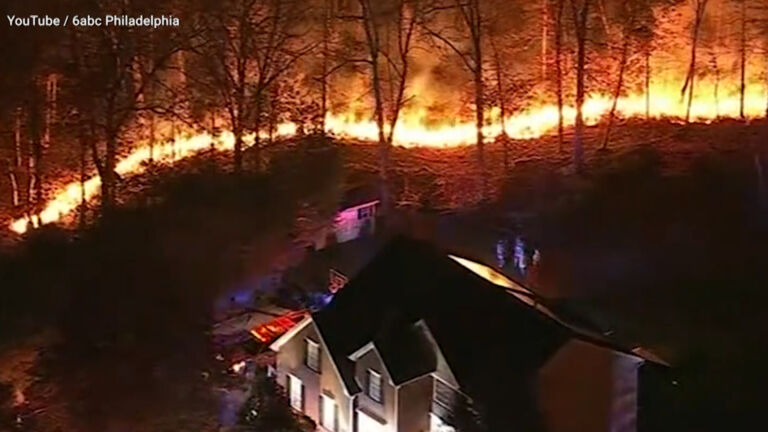
NJSN: How are you coping with this stress and anxiety right now?
GS: There’s a few things that I keep in mind. Take a deep breath, slow yourself down and think this through. As a neuroscientist, I know there are different parts of our brain that get fired up in these kinds of circumstances. There’s a more primitive emotional brain, the amygdala, which starts firing up and that clouds the thinking brain, the frontal lobe, which makes decisions logically. And so sometimes just taking a pause, thinking things through can help tremendously. Also, preparation is really helpful. I mentioned we’ve been through this before — evacuations for fires — so my wife knew the drill. Grab a few items and save yourself because you’re not going to be able to save all these other things.
The thing about fire is that a lot of people are very cavalier about it. They don’t realize how quickly it can spread. But our experience was that it can go much faster than you realize. So, you’ve got to really take care of yourself to be in a safe situation. You also have to anticipate the uncertainty moving forward. There are a lot of people suffering right now and what’s wonderful is people have been very generous about helping out, and that also is great because you can’t do it on your own. You’ve got to turn to others for help during these difficult situations.