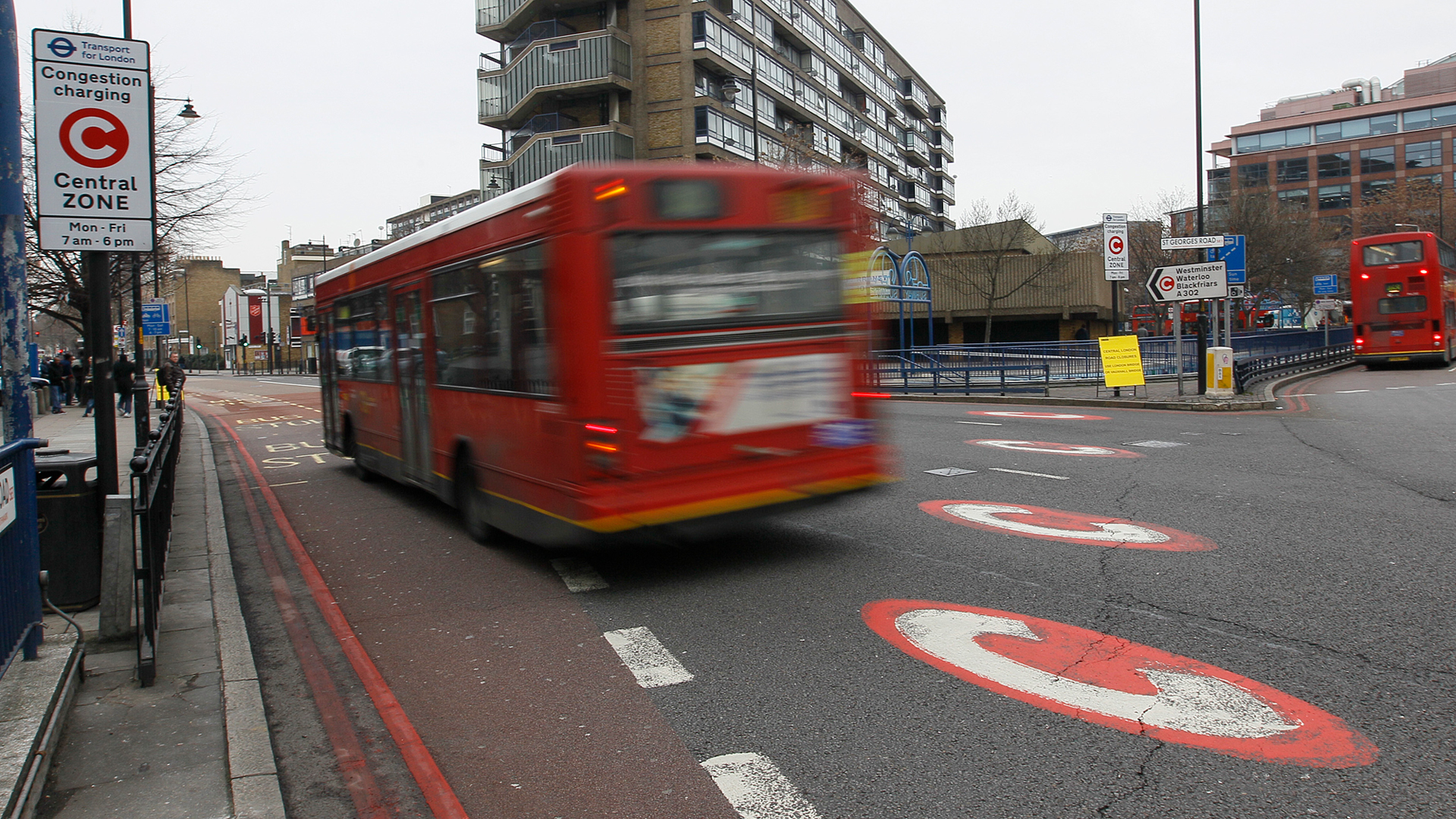
 Credit: (AP Photo/Alastair Grant)
Early data shows that congestion pricing could be alleviating conditions in often-gridlocked areas of Manhattan and increasing use of public transit while potentially altering vehicle routes.
It’s too early to see if congestion pricing will change the behavior of commuters heading to New York City from New Jersey, although the Metropolitan Transportation Authority estimates only a small portion of Garden State workers have been affected by the introduction of the controversial toll program.
Transit experts, politicians and news outlets have looked for answers in London, where congestion pricing has been in place for over 20 years. While the toll initially helped ease traffic in Europe’s most congested city, traffic eventually crept back up. It did, however, help fund major infrastructure upgrades for the city’s public transportation.
David Metz, an honorary professor at the Center for Transport Studies, University College London, spoke to NJ Spotlight News about how congestion pricing has worked in London.
Editor’s note: This conversation was edited for clarity and brevity.

NJ Spotlight News: Congestion pricing has become a contentious issue in New York and New Jersey. How has it worked in London?
David Metz: It’s been generally acceptable. The technology works. You pay a fixed amount for entering the zone each day online, or you have an account and you’re charged automatically, the enforcement uses camera technology identifying number plates. This is publicly acceptable. There’s no kind of pushback against it.
When it was introduced, initially there was a big drop in traffic going into the central zone, and so delays due to congestion, at that time, also reduced. But then over the next five years or so, the delays returned to the original level.
Two explanations [are] given for this, which are not mutually exclusive: the one offered by Transport for London, which is the body in charge for congestion charging and in charge of public transport in London generally, they said they took advantage of the reduced volume of traffic to introduce more bus lanes, cycle lanes and pedestrian spaces, thus taking away the amount of road space for general traffic.
The other explanation, which I give — which is a more general one: If you take action to reduce the amount of congestion, such as with a congestion charge, so you reduce delays. Then some of the people who were deterred by the scale of the previous delays are now attracted back onto the road network.
Those who are less able or less inclined to pay the charge will avoid using their cars on the system, whereas those more able to pay will take advantage of the space that now becomes available. And those more able are those on higher incomes, and probably those people traveling on business who can charge their business account.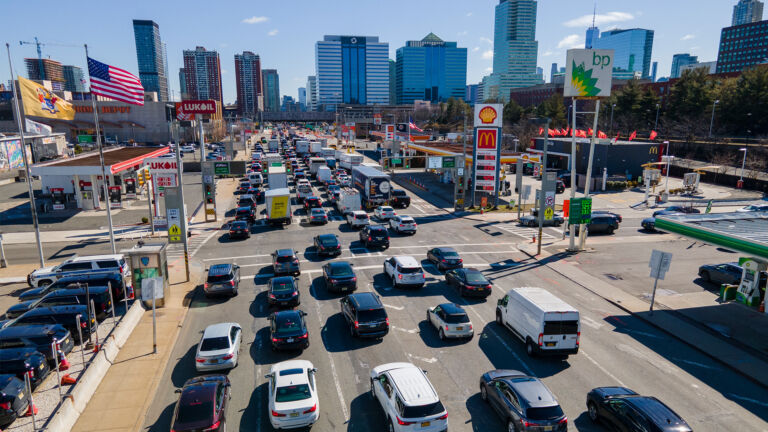
So my general sense is it’s quite hard to change the total amount of congestion, but you can get some redistribution in favor of those better able to pay. But on the other hand, if you’ve got a good public transport system — subway and buses — and that can be funded better from the proceeds of the congestion charge, then that still may be generally a good outcome.
NJSN: There’s an argument here that both New York and New Jersey should have built up their public transport systems before implementing congestion pricing. What was public transportation like in London 20 years ago when congestion pricing was implemented?
DM: I think it wasn’t bad then, because the main part of the [London] Underground was in place at that time, and the buses were improving. The occasion to introduce congestion charging was when the first Mayor Ken Livingstone, under the new arrangements for London government, was elected [in 2000] as a kind of an independent, and he included in his political manifesto the introduction of congestion charging. So when he got elected, he just pushed ahead with it very quickly, reckoning that by the time he was up for reelection in four years, the system would be bedded down and would be acceptable. And that actually is what happened.
Obviously, if you start from a better position with better-performing railways, in particular, it makes the introduction of any additional charge for road use more acceptable. But then the questions were had, how do you get to that better position? If you’ve neglected the upkeep of your railways, their performance is poor.
And in London, we’ve been opening more railways, notably what’s called the Elizabeth line, which is a major east-west line that opened a year or two ago and became immediately very popular. And then before that, we had a system called the Overground, which was taking older, rather underused surface-rail assets and making them into an urban metro system with more frequent trains, better branding, better reliability.
NJSN: You are quoted in one article talking about Singapore and how they adjust congestion pricing based on driver behavior. And London is considering how to change congestion pricing to help with traffic overall. It seems like congestion pricing should be malleable, instead of just setting the pricing structure only once.
DM: Singapore is unusual. They’ve always accepted that they would have to limit car ownership to the capacity of the road network. And also, Singapore has always had a very strong government.
So they have had a policy going way back of charging people for owning a car in Singapore, and they have a certain number of permits that they make available each year, ownership permits for auction. People bid for these, and if you got a permit, you’ve got 10 years’ use of a car, and that limits the car ownership to about 100 cars per 1,000 population, which is very low for a developed economy. In Britain, it’s about 450. In many European countries, higher, and I think in the United States, higher still.
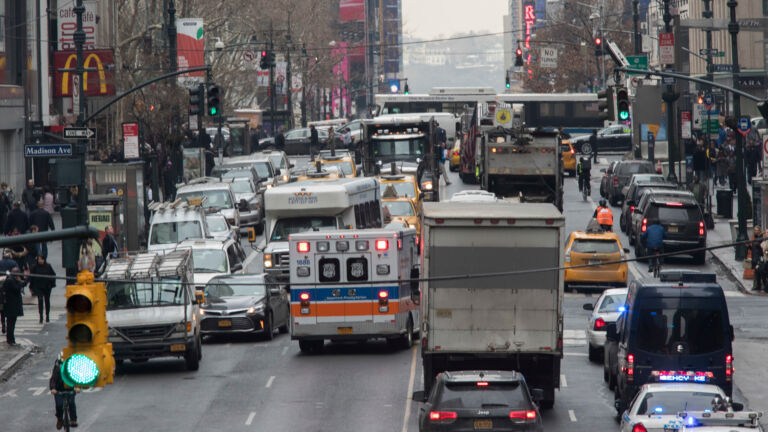
So, yes, in Singapore, it’s a good system, but the total charge is much more than you are charging in New York or we are charging in London.
There should be debate going on about the future of congestion charging in Britain, whether it’s moving in London from beyond the very central area to the inner suburbs, which is possible. But more generally, the argument is that with the introduction of electric vehicles, which don’t use gas or diesel — which in Britain and in most of Europe is quite highly taxed — then the state is going to lose quite a lot of revenue.
And so the question is, should there be some kind of general road user charging, so that the users of electric vehicles contribute to the cost of road maintenance, as well as contributing to the cost of public services generally. But that is a difficult political debate for any government to initiate.
Editor’s note: Zero emission vehicles currently pay an annual charge of £10, or about $12, to be exempted from congestion pricing in London. This exemption is set to end in December.