
 Credit: (AP Photo/Kathy Willens)
Since late December, more than 140 wild geese have been found sick or dead in New Jersey likely from avian influenza, state officials said. Those cases were discovered eight months after the last wildlife fatalities here were linked to the highly infectious virus.
But unlike in other states, H5N1 — also known as bird flu — has not been detected in backyard flocks or in commercial poultry, dairy cattle or people in New Jersey.
There have been 66 human H5N1 cases identified nationwide since the start of 2024. While most have involved mild or moderate symptoms, some patients have been hospitalized, including a Louisiana resident who died Jan. 6, according to the federal Centers for Disease Control and Prevention.
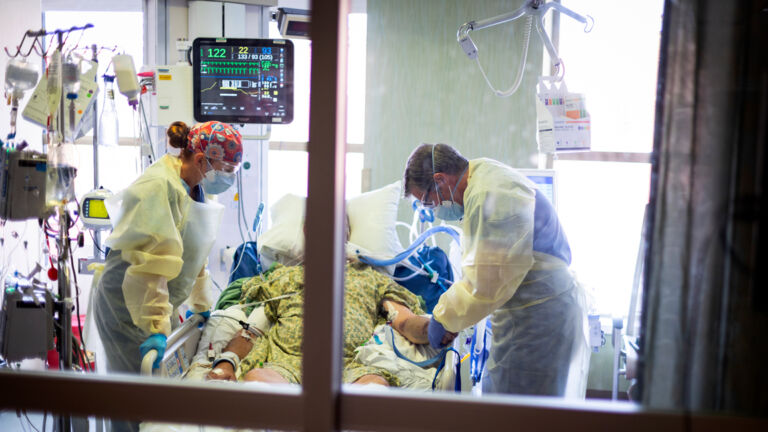
The announcement follows a sharp increase in seasonal flu cases in recent months, as is common during winter, and was released the day after an alert from the CDC on avian influenza. Last week the centers called on hospitals nationwide to accelerate the processes they use to determine the specific strain or subtype of influenza infecting a patient, a step it said is critical to quickly identify and separate those with H5N1 from patients with seasonal flu infections to contain the novel strain.
 Credit: (CDC/NIAID via AP, File)
Tracking infections … Trump factor
“This approach can help prevent delays in identifying human infections with avian influenza A(H5N1) viruses, supporting optimal patient care and timely infection control and case investigation,” the CDC announcement said.
However, President Donald Trump announced this week his intention to have the United States withdraw from the World Health Organization, a multinational intergovernmental organization that works with nearly 200 countries to address global health crises and improve access to care. Trump — who tried to sever ties with the 77-year-old organization at the end of his first term, a move blocked by incoming President Joe Biden — has said the arrangement costs the U.S. too much and other nations, like China, should pay more. About one-fifth of the organization’s 2023 budget, or $1.28 billion, came from the U.S. and was spent on containing health emergencies from spreading, according to Newsweek.
‘With the identification of H5N1 in migratory birds in New Jersey, it is crucial for owners of poultry flocks and those going to live bird markets to take steps to reduce interaction with wild bird populations.’ — NJ Agriculture Secretary Ed Wengryn
Withdrawing from the organization is likely to take time and may require congressional approval, according to various reports, but experts worry it would harm Americans’ health, if approved. Among other things, the WHO coordinates global disease surveillance and issued early warnings about the potential impact of COVID-19 in 2020. It has also tracked avian flu for decades.
“I think we would suffer. If you don’t have good surveillance and you don’t have good information you increase the risk of a pandemic in the U.S.,” said Dr. Eddy Bresnitz, the former New Jersey state epidemiologist who served as an adviser to the state Health Department during the COVID-19 pandemic.
“Pathogens don’t respect political boundaries — or political preferences,” Bresnitz told NJ Spotlight News. “And with international travel as it is today, we’re all at risk.”
That is certainly the case with avian flu, which was first detected in birds in China in 1996 and has since led to “an unprecedented number of deaths in wild birds and poultry in many countries in Africa, Asia and Europe,” according to the WHO. Human cases are rare — with most linked to people in contact with infected animals — but can be severe, with a high mortality rate, it notes.
Assessing NJ’s approach
Bresnitz raised concerns about the nation’s ability to confront avian flu in the spring. But on Wednesday, he praised the state agencies for their collaborative work to track and confront H5N1. However, in the interview, he did raise questions if state officials were working in conjunction with local public health leaders, whose teams become the front lines in any pandemic response.
Linda Brown, executive director of the New Jersey Association of County and City Health Officials, said the organization’s members have been consulted by state leaders, but there is always room for improved communication and a need for more resources to respond to a public health emergency. A number of reports, including an assessment of the state’s response to COVID-19, have raised concerns about the capacity of local public health offices to endure another disease outbreak, given their lack of stable funding and sustainable resources.
The departments of health, agriculture and environmental protection all have important roles to play in the state’s response, Brown said, but she worried that these groups are operating in siloes and that the messaging, guidance, resources and other information may not be reaching local health offices.
“This gap is frustrating to local health agencies,” Brown told NJ Spotlight News in an email. “The reality is, the local health department is likely to be the one getting a call about a concern over a dead bird, or a sick animal or illness in a human,” she said, a role they pride themselves on playing. “The three agencies involved (and needed) in the response have some opportunity to better align messaging and collaborate to ensure consistent messages, guidance and recommendations are making it to the public,” Brown said.
Who’s most at risk?
In New Jersey, the biggest risk of H5N1 appears to involve people who work with wild birds or farm animals or pets, animals that have been identified with the virus in other states. Baston warned residents whose jobs or hobbies expose them to wildlife to be aware of the risks. She also urged the public to fully cook poultry, eggs and beef and avoid consuming raw milk or dairy products, which can transmit the virus and other pathogens.
“With the identification of H5N1 in migratory birds in New Jersey, it is crucial for owners of poultry flocks and those going to live bird markets to take steps to reduce interaction with wild bird populations,” state Agriculture Secretary Ed Wengryn said in the release.
The Department of Agriculture said it tested more than 3,800 backyard flocks of poultry last year for H5N1 and screened birds at dozens of live markets, with no cases of the disease detected. Domestic birds that are sick or dead should be reported to its Division of Animal Health at 609-671-6400.
The state Department of Environmental Protection is responsible for tracking outbreaks in wildlife, conducting testing and working with other organizations to monitor diseases in various animal populations. It maintains a hotline for people to report sick or dead wild birds, 877-WARN-DEP (877-927-6337) and warned people to wear protective clothing if in contact with such an animal.
“State agencies are working closely together and with federal partners to rapidly assess and respond to any threats.” DEP Commissioner Shawn M. LaTourette said.

