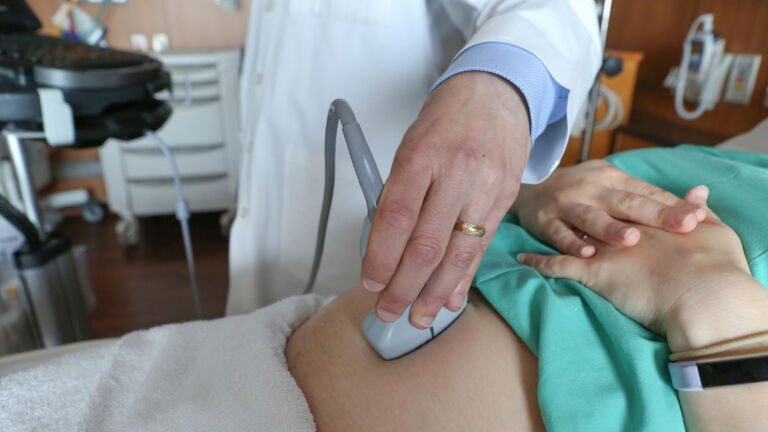
Credit: (StockSnap from Pixabay)
Gov. Phil Murphy’s new call to expand the state’s family leave program to allow state government workers to collect their full paycheck for three months has been welcomed in many advocacy corners.
But several advocates and others said there is also more that Murphy can do, starting with expanding the state’s existing plan which they said would do far more to strengthen families and make childbirth safer in New Jersey, especially among low-wage workers.
“It’s great to see the governor give it that placement in the State of the State” speech last Tuesday, Peter Chen, a senior policy analyst with left-leaning New Jersey Policy Perspective, told NJ Spotlight News, “but there are a lot of things missing.”
Republican Assemblywoman Nancy Munoz offered her own solution that she said “one-ups” the governor’s plan. She said it would provide fully-paid time off to almost all New Jersey workers — not just state government employees — and would also cover adoption or a family health crisis, with smaller payroll tax deductions for lower- and middle-income earners.
“Every worker, every new parent, no matter your occupation, deserves paid leave to bond with a child, not just state workers,” Munoz (R-Union) said in a statement last Tuesday. “As a mother of five children and a nurse, I know how crucial those first months are for both the health of the baby and the wellbeing of the parents.”
Murphy’s proposal
The Democratic governor outlined his latest plans for expanding the state’s family leave program — which he framed as part of first lady Tammy Murphy’s Nurture NJ campaign to improve maternal health and reduce related racial disparities — during his State of the State speech last Tuesday in Trenton.
Administration officials said that the proposal would cover “tens of thousands of workers” and cost between $6 million and $12 million, funding that could be added to the budget Murphy is due to sign into law by July. It was not clear what would happen in future years; Murphy’s second four-year term ends in early 2026.
“This will ensure that these workers can continue earning a full salary while caring for a newborn during one of the most crucial stages of development,” Murphy told lawmakers, lobbyists and members of the public gathered at the State House. “Why are we doing this? Because nobody should ever have to sacrifice their economic security in order to be a present and engaged parent.”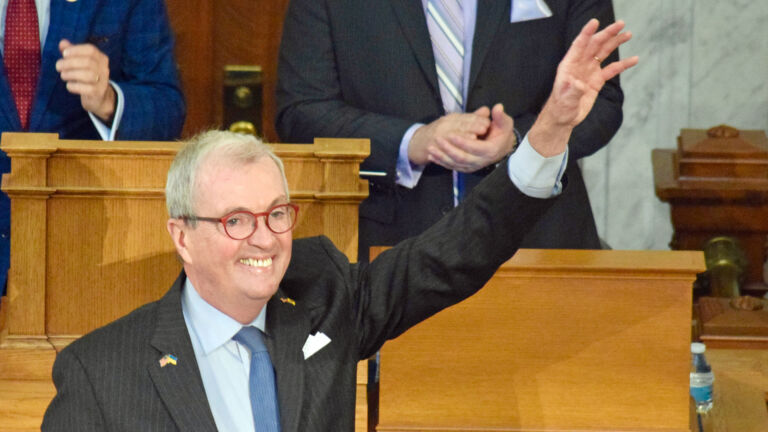
Paid family leave programs have been proven to improve the mental and physical health of new mothers and babies and reduce domestic violence, hospitalizations and mortality. But just over 1 in 4 private-sector workers nationwide have access to these policies, according to the U.S. Department of Labor, and just 1 in 10 low-wage workers, which disproportionally impacts people of color. New Jersey was one of the first states to offer such a program, in 2009.
What’s in NJ’s program now?
Now one of 10 states with a paid leave program, according to the National Conference of State Legislatures, New Jersey’s is considered by advocates to offer some of the nation’s most expansive benefits.
As of this year it allows public and private-sector workers — with some exceptions, including for small businesses — to collect 85% of their salary, up to $1,081 a week, over 12 weeks while caring for a baby, adopted child or sick family member.
‘We urge the Governor and Legislature to work together to strengthen job protections when taking leave for all New Jerseyans.’ — Yarrow Willman-Cole, New Jersey Citizen Action
The state’s family leave program, which was expanded in 2019, is funded by a 0.28% payroll tax that can’t exceed $386.96 annually, according to the state Department of Labor and Workforce Development. (New Jersey has a similar temporary disability leave program that is funded by contributions from workers and employers.)
 Credit: (Edwin J. Torres/Governor's Office)
Chen, with New Jersey Policy Perspective, praised the program but said, “there are lots of obstacles to its use.” One barrier to the existing family leave program is the loss of full pay workers experience during that period, administration officials said, a fact that prompts some workers to instead use personal or sick time to care for a newborn, a potentially stressful balancing act. Murphy said he hopes that by providing fully-paid family leave for state workers, private companies will follow this lead.
Tammy Murphy weighs in
In an email to NJ Spotlight News, Tammy Murphy pointed to the potential benefits of expanded family leave for maternal and child health. New Jersey has struggled with high maternal mortality rates and high racial disparities that leave Black women nearly seven times more likely to die from pregnancy, childbirth or in the months after than white mothers, according to state data. Improving these outcomes takes collaboration across state government, she said.
“We know that nearly every aspect of a mother’s life has a direct effect on her health and wellbeing, and thereby on the health and wellbeing of the entire family,” Tammy Murphy said in the email. “With Phil’s proposal to ensure 12 weeks of fully paid parental leave for State employees, we will be one step closer to becoming the national model — not just for maternal and infant care, but for families, period.”
What family-leave proponents say
Yarrow Willman-Cole, the workplace justice program director for New Jersey Citizen Action, which has led a coalition of advocates for family leave, welcomed Murphy’s proposal to expand the benefit for state workers. Both she and Chen said their own companies provide fully-paid parental leave benefits.
“We’re pleased Governor Murphy is focusing his attention on paid leave. The action taken by the state acknowledges the connection between paid leave and how equitable access can improve the health of birthing people and contribute to lower maternal mortality rates,” Willman-Cole said in a statement Tuesday.
But she and Chen also encouraged Murphy to fill gaps in the existing program by expanding job protections for workers who choose to take family leave. Currently employees with companies that have fewer than 30 people on the payroll, or workers who have been on the job less than a year, are not guaranteed their job will be there for them when they return, according to New Jersey Policy Perspective.
‘Workers cannot take time off to bond with babies or take care of sick family members in New Jersey, because the cost of living is just too high.’ — Assemblywoman Nancy Munoz (R-Union)
“People are not going to take it if they’re going to lose their job,” said Chen, the Policy Perspective analyst.
Willman-Cole said that all employees in the state contribute to the family leave fund, so it is only fair that everyone has access to the benefit — and job protection — if they choose to use it.
“As New Jersey moves forward with this expansion of benefits for state workers, we urge the Governor and Legislature to work together to strengthen job protections when taking leave for all New Jerseyans, so that no family has to risk job loss when they need to care for a new child or ill loved one,” she said.
Legislation (A-3451) to expand this job protection to more workers advanced in the Assembly early last year, but it has yet to move in the Senate. Advocates note this measure still wouldn’t guarantee jobs for workers at companies with five or fewer staff.
Republican Assemblywoman’s bigger plan
In her 40-page bill (A-5208) — which has no co-sponsors or Senate counterpart — Munoz highlights the benefits of paid family leave — from reducing postpartum depression to increasing breastfeeding to boosting female participation and advancement in the workforce. The proposal also calls for the state to collect data on program participation and impact.
Munoz’s measure would let workers collect their full paycheck for 12 weeks while caring for a child or loved one; the same amount could be spread over 24 weeks if needed and the person’s job would be protected. These expansions in family leave benefits would be funded by restructuring the payroll tax contribution formula now in place, a step Munoz said would generate roughly $150 million in additional revenue while reducing taxes on those who earn less than $300,000 annually.
“Workers cannot take time off to bond with babies or take care of sick family members in New Jersey, because the cost of living is just too high,” Munoz said. “Making their paycheck whole while ensuring they have a job when they return will help all families, but especially mothers who are often responsible for the bulk of the caregiving.”