
 Credit: (NJ Spotlight News)
As New Jersey shelters are seeing what they say is an unprecedented surge in the number of people experiencing homelessness, volunteers and outreach workers are set to traverse all 21 counties this week for the state’s annual count of the homeless.
The survey aims to provide a glimpse into the number of people and families living in emergency shelters, transitional housing programs and on the streets, among other locations, during a single night in late January, according to Monarch Housing Associates. The Cranford-based nonprofit has coordinated the count for over a decade.
“Normally, what we see in the spring and the summer is a dip in our numbers and we did not see that this year at all,” Barrett Young, the chief executive officer at the Rescue Mission of Trenton, said in an interview with NJ Spotlight News. “We’re having upwards of 250 to 300 people in our center a day. The numbers are just off the charts. We haven’t seen these numbers in 10 or 12 years in our shelter,” said Young.
To accommodate this “unprecedented surge,” the mission aims to dedicate additional space and add staff to serve up to 85 more people a day, according to a recent news release from the nonprofit. A new “comfort center” will be housed where the mission’s thrift store is currently and will be open seven days a week, through March, to serve breakfast and dinner. The mission will also be providing access to behavioral health counseling, addiction treatment and the possibility of obtaining housing, among other services, according to the release.
Young said the annual point-in-time count is “critical” to showing the massive volume of people experiencing homelessness in communities.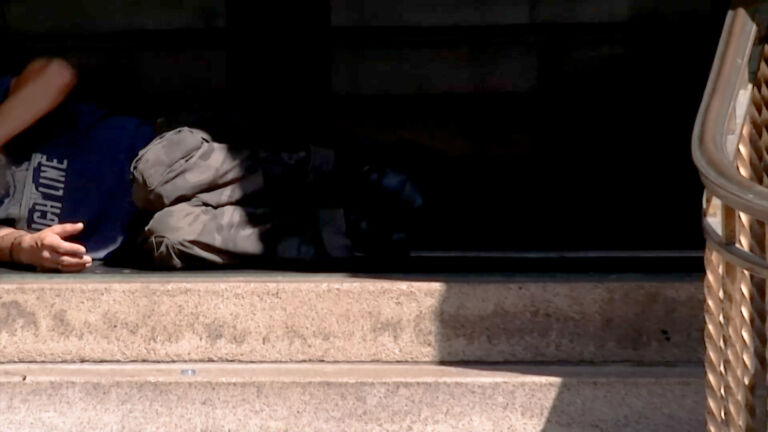
“You see it (the annual report) by county, which I think is even more important so that we know where funding should go and also what counties are facing the highest surge or the biggest need,” said Young.
The yearly tally is also required by the federal Department of Housing and Urban Development and takes place during the last 10 days in January each year. The findings from the annual count are intended to help community organizations and advocates understand how to better allocate housing resources and services.
The upcoming count comes as cities, including Paterson, have introduced ordinances that would ban sleeping or setting up camps in public places and would penalize anyone who does. In June, the U.S. Supreme Court cleared the way for local governments to enforce bans on homeless people sleeping outside in public places after a 6-3 decision in the City of Grants Pass, Oregon v. Johnson case.
Last week, Paterson City Council backed away from the ordinance after more than two dozen social service providers, people who were formerly homeless and other advocates confronted the council to denounce it. Officials said during the meeting that they would try to revise the proposed ordinance against public camping, possibly by removing the penalties.
Last year’s count showed over 12,600 people in New Jersey were homeless on a single night in late January, a 24% increase in the number of people experiencing homelessness in the state compared to the previous year.
The count is typically coordinated at the county level and includes people who are experiencing both sheltered and unsheltered homelessness, said Taiisa Kelly, the chief executive officer at Monarch Housing Associates. Outreach teams go to drop-in centers, soup kitchens, shelters and transitional housing programs while also speaking to people living on the street or in encampments, among other locations, according to Kelly. The survey will include questions about where a person spent the night of Tuesday, Jan. 28, how long they have been in their current living situation, what issues they have encountered when trying to get access to services and if they would like to receive mental health care, substance abuse treatment services or legal services.
After the survey is complete, each county has to report the number of people experiencing homelessness in their region to a federal Housing and Urban Development website, according to Kelly.
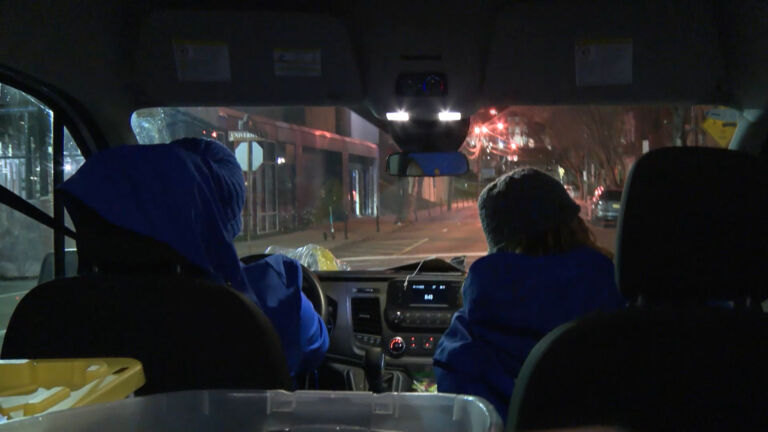
Monarch then does an analysis of the data and creates a report, which is usually completed around April or May of each year. Once the state approves the report, the nonprofit can then release it to the public, Kelly said.
Advocates, including Connie Mercer of the New Jersey Coalition to End Homelessness, say that while the count is an “absolutely critical effort” to measure homelessness across the country, there are some problems with the survey.
“The biggest one is it gives you a significant underestimate of the non-sheltered homeless,” said Mercer, the chief executive officer of the nonprofit.
“Finding the numbers of unsheltered homeless depends on the weather (and) depends on the number of people who are gathered to volunteer to go under bridges and into scary places sometimes to ask these questions.”
Mercer also doesn’t like that the survey is only done once a year and said that conducting it at least twice a year would be better because the trends in family homelessness are very different than the trends in individual homelessness, among other reasons.
“Family homelessness always, for the 30 years I’ve been doing it, peaks in August and is at its lowest in January, so it gives you a skewed picture,” said Mercer.
The reason for this summer spike is because children are out of school during this time of year and many parents cannot afford childcare, Mercer said. They are forced to stay home instead of working and without money coming in from a job, many cannot afford to pay their rent, which does too often lead to homelessness.
“Some communities, frankly, try to keep their numbers low because if they report low numbers of homeless, then they don’t have to do government requirements like Code Blue,” Mercer added.
New Jersey requires all county emergency management coordinators to have a plan in place to shelter all homeless people during conditions of severe weather. Under this “Code Blue” law, counties must issue Code Blue alerts whenever the temperature drops below 25 degrees without precipitation or below 32 degrees with precipitation, among other factors, according to the city of Trenton.
Shauna Hutsell, who experienced homelessness in Atlantic City in 2023, said she is afraid that people currently living in abandoned buildings will also not be included in the count.
“There are people that don’t want to be found, but it’s very important that we do find them,” Hutsell said.
Since 2014, Monarch Housing Associates has been commissioned by the state Housing and Mortgage Finance Agency to coordinate the survey and partners with local governments, service providers, community advocates and volunteers to conduct it, according to the nonprofit.
