
 Credit: (Mihai_Andritoiu via Shutterstock)
New Jersey’s top planning officials this week released a draft of the state’s first State Development and Redevelopment Plan in at least 23 years, updating goals around major issues like economic development, transportation, housing and urban revitalization.
Long in the making, the new document would guide state policy on infrastructure and land use statewide, and has new proposals for counties and towns on managing public assets in light of climate change and the demand for equity.
The plan, if finalized over the next year, will be the first to be adopted by the State Planning Commission since 2001 even though a 1980s law that enables it called for a review every three years.
As the overarching statement of state policy on planning and infrastructure, officials said the plan would provide a framework for infrastructure planning over the next 25 years, while recognizing the needs to adapt to climate change and to ensure equitable treatment for underserved communities — neither of which was included in the last report almost a quarter-century ago.
“This is immensely historic,” said Tom Dallessio, vice president of policy for the New Jersey chapter of the American Planning Association. “New Jerseyans as taxpayers are stockholders in this public corporation called New Jersey. Who owns stock in a private corporation that doesn’t have a plan, let alone a plan that’s 24 years old?
“The idea of not having an up-to-date plan is folly,” he said. “We’ve got a really solid opportunity to leave our children and grandchildren a better place.”
Previous failed attempts
Officials failed twice to update the State Plan, once in the administration of Gov. Jon Corzine from 2006 to 2010, and then under Gov. Chris Christie from 2010 to 2018. Both administrations produced drafts but neither finalized them, in Christie’s case because Superstorm Sandy became the state’s overwhelming priority starting in 2012.
This time, there seems to be a better chance that the new draft will be formally adopted with the support of Gov. Phil Murphy, who is said to want to get the process finished before he leaves office at the end of 2025.
“What’s different here is that Governor Murphy is one hundred percent behind this,” said Dallessio, a former member of the State Planning Commission. “He asked his cabinet to make this move forward, and he has given the Office of Planning Advocacy the resources to make this work. Governor Murphy now owns this and says this is going to be our plan for the next 25 years.”
This process wasn’t easy, either. In November, 18 senior planning figures including Dallessio wrote to Murphy asking him to break a logjam between some state agencies that were blocking the plan from moving forward.
“Various state agencies, who have had the draft for review for several months, have yet to reconcile their differences,” the letter said. “Without the necessary approvals from these agencies, the State Planning Commission is unable to move the Preliminary Plan forward for distribution to municipalities and counties.”
The planners urged Murphy to “resolve any outstanding issues” within his agencies to get the State Plan process on track to be finalized in 2025, as Murphy pledged during his latest election campaign that it would be.
Murphy’s office did not comment on the release of the new draft on Thursday afternoon.
Will developers and environmentalists balk?
Dallessio said he expects pushback from developers who fear the plan will mean fewer acres to build on, and perhaps from environmentalists, who will argue against any development at all, especially in coastal areas.
But Ray Cantor, a spokesman for the New Jersey Business and Industry Association, predicted the plan would take a balanced approach.
“The business community is a strong supporter of the State Plan,” Cantor said. “If done right, the plan will not only protect ecologically sensitive lands but will designate lands where we can develop and grow and build the affordable housing we need.”
But the economy would be hurt, Cantor warned, if the State Plan ends up incorporating recent regulations from the state Department of Environmental Protection to limit development in vulnerable coastal areas.
‘The State recognizes a backlog of public health and quality of life challenges that disproportionately affect overburdened communities,’ the document said.
Despite some hopes for finalizing the plan in 2025, Jim Gilbert, a former chair of the commission, said prospects for adoption are dimmed by the approaching end of Murphy’s term. Also damaging is the impending retirement of Donna Rendeiro, executive director of the commission’s executive arm, the Office of Planning Advocacy, who is widely respected for her work heading the updating process.
“I’m worried for two reasons,” Gilbert wrote in an email. “One is that Donna retires in February, and she is almost irreplaceable, due to her superior understanding of how Trenton works. Another is that the Governor’s office is in the usual end-of-term flux, and it is only the Governor who can give marching orders to the agencies.”
‘Aggressive timeline’
Still, Rendeiro predicted the plan could be finalized by the end of 2025 because of the preliminary work her office and its consultants have completed. There clearly won’t be 100% agreement between 564 municipalities, 21 counties and 18 state agencies, but they all need to work to the highest possible level of consensus, she said.
“It is an aggressive timeline, but we believe that with the work we have done ahead of time, it’s possible to get there,” she told a meeting of the State Planning Commission, which unanimously approved the plan on Wednesday.
The approval starts a process called “cross-acceptance,” a legally required part of the State Plan, in which planning stakeholders, government officials and the public can weigh in on the plan, which is expected to be modified considering their input.
Cross-acceptance makes New Jersey unique among U.S. states by inviting the participation of all stakeholders in setting state planning goals, said commission chairman Tom Wright, at the meeting.
“The Legislature laid out a process to make sure that any growth management document, any State Plan for New Jersey, would have a robust conversation between the public and private sectors, between and within municipalities, counties and state agencies, and I think this is a model for the nation,” Wright said. “This plan that we release today does not need to be perfect. What it needs to be is a framework for these conversations.”
The climate key
On climate policy, the plan aims to reduce greenhouse gas emissions while promoting adaptation to higher temperatures and bigger rainstorms. It urges a shift toward renewable energy and calls for land-use and transportation planning that seeks “carbon neutral mobility” such as walking and cycling. Development should be limited in “vulnerable” areas, the 168-page document said.
 Credit: (AP Photo/Eduardo Munoz Alvarez)
On equity and environmental justice, the draft said planning-related and policy actions should seek to create thriving communities throughout the state. Many cities have long suffered from underinvestment or disinvestment, exposing them to poor housing and public transportation, pollution, and crumbling infrastructure.
The plan gives municipalities a ‘road map’ to use when updating their master plans, which they are required to review every 10 years, said Chris Sturm, New Jersey Future.
“The State recognizes a backlog of public health and quality of life challenges that disproportionately affect overburdened communities,” the document said.
Some of the plan’s other priorities are interrelated. For example, its policy on infrastructure calls for the reduction of greenhouse gases in developing transportation, schools and roadways. And it said its goals on revitalizing neglected towns should be achieved in a way that does not expose residents to climate pollution.
What’s next?
Before the plan is finalized, all its proposed policies will be subject to a legally required impact analysis on their costs and benefits, to be conducted by Rowan and Rutgers universities.
John Hasse, a professor of geography and part of the Rowan team that consulted on the State Plan, said he is encouraged by its progress.
“This draft approval is a considerable accomplishment and allows the process to enter the cross-acceptance phase,” Hasse said. “So it is really more of a beginning than an end point. There will now be about a year of outreach and feedback for comments on the draft before a final plan is put up for approval sometime next fall. Getting successfully through that final approval will be an even bigger deal.”
The plan gives municipalities a “road map” to use when updating their master plans, which they are required to review every 10 years, said Chris Sturm, policy director for land use at New Jersey Future, a nonprofit that advocates for “smart growth,” and participated in the updating process.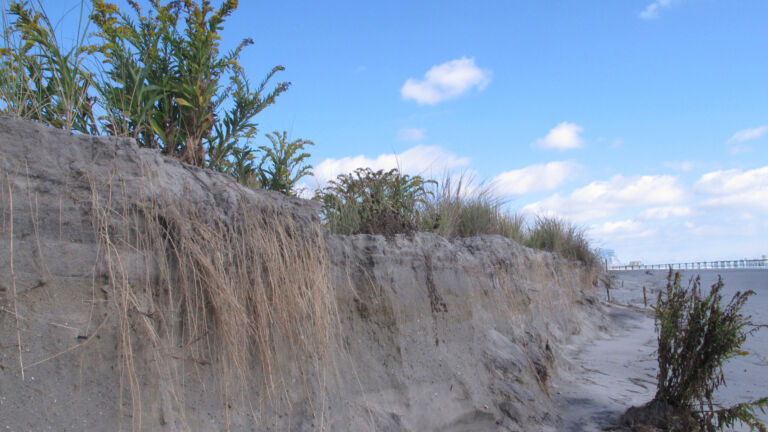
For example, towns are now trying to decide where to build affordable housing to meet their legal obligations, and that’s a big planning issue that could be helped by the State Plan, Sturm said. Planners like New Jersey Future want to see a lot of new housing built in places where people can walk, bike or use public transit, a goal that would be shared by the new plan if it’s adopted. Planners are also pushing against allowing development in flood-prone areas, as proposed by the DEP in its recent rules for coastal areas, but attacked by business groups including the NJBIA.
“That’s a conflict that state government needs to help local government with. The State Plan sets the table for that conversation,” Sturm said.
The plan “sets the table for state agencies and local governments to come together and resolve them but just by doing that, it surfaces some of the tough challenges that agencies are working on,” she said. “Sometimes it’s simpler to work on them individually rather than together. Everyone shares the same goals but getting there can be tough.”
