
 Credit: (AP Photo/Bebeto Matthews, File)
Advocates are calling on the state Department of Corrections to fully follow the five-year old law that requires those incarcerated in New Jersey state prisons get at least four hours out of their cells each day.
The department should also face greater monitoring of its compliance with the law restricting isolated confinement, the advocates said, and there should be legislative hearings on the issue.
In a report issued Tuesday night, the group NJ Prison Justice Watch said prison officials’ noncompliance with the 2019 state law restricting isolated confinement creates “inhumane conditions” and “a dire humanitarian crisis that demands immediate attention and action.” The report includes statements from a number of individuals currently serving prison time contending they are kept in their cells for more than 20 hours a day, contrary to state law, and this is impacting their health. There have been at least two suicides in state prisons over the last year.
“A person becomes dull mentally, and emotionally,” wrote one South Woods State Prison inmate identified only as “T” in the report. “A person becomes numb. If a person is in segregation, socializing isn’t an option. With no access to services, how can a person connect on any level, spiritually, emotionally, physically or mentally?”
The report includes surveys from 65 people who currently or previously experienced isolated confinement who said people in state prisons are not getting the legally required four hours a day out of their cells.
“The law designed to protect people from torture is still not being implemented correctly, which is unacceptable,” said Jim Sullivan of ACLU-NJ, a member of the NJ Prison Justice Watch coalition.
Colleen O’Dea, senior writer and projects editor for NJ Spotlight News, shares more on the report.
Tuesday’s report confirms a report released last year by the state’s corrections ombudsman’s office and echoes complaints several inmates conveyed to NJ Spotlight News over the last year that people were being confined beyond that daily state time limit.
Two out of three people who responded to NJ Prison Justice Watch said they were getting out of their cells for less than an hour a day, while only 6% said they get out for four hours or more. On average inmates said they get 70 minutes a day out of their cells.
In response, the correction department said in a statement that it “unequivocally contests the characterization” it is ignoring the law.
“The Department continues to provide for and enhance the out-of-cell time afforded to incarcerated persons,” the statement said. “The NJDOC continues to explore policy reforms and best practices to encourage and incentivize good behavior and curb the behavior of individuals who display maladaptive behavior that is threatening and assaultive to staff, volunteers, and other incarcerated persons and leads to significant disruptions that impact daily life and time out-of-cell.”
The law that limited isolated confinement, the Isolated Confinement Restriction Act (ICRA), requires quarterly public reports.
The most recent ICRA report showed 782 placements in isolated confinement housing between April 1 and June 30 of this year. Some of those could represent one person confined for two or more periods during the quarter. There were close to 12,000 people incarcerated in state prisons at the start of the year.
New Jersey Prison Justice Watch is a network of organizations and advocates that monitors state compliance with the isolated confinement law and works for greater oversight and accountability of the state’s prison system.
The group’s report says the department is not even interpreting the law properly. The law defines “isolated confinement” based on the number of hours out-of-cell a person is given, NJ Prison Watch states. But the department is using a “narrow” definition and applying its requirements only to those in units known as “administrative segregation” or other “close-custody units,” the report said.
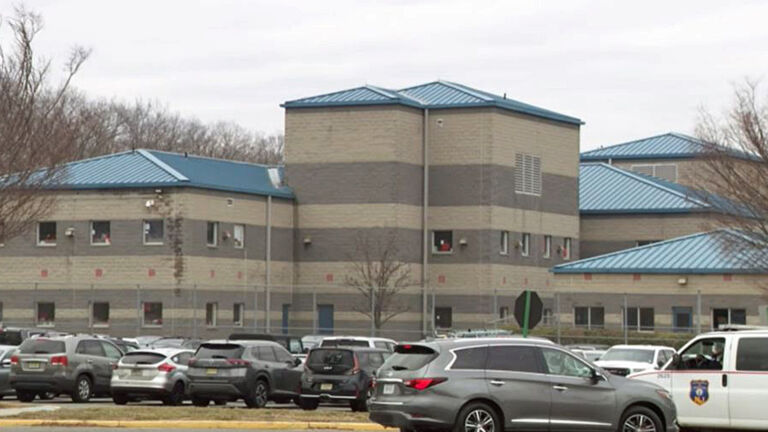
A spokesman for the Department of Corrections said those suicides are not reported in the ICRA reports because restorative housing is not considered isolated confinement under the law because the schedule there allows for four hours of out-of-cell time.
“Many prisons have failed to adhere to the law’s mandates, particularly regarding the provision of adequate time out of cells in restorative housing units (RHUs), which poses a significant threat to the well-being of incarcerated individuals,” the report states.
Donte Hatcher, who is finishing up his studies toward a bachelor’s degree in psychology at Rutgers University, was incarcerated for close to 14 years at three different facilities. Hatcher told NJ Spotlight News that “solitary confinement” isn’t a place within a prison, it’s the time spent inside and it continues unabated regardless of whether a person is in a unit with special restrictions or the general population.
“I was locked in my cell 23 hours a day,” said Hatcher, who was released almost a year ago. “Some days you didn’t get yard and you only came out of your cell for a half an hour to shower.”
Hatcher said there were about 100 men released from their cells at the same time, and with only six showers and three telephones, it was impossible to get clean and contact loved ones in such little time. He called it “gruesome,” and said it impacts both the physical and mental health of the incarcerated.
The law prohibits the isolation of a person for more than 20 consecutive days and no more than 30 days every two months. But the NJ Prison Watch report found the median amount of time a person spent in conditions formerly known as solitary confinement was seven months. Ten people said they had been kept in isolated housing for more than four years, or every day since the passage of the act. Only three people said they were receiving adequate time out of their cells.
Most inmates said their health was suffering and they said conditions were worsening, not improving, in the prisons.
“I have panic attacks when I think of the long days with nothing to do,” wrote a person referred to as “Q,” who is incarcerated at New Jersey State Prison. “And in lock up, the yelling and banging on the wall starts early and continues throughout the entire day. I spent every day trying to cover my nose because the entire unit reeks of K2 synthetic marijuana. If I didn’t, I would be left [with] the pounding headache, and the nurse refused to give out any ibuprofen.”
The report states that the “substandard living conditions” for those incarcerated in state prisons “starkly violate international human rights standards,” including those of the United Nations, whose minimum rules for the treatment of prisoners states those being held must have adequate “light, ventilation, temperature, sanitation, nutrition, drinking water, access to open air and physical exercise, personal hygiene, health care and … personal space.”

“The law did not consider existing and aging facilities originally designed for detention, the inherent limitations of the infrastructure in meeting the requirements established, and spatial limitations in providing out-of-cell time, programs, and activities,” the statement reads. “In addition, the maladaptive behavior of some of the population profoundly impacts staffing resources. The need to de-escalate crises, respond to assaultive or disruptive behavior, and provide medical and mental health services impacts the availability of resources.”
Some of those who responded to the NJ Prison Watch survey said they sometimes can go days without showing and don’t have access to the phone or recreation time. Schuster’s office issued a report earlier this year critical of the Department of Corrections’ policy to take away telephone privileges as a disciplinary measure.
NJ Prison Justice Watch is calling on the ombudsman to conduct and make public quarterly inspections of each facility to assess living conditions, access to medical and mental health services and out-of-cell time. It is also urging corrections officials to adopt the definition of isolated confinement contained in the law and report all incidents of people isolated for more than 20 hours a day in its mandatory reports on isolated confinement. The group is seeking the creation of a trustee board for each prison to provide additional oversight for housing practices and care. And it is asking for lawmakers to hold hearing on corrections officials continuing “inhumane and illegal housing practices,” as disclosed in their report and that of the ombudsman.
