Credit: (AP Photo/David Goldman)
The cost of health care continues to burden New Jersey residents, according to a series of new reports that outline steps the state could take to make medical services more affordable, including how it regulates health insurance.
The findings, scheduled to be released Wednesday but shared with NJ Spotlight News in advance, are in a trio of initial reports from the state’s Health Care Affordability, Responsibility and Transparency Program that examined recent health care spending, access and quality.
A fourth report, from the state Department of Banking and Insurance, also highlights possible solutions, with examples from other states like California and Massachusetts.
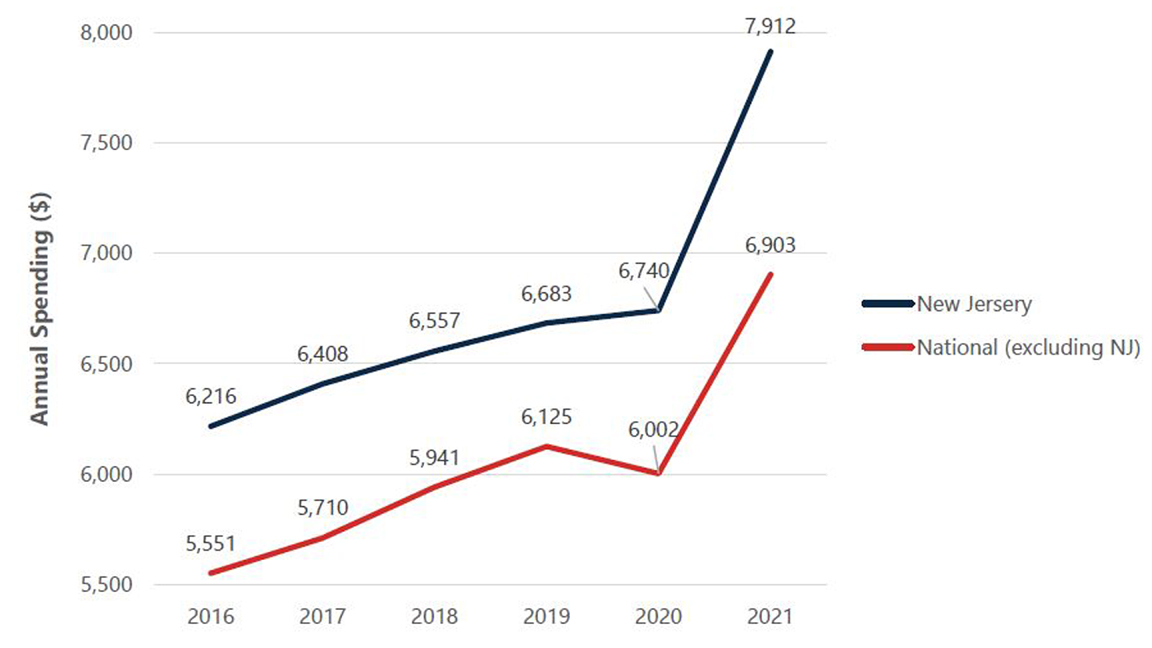
The bottom line from one of the reports: Health care spending per person in New Jersey’s commercial insurance market increased more than 24% between 2016 and 2021, growth that was faster and at higher rates than the national average, largely driven by higher costs, not greater use of services.
NJ residents spend more out of pocket
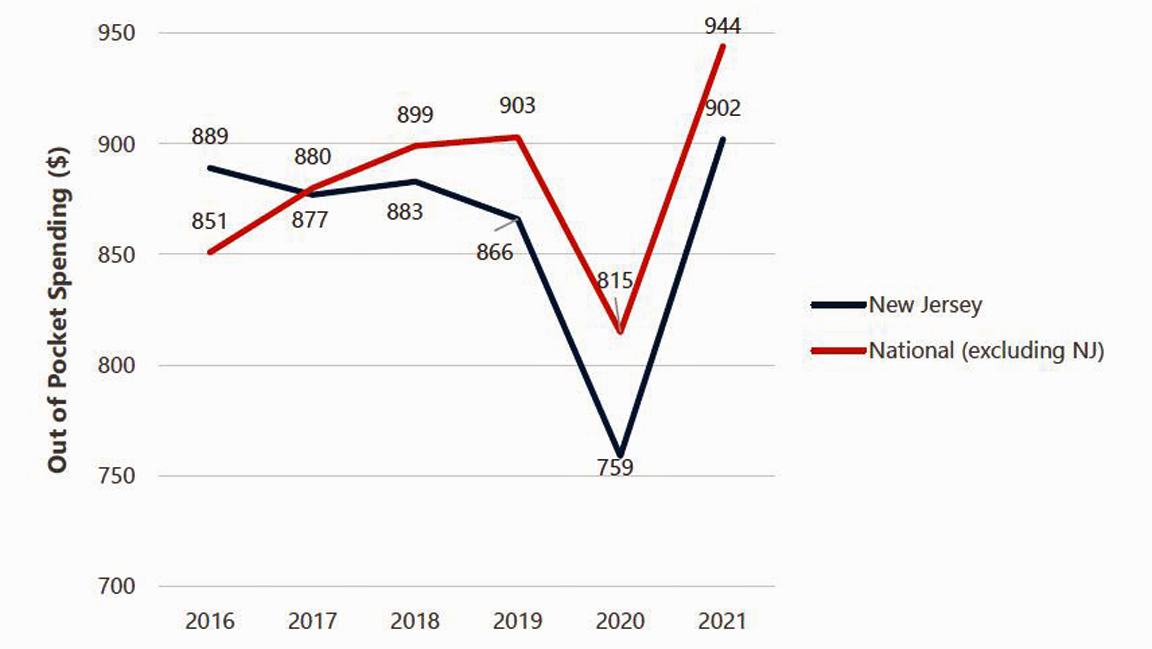
In 2021, commercial insurance companies spent $7,912 per New Jersey resident annually, versus $6,903 nationwide. State residents’ out-of-pocket spending increased less than 2% over those six years, however, the report shows, and at $902 per person in 2021 it was less than the national average of $944. The analysis covered about 25% of people with commercial plans in New Jersey.
 Credit: (HART)
“We’re all feeling the financial strain of inflation and the rising costs of daily life. These reports serve as a critical landmark in our efforts to make high-quality health care more affordable and accessible for everyone in our state, and set the stage for more work to come,” said Shabnam Salih, director of the Governor’s Office of Health Care Affordability and Transparency, which was created in 2021 to lead the push for health care affordability alongside the Department of Banking and Insurance.
‘The reports released today allow for greater transparency around costs and improved understanding of New Jersey’s health care landscape, which will drive strategies to limit cost growth over time.’ — Justin Zimmerman, acting commissioner, Department of Banking and Insurance
The office’s work is informed by input from insurance companies, hospitals and other health care providers, labor organizations, consumer advocates and other stakeholders. A related compact signed in December 2021 by a group of New Jersey health care leaders pledging to work together and with the state to improve affordability is designed to drive change.
 Credit: (HART)
Part of the agreement also involved setting benchmark targets for annual per-person spending, a schedule that envisioned a 3.5% rise in 2023 and narrowing to a 2.8% increase in 2027. The pledge called for stakeholders to take steps to meet these targets, starting in 2022, and the state will release regular performance reports, based on an analysis of the spending data, to measure progress in meeting these goals. Findings reflecting spending during 2022, a “transition year,” and 2023, the first benchmarked year, are expected in late 2025, according to state officials.
By the numbers
One of the reports released Wednesday provides a reference point for this schedule of benchmark targets — and highlights the challenges ahead. It notes that statewide health care spending grew 4.5% between 2018 and 2019, based on an analysis of all health insurance costs. Year-over-year spending increases ranged from 0.2% for Medicare plans to 4.4% for the state’s Medicaid program — which covers close to 2 million residents — to 8.7% in the commercial market, according to the report.
“Using this information, advocates, policymakers, and leaders in the health care industry can make evidence-based decisions about how to bring better value and cost savings to New Jersey residents and businesses,” Salih said in a draft news release.
Another report provides an analysis of other state, national and nonprofit data and shows that New Jersey in comparison generally does well when it comes to providing quality care, like preventing hospitalizations, treating heart attacks and caring for people with diabetes.
It also outperforms the nation in terms of health care access, considering the number of adults that have a personal doctor, the state’s low rate of uninsured residents and other factors, according to that report.
But access to primary care is a challenge, the analysis indicates, and Black residents are less likely to experience quality care than other racial groups — with higher rates of preventable hospitalizations, emergency department visits and infant mortality. Hispanic residents are also less likely than other groups to connect with care.
State affordability efforts
A separate but related report by the state’s Banking and Insurance Department recaps state actions to address affordability and offers other potential reforms like changing the agency’s statutory authority to enable it to consider consumer affordability during its review of health insurance rate-hike proposals.
Current law focuses state officials on making sure rate hikes are enough to cover an insurance company’s costs and keep them solvent and active in the market. Greater public participation in the process would also improve affordability, the report notes.
The department’s “affordability standards” report highlights how California, Massachusetts and Rhode Island have become more aggressive in regulating what services health insurance companies include in plans they sell on state marketplaces, or Obamacare exchanges. These states have used a mix of financial incentives, performance standards, reporting requirements and other tools to improve both affordability and quality, according to the report.
While the reports themselves are largely a starting point for additional tracking and potential reforms, they build on other work that Gov. Phil Murphy’s administration has done to make it easier for people to afford health care services, and they echo a larger affordability theme Murphy has highlighted in the wake of the COVID-19 pandemic.
For example, Murphy has expanded access to health insurance for working-class residents through changes to the state health insurance marketplace, which now offers plans for as little as $1 a month. He has taken steps to address the high cost of prescription drugs as well, and led changes designed to lessen the impact of medical debt.
More to do
Justin Zimmerman, acting commissioner at the Department of Banking and Insurance, said that despite the gains New Jersey has made to address health care affordability, the reports show more work is needed.
“The reports released today allow for greater transparency around costs and improved understanding of New Jersey’s health care landscape, which will drive strategies to limit cost growth over time,” Zimmerman said in the draft news release.
The Banking and Insurance Department’s report also flags the potential benefit of codifying the program to benchmark annual increases in health care spending in state statute to ensure its work continues, something Connecticut has done. It also highlights how Massachusetts and other states have passed laws requiring the creation of all-payer claims databases — publicly accessible repositories for all medical, dental, pharmacy and other health care claims from commercial insurance companies and public programs, like Medicaid. These systems allow state officials, insurance companies, health care providers and patient advocates to identify areas of cost growth and target reform efforts.
The New Jersey Health Care Quality Institute, a stakeholder group focused on cost and quality, is among those that have long called for such a database to better understand spending trends, something insurance companies have hesitated to embrace.
Claims data analyzed by experts hired by the Quality Institute found that in 2016, New Jersey had the fifth-highest per-person spending for health care services nationwide, at nearly $6,200 annually. Spending had increased 18% over four years, the data showed, outpacing the nationwide increase of 15% over that period. As is seen today, the rise was driven by increasing costs, not greater use of services.
Editor’s note: This story has been updated to add details about the compact signed in December 2021 by New Jersey health care leaders who pledged to work with the state to improve affordability.