
 Credit: (NJ Spotlight News)
The equation politicians pitched to property owners and taxpayers in New Jersey has been simple: Increases in school aid equal property-tax relief.
But to more than 1 million property owners who have seen their local property taxes rise at rates higher than the state average, that formula doesn’t add up.
An NJ Spotlight News analysis of state aid to public schools and property-tax data found that taxes rose in all but a small number of municipalities, regardless of whether a school district’s state aid was increased or cut.
People living in districts that lost state aid were more likely to see the highest average property tax increases, but taxes also went up by more than the state average in a majority of districts that have had a net increase in inflation-adjusted state aid since the 2018-19 school year.
That was the first year for what is known as S-2, a new formula for public schools designed to smooth out funding to districts and correct what many said was an unbalanced formula. Now that formula is fully funded with almost $12 billion in total aid to public schools included in the budget approved earlier this year.
“Fully funding our public schools will benefit every New Jerseyan — whether or not you have kids in school. Because every additional dollar we spend on public education is a dollar our taxpayers get to save in property taxes,” Gov. Phil Murphy said in February when he proposed a record-high state budget. “So we are strengthening our public schools and helping taxpayers save more money at the same time.”
Schools are only one component of the local property-tax bill; rising municipal and county costs may also have contributed to higher taxes during this period. But schools are the largest driver of property-tax increases, accounting for about 52% of the average property-tax levy.
The formula for state aid to schools
Republican lawmakers, in particular, have been critical of the way the school funding formula has both hurt taxpayers forced to pay more in local taxes as a result of state aid cuts, and students who have been impacted by cuts in staff and programs that have resulted from the combination of aid cuts and a spending cap.
“This year in the governor’s budget address, he essentially said that this increase in this year and the increases made cumulatively during the administration’s tenure have benefited every single child, more money into schools, and benefited every single taxpayer,” said Sen. Declan O’Scanlon (R-Monmouth). “We know that’s false.”
Two of the largest property-tax increases came in municipalities where school districts used to get additional aid due to their lower socioeconomic status and student needs: 54.1% in Asbury Park and 48.8% in Jersey City.
State aid to schools is intended to replace money local property owners would have to pay, potentially blunting what could have been much larger tax increases. It is meant to bridge the gap between their local tax levies and the amount of funding necessary to provide students with a thorough and efficient education. But the current formula, which Murphy made a point of fully implementing according to the schedule set out in the law, is no panacea for the state’s high property taxes.
“Recognizing the effects of inflation on local property taxes, Governor Murphy is proud that almost 49 percent of his FY2025 budget recommendation, or $27.3 billion, is allocated to direct and indirect property tax relief programs,” said Natalie Hamilton, a spokeswoman for the governor. “The record levels of municipal aid and school funding provided by Murphy Administration represents funds that do not have to be raised by municipalities through local property taxes to achieve an adequacy budget, saving taxpayers from increased local taxes.”
The state Budget in Brief proposal for the current fiscal year states that the Murphy administration has increased school aid by 43% since taking office in 2018. That represents an increase of about $3.5 billion. But the budget document also explains that not all school districts would benefit, stating that the proposed $908 million increase over the current fiscal year includes “reallocations from overfunded districts to over 400 underfunded ones.” The same paragraph states that the funding increase “will help schools to keep up with rising costs and limit excessive growth of property taxes.”
Where property taxes rose
Despite this, the average property-tax bill in the state rose nearly 13% between 2017 and 2023, with property owners in close to 100 municipalities seeing taxes go up by 20% or more.
Two of the largest property-tax increases came in municipalities where school districts used to get additional aid due to their lower socioeconomic status and student needs: 54.1% in Asbury Park and 48.8% in Jersey City. One goal of S-2, the revised school funding law, was to gradually decrease aid to districts like these that the formula considers have been “overfunded” by the state for years.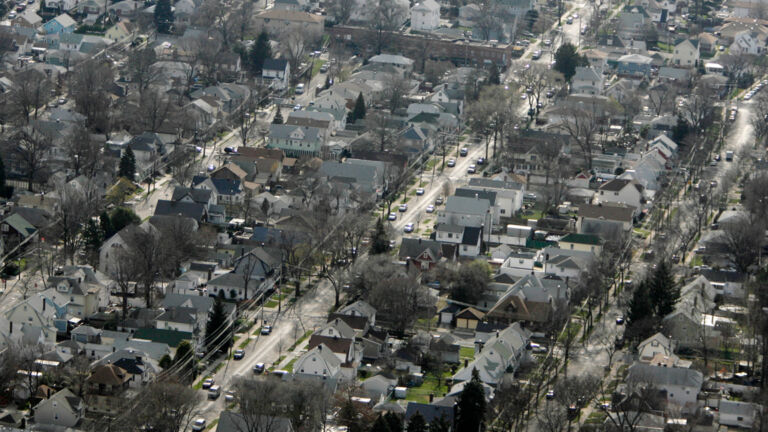
It can be difficult to compare school-aid changes and property-tax increases for a number of reasons beyond the fact that municipal, county and sometimes other spending also impacts what property owners pay. For instance, comparisons among municipalities with elementary school districts whose students go on to regional high schools can be less precise because there are two school levies that can impact the property-tax bill.
A key provision of the aid formula is each district’s ‘local fair share’ contribution, or the amount it can raise in property taxes.
The best comparisons are for towns that have comprehensive school systems with students in pre-school to 12th grade where residents pay just one school tax levy.
For these districts, the results of the NJ Spotlight News analysis were stark. Between 2017 and 2023 in towns with districts that had school aid increase equal to or greater than the 26% increase in inflation, a little over half had average property-tax increases greater than the state average. In towns where school aid was cut or did not keep up with inflation, two-thirds had higher property-tax increases than the state average.
Some of the biggest tax increases were in districts that previously were known as “Abbott” districts — low-wealth, urban school districts that were covered in a state Supreme Court ruling that required additional aid to give students the “thorough and efficient” education required by the state Constitution. The additional state support included, at least initially, increased aid under the school funding formula, as well as funds for universal preschool for all 3- and 4-year-old children, supplemental or at-risk programs and funding, and curriculum reforms.
The big change in 2018
In 2018, lawmakers passed, and Murphy signed, S-2 which amended the School Funding Reform Act of 2008. The new formula seeks to correct what state education officials say were faults with the one enacted in 2009 that wound up overfunding some districts.
Kevin Dehmer, the state’s acting education commissioner and one of the authors of S2, the amended formula, has said several factors lead to adjustments in state aid for a district, including changes in enrollment and student demographics, as well as the community’s ability to contribute to school funding, which is determined by property value and income data. This year’s reductions, proposed for about 140 districts, were to have been especially onerous because the largest cut — almost a quarter of a district’s former aid allotment — was left to this year, the final year for the new formula’s implementation.
Sen. Paul Sarlo (D-Bergen), chairman of the Senate Budget and Appropriations Committee, said during the Education Department’s hearing before the committee that increased property values have played a part in the aid cuts and property-tax increases.
“They’re not wealthy districts, but they had a significant increase in property values,” he said at a hearing in April.
After an outcry from school officials and lawmakers representing districts losing aid, the Legislature passed, and Murphy signed, bills restoring 45% of the aid that was to have been cut and giving about a third of districts more time to finalize their budgets to account for the late changes. That legislation also allows districts getting less aid than they did in the 2020-21 school year to increase property taxes by up to 9.9% of the current tax levy, far more than the 2% state cap, without seeking voter approval. That provision is, essentially, an acknowledgement that property-tax relief is not the main purpose of the current school aid formula.
A key provision of the aid formula is each district’s “local fair share” contribution, or the amount it can raise in property taxes. Many districts that got reductions in aid were not raising taxes up to a level considered “adequate” by the formula. That is another way that the formula encourages property-tax increases in at least some districts.
Through the seven years of the revised formula, more than half of all districts saw state aid remain flat or got an increase every year. Two in 10 districts have lost aid every year or in all but one year. Some districts saw significantly more aid over the last seven years: Newark’s expected total aid increase was $500 million, followed by $210 million for Elizabeth and $178 million for Paterson.
What happened in Asbury Park and Jersey City
But the specifics of the revised formula have led to significant cuts to districts in other cities that have grown wealthier, at least in terms of property values, than they were decades ago at the genesis of the Abbott case.
Asbury Park and Jersey City are two of those that have seen large school aid cuts and large property-tax increases since 2017.
The average property-tax bill in Asbury Park has risen by more than half, according to the NJ Spotlight News analysis, while state aid was cut by 66% between the 2017-18 school year and the current year.
Statewide, 14 municipalities have seen a drop in the average property-tax bill between 2017 and 2023, though in nearly all cases, the declines were less than the rate of inflation.
Including recently added stabilization aid, Asbury Park started this school year with little more than one-quarter of the state aid it had seven years ago, when amounts are adjusted for inflation. That reduction can be seen in how much of the school district’s budget is state aid. State support for Asbury Park dropped from 90% in the 2017-18 school year to 36% last year. Last year, about 47% of the district’s 1,500 students were considered economically disadvantaged — qualifying for free or reduced-price school lunch — 21% were migrant learners and 95% were Black or Hispanic, according to fall survey data. The city’s median household income was $63,461, more than $30,000 less than the state average, according to the U.S. Census Bureau’s 2022 American Community Survey, the most current available.
Jersey City has seen a similar drop in state funding for operations, from three-quarters of the district’s budget to 16% in 2023-2024. The state’s second-largest city is seeing its state aid decline by almost 75% this year. Property taxes rose by close to 50% between 2017 and 2023. And while the city continues to experience a development boom and the median household income has risen faster than that of the state, it still lags the state median by about $2,000. Jersey City has a higher poverty rate than the state, 13% versus 9.7%, and more than half of its public school students were considered economically disadvantaged in the last school year.
What happened in Mountain Lakes
Enrollment has declined in both Asbury Park and Jersey City, but it has also declined in some of the state’s wealthiest districts, some of which have seen their state aid more than double. One of those is Mountain Lakes in Morris County, where the state Department of Community Affairs calculated the average property value in 2023 at $888,000 and the U.S. Census Bureau reported the median household income at more than $250,000 — the highest it measures — in 2022. The district’s enrollment has dropped by almost 13% since the 2017-18 school year, according to the Department of Education’s Fall Survey enrollment reports. State aid to the district has increased by more than two-thirds during the period. The average property tax bill rose by 11.9%, less than the state average, from 2017 to 2023.
Statewide, 14 municipalities have seen a drop in the average property-tax bill between 2017 and 2023, though in nearly all cases, the declines were less than the rate of inflation, and six of those are either part of regional school districts or send students to other districts that lost state aid.
More commonly, there have been property-tax increases in districts that got more state aid.
State aid to Dover, in Morris County, has increased every year under the current school funding formula. The total has more than doubled since 2017-18 and, adjusted for inflation, stands to be about 90% higher this year than prior to S-2. Yet the average property-tax bill in the town rose by almost 30%, twice the state average, between 2017 and 2023. The school tax levy alone in Dover increased by more than a quarter over that time, even as state aid increased. That’s due to the “adequacy” provision of the formula that requires districts to work up to spending a certain amount of money for curriculum and programs. Despite increases in local spending on education, including facility improvements districtwide and new staff hires, Dover is still spending almost $3.7 million less than what the state formula considers to be adequate.
Despite getting $5.4 million more in aid this year, the district is also increasing property taxes property taxes again, by more than $360,000 — close to 6% on the average home assessed at $240,000. This is because it did not get as large an aid increase from the state as the current year, meaning the state share of the budget is dropping from 72.1% to 70%, and because federal COVID-19 relief aid is expiring.
“There was a long history in the district here of keeping the tax levy down as much as possible, and that has a cumulative effect,” said James McLaughin, the former Dover schools superintendent. “So we, from the calculation, continue to be short on what we’ve asked of the community. However, we’re very sensitive to our economic needs.”
“We only went with the 2% again,” he said, referring to the state cap, “trying to be sensitive to the needs of our homeowners, but at the same time, making sure that we can support what we have in the district.”
— Table and graphic by Colleen O’Dea
