
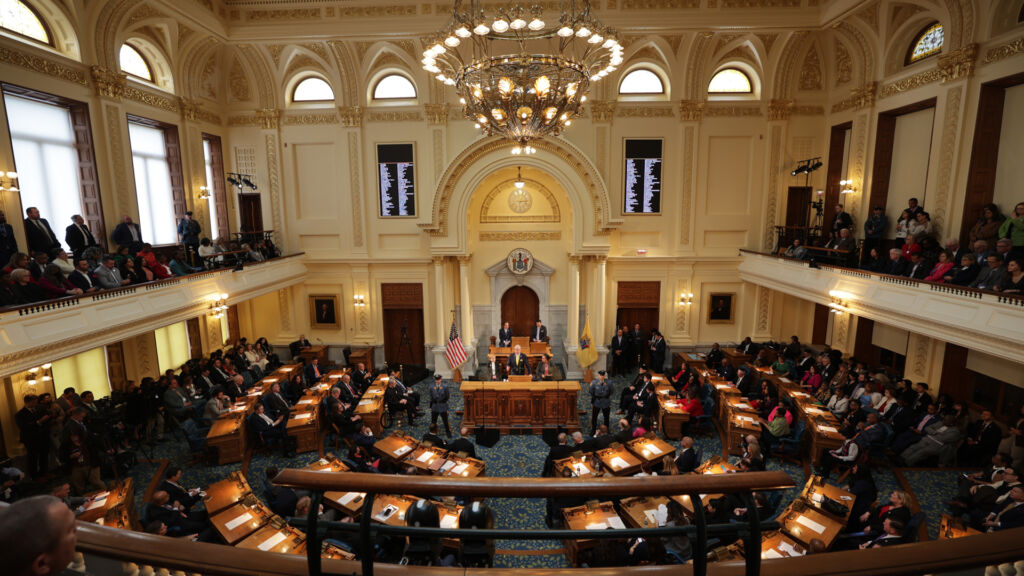
A number of advocates vowed to hold lawmakers accountable for voting last week to make it harder to get public records, but state legislative elections are more than a year away. Will opposition to this bill still be a priority and will voters care?
That could depend on a host of factors, including who wins the presidency this November, who the gubernatorial nominees are and whether challengers have enough money to get their message across.
The status of the “party line” ballot, a powerful tool for incumbents and party leaders, could be a major factor. If the current injunction against the party line remains in place next year, legislative candidates will have to appear on the ballot in their own blocks, not with the gubernatorial candidate endorsed by the county parties. While most incumbents would be running in November 2025 in safe districts drawn to favor one party or the other, some Assembly members could face primary challenges. Senators are not up for reelection until 2027.
Party support continues to bring money and party workers for endorsed candidates. But without the line, well-funded challengers could have a chance, particularly if they run on an issue that voters both care about and understand. And the Democratic-led vote for S-2930 to change the Open Public Records Act is both of those.
All about transparency
“The OPRA bill is understandable by the general public; it’s transparency,” said Ben Dworkin, director of the Rowan Institute for Public Policy and Citizenship. “This makes it a very effective piece of source material to attack an incumbent.”
That’s especially the case given a recent FDU Poll said 81% of New Jersey registered voters wanted to keep the OPRA law intact and did not support tightening access to public records.
“There was a reason why 81% of the public said they opposed it, because they in their mind, they got it,” Dworkin continued.
The bill to amend OPRA is the second major attack on democracy in the state in the last year, according to critics. Many of the same activists argued against the passage last spring of a law that weakened campaign finance statutes, doubled campaign contributions and severely restricted state and local pay-to-play rules. They argued that people would remember in November, when the entire Legislature was on the ballot.
‘Let me be clear: Don’t be surprised if Assemblymembers lose their seats next year if they vote yes on the bill to gut OPRA.’ — Amol Sinha, ACLU-NJ
That campaign finance law also was largely driven by the Democrats, who control both the Legislature and the governor’s office. But Democrats gained a net six seats. They hold a commanding 52-28 majority in the Assembly, where 41 votes are needed to pass a bill.
Dworkin said the difference is that the Elections Transparency Act was a complicated bill, involving campaign financing limits, “dark money” committees, the dismissal of complaints pending before the state’s election finance watchdog for more than two years and an end to local rules governing whether those who make campaign contributions could get public contracts. It’s difficult to make something like that understandable to voters in a mailer or a soundbite, he said.
Public records transparency, however, is much simpler to understand.
Still pressing Murphy to veto
So far, good-government advocates are continuing to lobby Gov. Phil Murphy to veto the bill and they are vowing to oppose those lawmakers who voted for it.
“Let me be clear: Don’t be surprised if Assemblymembers lose their seats next year if they vote yes on the bill to gut OPRA,” Amol Sinha, executive director of ACLU-NJ posted on X before the final vote in the lower house last Monday. “The government might try to end transparency, but we are being transparent and clear about the political consequences.”
Several other organizations, including the New Jersey Public Education Coalition, the Housing and Community Development Network of New Jersey and New Jersey Citizen Action have also publicized the votes.
But these groups, and candidates, will need to remind voters of the OPRA issue next spring if challengers are to have a chance at unseating anyone who voted for the bill in a primary, and later in the November 2025 election, when party control of at least a few districts will be at stake.
Races to watch
The Democratic Assembly members in districts likely to have close races next year, including the 3rd and 16th, opposed the revisions to OPRA, and both Assembly members in the 14th did not vote. But the newly elected Assembly members who flipped seats in the 11th, Margie Donlon and Luanne Peterpaul, voted for it, as did Dan Hutchison and Cody Miller, freshmen in the 4th District that Republicans had targeted last year.
This year, two Democratic Assembly members are running against each other for the party’s nomination for the U.S. House of Representatives in the 3rd Congressional District. Herb Conaway and Carol Murphy, who both represent the 7th Legislative District in the state Assembly, opposed changing OPRA.
While next year’s gubernatorial election contest and who the nominees are could play a large role in the Assembly races, incumbents’ votes on OPRA — especially if Murphy signs the bill — may wind up being a factor, as well.
“There’ll be a whole number of dynamics going on in the next election and a number of different issues,” Dworkin said. “But this one certainly stands a good chance of being used.”
— Table by Colleen O’Dea
